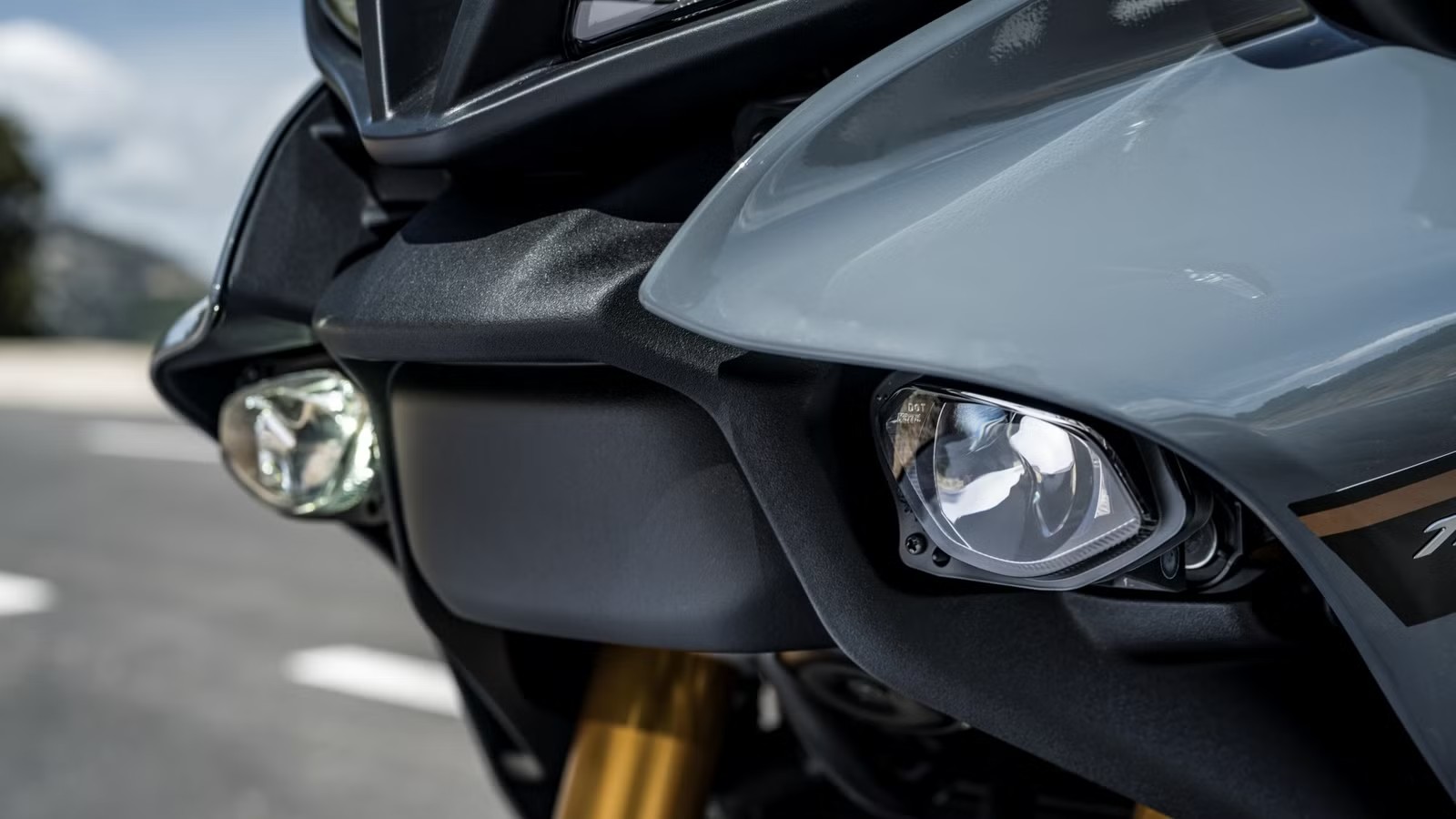
Touring motorcycles have lost their minds.
Spec sheets dictate design now. Marketing departments argue over horsepower numbers while ignoring how anyone actually rides a bike. The engines get bigger. The electronics get thicker. The weight creeps up. The result is a machine built for a spreadsheet, not for a Tuesday commute or a Sunday canyon run.
It’s excessive. And it’s heavy.
The Problem With Modern Excess
Sport-touring used to mean balance.
You wanted something comfortable for long distances but light enough to carve up a mountain pass. Now? Manufacturers treat these bikes like rolling hotel lobbies. Huge fairings. Heavy chassis. Endless menu options buried in TFT screens.
On paper it looks impressive. On the road, it feels clumsy.
Think about it. How many of you really need 170 horsepower? You’re stopped at traffic lights. You’re merging on uneven highways. You’re riding in sudden rain. Comfort matters there. Confidence matters there. Top-end acceleration doesn’t.
Riders want to arrive fresh, not exhausted by a heavy bike that fights you through every pothole and side-street.
The Tracer 9 Compromise
Yamaha gets this.
The Tracer 9 isn’t trying to win the horsepower wars. It’s trying to win your attention every day. It’s small enough to slip through traffic but planted enough to swallow interstate miles.
It sits somewhere between a superbike with saddlebags and a luxury cruiser. The sweet spot.
The upright handlebars help. The wide grip makes you feel stable. It doesn’t have the intimidating bulk of a flag-ship sport-tourer. You don’t need to wrestle it into a parking space. It just works.
Built For The Real World
Yamaha didn’t engineer the Tracer 9 for a test track with freshly painted white lines.
They built it for bad pavement.
The chassis prioritizes adaptability. An aluminum Deltabox frame. A 41mm inverted fork. A linked rear shock. It absorbs the chaos of real roads. It stays composed when the wind picks up or the sun hides behind clouds.
The engine makes it interesting, too.
That CP3 inline-three. 890cc. 117 horsepower. It sounds odd to some but it delivers torque where you need it—low and mid-range. You don’t hunt for gears. You pull.
The Tracer 9 GT adds the serious touring kit if you need it. Electronic semi-active suspension that adapts as you ride. Heated grips. Hard luggage. Radar-based cruise control. It feels like a tech upgrade from ten years ago without losing the playful spirit of the base model.
It delivers a premium feel without the bloat.
Not Too Expensive. Not Too Light.
Starting at $12,5$99.
That undercuts many of its rivals while giving you almost all the features. The GT model sits at $16,4$99. Still cheaper than the big European flagships.
Is it the best bike? Maybe not. But it’s the most honest one.
The BMW F 900XR ($12,6$95) is light and efficient, sure. But that parallel-twin lacks the personality of Yamaha’s triple. It feels functional, not exciting.
The Honda NT1100 ($11,9$99) is a tank. It’s great for crossing continents but sedate for canyon runs. It shares DNA with the Africa Twin because it prioritizes safety and stability over fun.
The Triumph Tiger Sport 80 ($12,8$45) is close. Light. Punchy. Sporty. If you want pure agility over all-rounder capability, pick the Triumph.
But most of us aren’t pure racers or pure pilgrims. We are both. Sometimes we commute. Sometimes we run away.
The Tracer 9 handles that shift. It’s boring enough to be practical. Exciting enough to stay interesting.
That’s a rare thing these days.
Most bikes specialize until they become useless tools for any one task. The Tracer 9 stays general purpose.
Does it feel like a toy? Or a tool?
It’s a little of both.