You pull the shoulder strap. The webbing slides out smoothly. You release it, and it snaps back tight. That isn’t magic. It’s a mechanical dance between a spool, a spring, and a locking system designed to keep you from becoming a projectile in a crash.
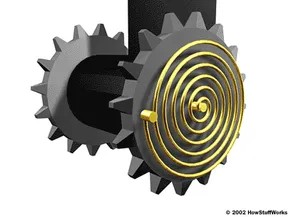
At the heart of the retractor is a simple spool. The belt webbing is wound around it. Inside the housing, a spring applies torque to that spool. This torque pulls the webbing in, removing slack. When you yank the belt to slide into the seat, you rotate the spool counter-clockwise. The spring twists along with it. You’re essentially winding a clock spring tighter. It resists. It wants to unwind.
Let go of the strap. The spring’s stored energy takes over. It rotates the spool clockwise, reeling the belt back until it’s taut against your shoulder. Simple. Effective. But what happens when the world goes sideways?
The Locking Mechanism Explained
The retractor has to do two jobs. It needs to pay out webbing freely for comfort. It needs to lock instantly during a collision. To handle this, manufacturers use one of two common locking systems. Both aim to stop the spool from rotating when they sense danger.
Systems are generally categorized by what triggers the lock. You have systems triggered by the car’s movement and systems triggered by the belt’s movement. The first type relies on the vehicle itself. If the car decelerates rapidly, the system engages. Think of a rear-end collision or a hard brake.
The simplest version of a car-movement-triggered system uses a pendulum or ball bearing. The inertia of the sudden stop swings a weight inside the retractor. This weight hits a lever. The lever jams into the teeth of the spool. The spool freezes. The belt can’t pull out any further. You’re held in place.
The retractor locks the spool when the car rapidly decelerates, preventing the belt from extending during impact.
This design doesn’t care about how fast your body is moving relative to the seat. It cares about how fast the car is stopping. It’s a blunt instrument, but it works. The second type, triggered by the belt’s movement, watches the webbing itself. More on that in the next section. For now, just know that the spring isn’t just for comfort. It’s the engine of the retraction system, and the lock is the brake.
The core of the system is a weighted pendulum. It’s a simple mechanical component, but it does the heavy lifting when things go wrong.
When the car decelerates rapidly, inertia takes over. The pendulum swings forward. The pawl, attached to the opposite end of the pendulum, swings too. It slams into a toothed ratchet gear connected to the spool.
Once the pawl catches a tooth, the gear is locked. It cannot rotate counterclockwise. The spool attached to it is stuck. The belt stays taut. You’re held in place.
If the webbing loosens after the impact, the tension releases. The gear rotates clockwise. The pawl disengages from the teeth. The mechanism resets.
The Mechanics of the Centrifugal Lock
Most modern retractor systems rely on a specific trigger to lock the spool: a sudden jerk on the belt webbing. The mechanism doesn’t care about slow movement. It cares about speed. Specifically, it measures the velocity of the spool’s rotation.
The core of this design is the centrifugal clutch. Imagine a weighted lever pivoted directly onto the spinning spool. Under normal conditions—say, you are just reaching over to grab the buckle—the spool turns slowly. The lever stays put. A spring holds it in place against the housing. Nothing happens. The belt moves freely because the lock is disengaged.
But then, a collision occurs. Or you slam on the brakes hard enough to lurch forward. The webbing yanks the spool. The rotation speed spikes. Now centrifugal force takes over. It drives the weighted end of the lever outward, away from the center of rotation.
This outward motion isn’t just cosmetic. The extended lever shoves against a cam piece fixed to the retractor housing. That cam is linked to a pivoting pawl via a sliding pin. As the cam is forced to the left, the pin travels along a specific groove machined into the pawl. This mechanical linkage pulls the pawl into action.
The pawl slams into the teeth of the spinning ratchet gear attached to the spool. It engages instantly. Locking. The ratchet prevents any counterclockwise rotation. The belt freezes in place. You can’t pull out more webbing. The occupant is held fast.
In some newer seat belt systems, a pretensioner also works to tighten the belt webbing.
This centrifugal setup is reliable. It reacts to the physics of the crash itself. But it’s not the only way to secure a passenger. Some newer designs integrate a pretensioner as well. These devices take the locking concept a step further, actively removing slack before the lock even engages. How they achieve that tightness involves a different set of mechanics altogether.