An entire generation of drivers learned to steer with a gas tank and engine behind their shoulders.
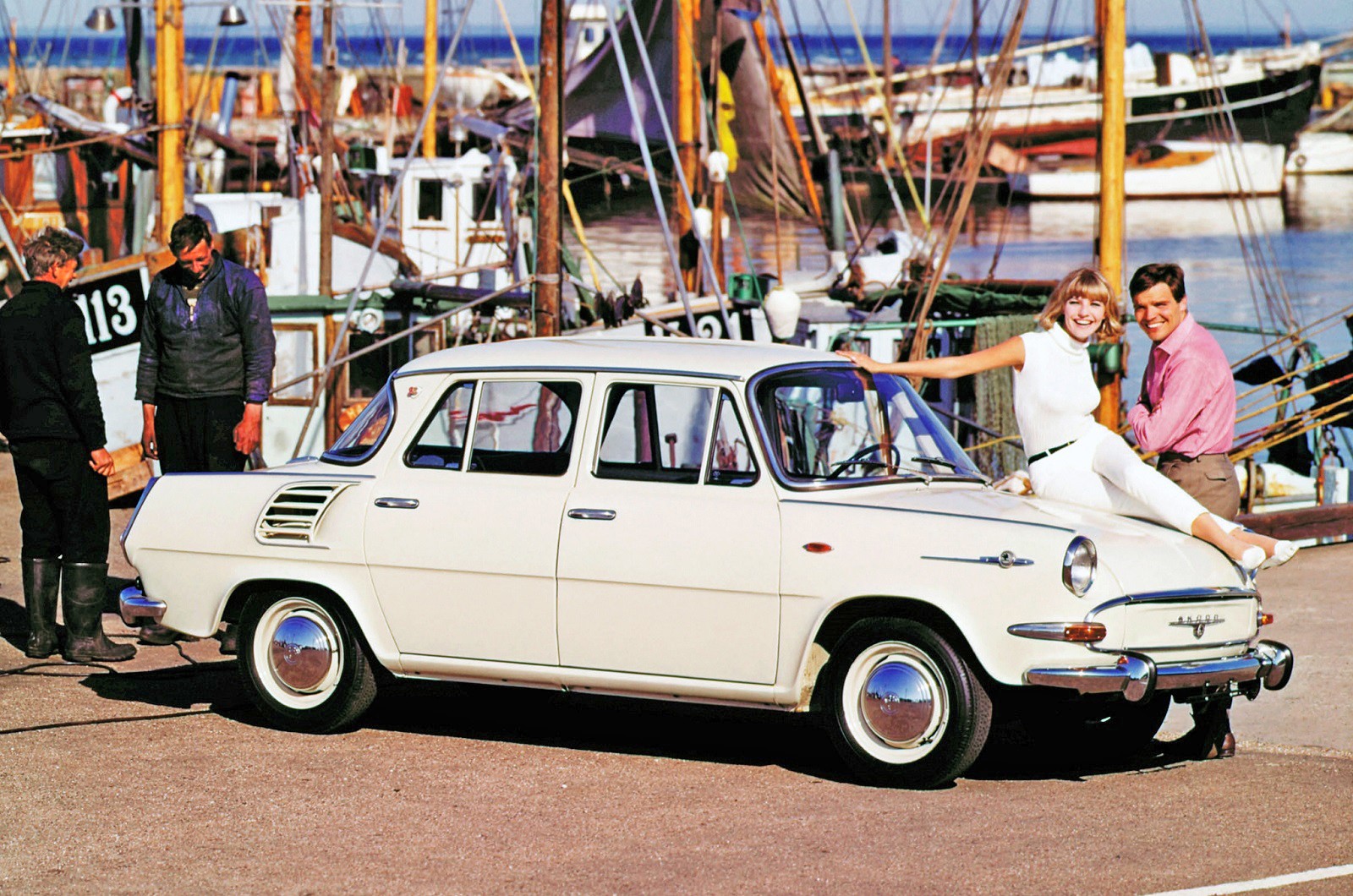
This layout dominated the 1950s. Automakers across every market segment pushed rear-mounted engines hard. They claimed moving the power unit backward cut costs. It opened up the cabin. It kept the footprint small.
Then, almost as fast as it appeared, the rear-engine era vanished. Tastes shifted. Engineering changed. We are looking back at the cars that defined this brief, noisy chapter. And why they ultimately failed.
Why did automakers choose this layout?
Weight. Cost. Packaging. These three factors drove the trend after WWII.
Fiat engineer Dante Giacosa laid it out clearly. He designed the Fiat 600 and the iconic 500. Front-wheel drive offered technical perks. It freed up floor space for the passenger compartment. But for a budget car? It was too expensive. The rear-engine arrangement saved money. That was the decisive factor.
It wasn’t just Fiat. Mainstream brands followed suit. The shift began before the 600 even debuted in 1955. But the roots go back much further.
The Czech precursors: Tatra’s aerodynamic experiments
The story starts in 1931. Czech firm Tatra built the V570 prototype. Engineers argued the rear layout reduced noise. It eliminated the bulky transmission tunnel running through the floor. The cabin got bigger. The car got quieter.
They also stretched the rear end. Aerodynamics improved. The shape mimicked a teardrop. The V570 never went into mass production. But historians point to it. Many claim it directly inspired Ferdinand Porsche.
Then came the Tatra 77 in 1934.
This wasn’t a prototype. It was a real car. Much larger than the V570. It kept the streamlined body. It kept the engine in the back. This one was air-cooled. It was an 8-cylinder setup. Power sat at 60 bhp. Later versions, the 77a, pushed 75 bhp.
Sales didn’t explode. Tatra built roughly 250 units. Production stopped in 1938. Yet it laid the foundation for Tatra’s identity. They made passenger cars until 1999. The last one? The Tatra 700. A large, four-door sedan. Air-cooled V8. Rear-engine. Just like the 77 from decades prior.
Hitler’s request and the Beetle
The most famous rear-engined car? The Volkswagen Beetle.
The request came from the top. Adolf Hitler asked engineer Ferdinand Porsche for a car. It had to be affordable. It had to be economical. It needed to put Germany on wheels.
Car ownership was low. Neighboring France owned far more vehicles. Germany needed mobility. Porsche listened. He looked at Tatra’s ideas. He applied them to a mass-market vision. The result would redefine global automotive culture. But the cost, the politics, and the eventual mechanical quirks of rear-engine dynamics would later spark a backlash.
Why the decline was so fast
The rear-engine layout had inherent flaws. Rear-wheel drive meant the car could snap sideways on wet pavement. Weight distribution was uneven. Braking under heavy load caused front-end dive, overwhelming the steering axle.
As engine technology improved, the cost gap narrowed. Front-wheel drive became more viable. Suspension tech got better. The packaging arguments weakened. Why hide the engine and complicate cooling when a transverse front layout worked fine?
Consumers wanted reliability. They wanted predictable handling. The quirky, tail-heavy behavior of older rear-engine cars felt dated. By the mid-1970s, most major manufacturers had moved on. Fiat held on the longest with the 500. Even then, it was a nostalgia play by then.
We still see the ghosts of this era. The Mini. The Beetle (in its later years). The Porsche 911, which refuses to yield to convention. But for the average commuter? The engine moved to the front. The era ended.
Is it better to have the power at the rear? Some say it offers more traction. Some say it’s fun. But for mass adoption? The front-engine car won. Quietly. Efficiently. Without the drama of a rear-end slide.
The rear-engine car remains a fascinating footnote. A time when cost and necessity trumped tradition. It was fast. It was popular. It was gone.