Most cars launched these days chase safety in numbers. They look like every other vehicle. They aim for “attractive.”
Some don’t make the cut.
That applies to a few models below. By standard metrics? Maybe failures. But they stick with us. We have to defend them. Even when no one else will.
The BMW iX
Laughter was immediate. The moment that front fascia hit the internet.
It has rabbit teeth. A gaping mouth that splits the bumper into bizarre trapezoids. It feels alien compared to the stoic “Ultimate Driving Machine” brand. People mocked it. And rightfully so?
Maybe.
But then you sit inside. The comfort is plush. Real luxury. It has an electrochromic glass roof that dims automatically. No moving parts. Plus, the Bowers & Wilkins 4D audio system punches through the cabin in ways that make you forget what it looks like.
Driving the standard xDrive40? 322bhp. Not fast off the line. But the instant torque delivery is addictive. And frankly, does it deserve those tiny chrome slits? No. Those aggressive headlights need space to breathe. We prefer this weird, polarizing look. Smaller grilles would feel dishonest here.
Renault Avantime
“Ugly.”
That word followed the Avantime from birth in 2001 until the very end. A coupe-mpv hybrid that made sense to absolutely nobody. Except us.
No one else has ever tried it again. Why not? The sheer weirdness is its power source. With that 3.0-liter V6, it looked ready to sprint. Those wing-mounted grilles suggested a track car waiting to happen. You could almost imagine a Renaultsport badge on the fender.
See it from the side? That’s the money shot. Windows dropped, silver roof contrasting the dark body. It looks fast standing still.
Renault didn’t just design a people mover. They threw a concept car at the asphalt and hoped we’d keep it. A huge risk. It failed commercially. It succeeded in soul.
Volvo 240
Bland? Sure. If you liked sharp, aggressive lines in the 80s, the Volvo 240 was boring wallpaper.
But there is a charm in its squares. It is elegantly retro. That front grille was wide. Headlights large, complete with actual headlight wipers. Side strips ran the entire length, tying it all together. Simple. Honest.
Inside, it was stark. Hard plastic. But those rocker switches? Satisfyingly heavy. Click. Retro headrests that look like little thrones.
And then the turbo.
The “Flying Brick” made 153bhp. Back then, that was rocket science. Even by today’s standards? Still peppy. Still capable. It turns boring into iconic just by being reliable enough to outlast the competition.
Daihatsu Copen
Look like a crocodile shoe. That was the internet’s consensus.
Or perhaps a shrunken Audi TT. Seen from the wrong angle? Definitely a Porsche 914 on steroids. The styling was cute, borderline kitschy. Many wrote it off.
Drive it though.
The folding electric roof disappears quickly. Behind that cute hood sits a 66hp turbocharged 3-cylinder engine. Small. Loud.
It weighs 850kg. Eight. Five. Zero.
You can throw this thing into bends that would scare a sedan owner. The chassis responds instantly. Feedback travels straight to your palms. Who cares about the sandal aesthetic? The Copen is a driving toy in a world of appliances.
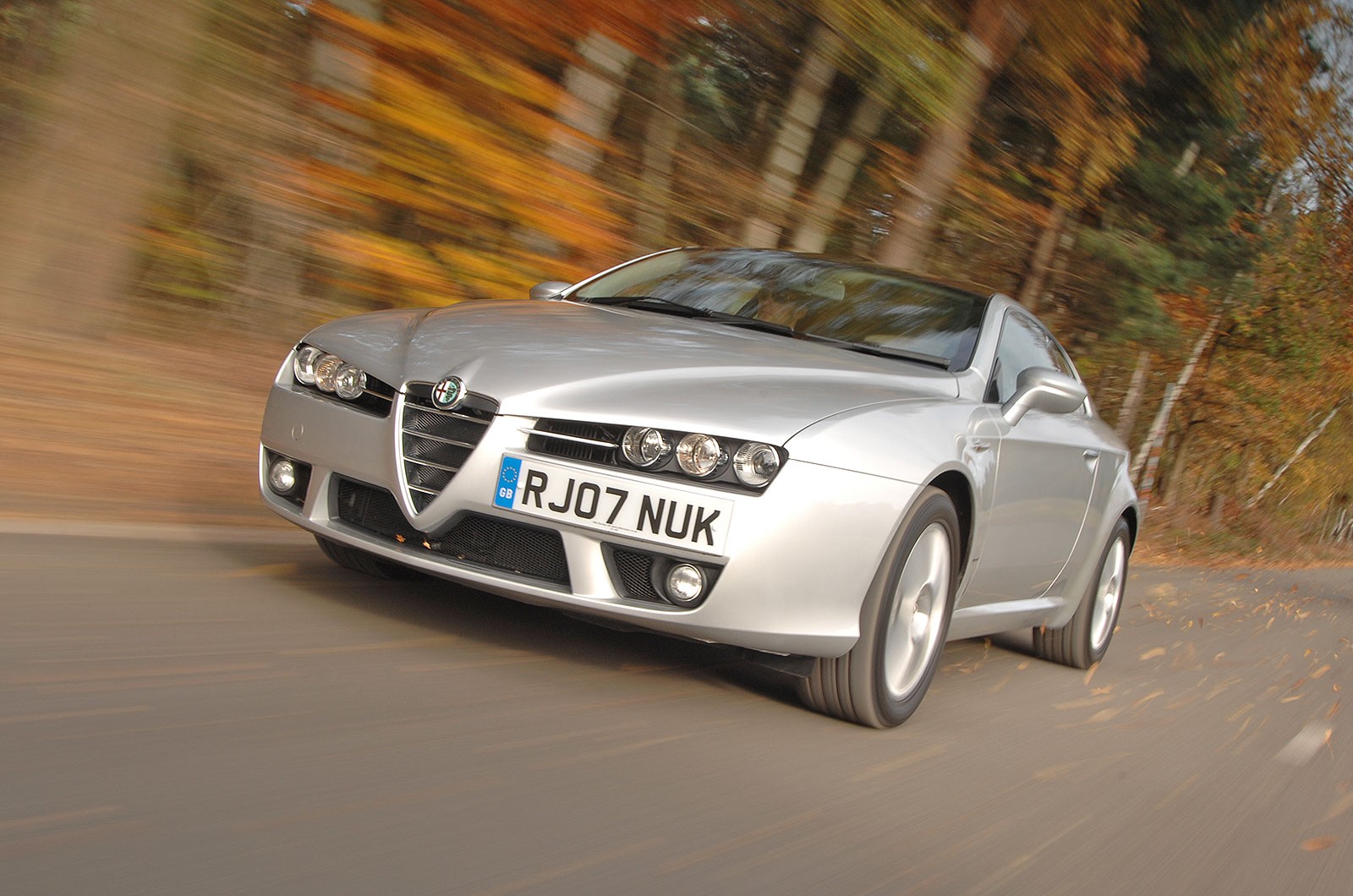
Alfa Romeo Brera
Style over substance? Usually, that phrase gets laughed out of the room.
With the Brera, we don’t laugh.
Alfa dropped a Pininfarina sculpture into a showroom and asked us to look. Curved fenders. A nose that looks like it’s mid-sneeze. It didn’t always hold its value. It didn’t always start when asked. But did any car of the last two decades look quite like this?
The interior felt like jewelry. Stitching that mattered. Gauges that looked analog art pieces rather than instruments.
Is it practical? Not particularly. Is it memorable? Absolutely. We forgive the quirks for the design alone. Why shouldn’t a car be a conversation starter instead of a spreadsheet row?
These cars prove that popularity is temporary. Taste is not. We’ll stick to the weird ones.
Until something even weirder shows up.