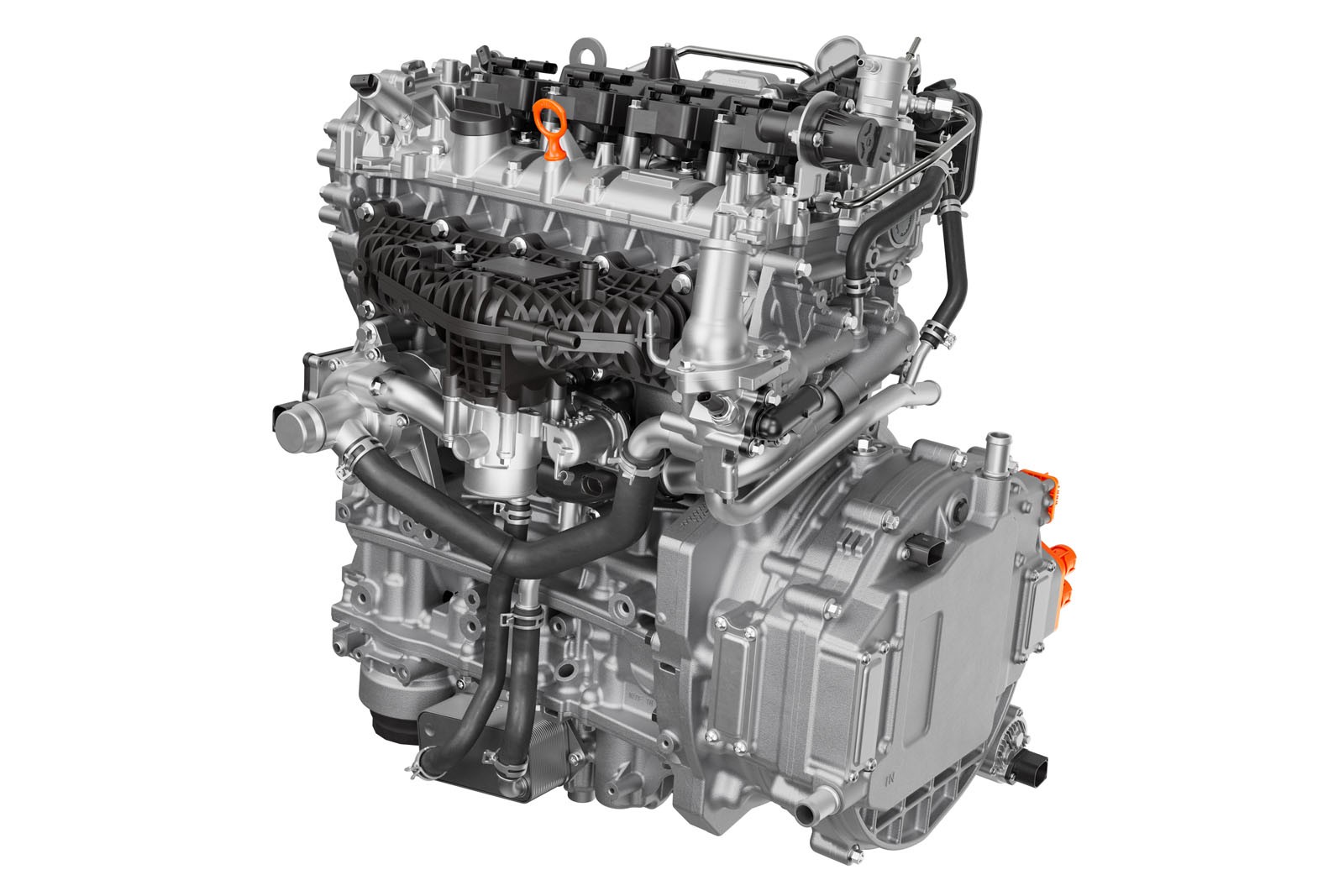
Horse Powertrain just dropped something new. A range-extender hybrid. It’s a joint venture between Geely and Renault. And it’s doing things differently.
At the heart of the system is an axial-flux electric motor. Pancake shaped. Compact.
Unlike the bulky, drum-like radial-flux motors in most EVs today, this design packs serious punch into a tiny footprint.
Horse claims this motor is 46 percent shorter than its radial counterparts. That matters. Space is tight under modern hoods. You need components that fit without screaming for room. They stuffed it into the new D20 powertrain gearbox. Easy.
The stats are noisy, though. Sixty-three percent more power for the same size. One hundred and forty-one bhp.
You see axial-flux tech elsewhere, sure. Ferrari uses it. The 296 GTb. The SF90. Lamborghini puts it in the Temerario. Even Mercedes-AMG throws three of these beasts into the new GT 4-Door Coupe. That car hits 1169 bhp. It’s wild.
Horse isn’t building hypercars. Not really. They’re chasing efficiency. Packaging. The kind of advantage that keeps fuel economy charts happy.
So, how does the D20 actually work?
Methanol is the secret sauce
It’s a hybrid, yes. But not one where the engine turns the wheels directly. That job belongs to the electric motor. The internal combustion unit? Just a generator. A very specific kind, though.
It’s a 2.0-liter naturally aspirated engine. It drinks methanol.
That word trips people up. Methanol isn’t your daily gasoline. But in China? It’s common. Geely has bet big on it. Taxi fleets run on the stuff. They even have a one-make racing series for it using the Xingyao 6 sedan.
The D20 doesn’t care about acceleration records. It cares about range. Horse says the methanol engine can fully recharge a 40-kWh battery pack. The cost? Nineteen and six-tenths liters of methanol. Roughly 4.3 gallons.
Think about that ratio for a second. Is it efficient enough? Probably better than you expect.
This isn’t about saving the world with pure EVs right now. Horse sees the electric transition as slow. Slower than manufacturers would admit. So they’re bridging the gap. Hybridisation as the practical step. Full electrification as the distant goal.
Matias Giannini, the CEO, said it bluntly. EV adoption is too far off. Decarbonization needs a solution now. An obligation to solve the immediate problem while waiting for the perfect future.
The industry moves when it moves. Horse is just rolling with whatever fuel fits best in the moment. Even if it smells a little like industrial cleaner.
Who knows. Maybe the supercar trick ends up powering the commute. Not just the track.