Car makers are ruthless about cost-cutting. They scour the globe for the cheapest suppliers to build your vehicle. The wiring harness? Low-cost producer. The seats? Cheap vendor. The instruments? Mass-produced by whoever bid lowest. You are driving a collective creation of budget components bolted together to form a complete automobile.
Manufacturers do enforce quality standards. They aren’t completely trash. But for the discerning driver, those baseline specs often fall short. That’s why enthusiasts routinely swap out Original Equipment Manufacturer (OEM) parts for better gear. We are looking at brake upgrades today. We’ll cover why you’d do this. We’ll look at the parts you’ll replace. And we’ll map out the types of upgrades available.
“Higher-quality brake parts can last longer, decrease stopping distance, perform better under extreme conditions and, as a result, improve your vehicle’s safety.”
The politically correct reason for upgrading brakes is performance. Simple. High-end components last longer. They cut down stopping distance. They handle heat better when you’re pushing hard. This improves safety. Naturally, there’s an aesthetic angle too. If you want to show off without screaming for attention, nothing says subtle performance like big, vented rotors peeking out from behind custom rims. It’s a quiet flex.
But here is the reality check. The most important high-performance brake part is your own good judgment. Maybe you can haul 60 mph (97 kph) down to zero in 50 yards (46 meters). That’s impressive. It doesn’t mean you should treat city streets like a private racetrack. Brake upgrades give you an extra margin of safety. That margin might be the only thing standing between you and a catastrophe in a driving emergency.
You can make your car go faster than the factory intended. That’s fun. But you need to be able to stop it just as quickly. Steel and rubber have mass. You need to arrest that motion in a jiffy. To find out about performance brake upgrades, go to the next page.

Typical OEM brakes are engineered for the mundane. They handle the morning commute, the grocery run, and the drive to soccer practice. They are not built for chaos.
If you’ve added power, you need more stopping power. Nitrous. Turbochargers. Superchargers. Engine swaps. Or just living in a place where the road goes down a lot and doesn’t come back up. Stock stoppers simply can’t handle the thermal load. They get overwhelmed.
The result is brake fade. It’s a familiar enemy for anyone who has pushed a car past its limits. When you hit the pedal, the calipers clamp down. They take the kinetic energy of your moving vehicle and convert it to thermal energy. Heat.
Under prolonged stress, that heat builds up. The brakes lose effectiveness. You press the pedal harder. It feels spongy or unresponsive. You’re descending a steep mountain pass, and the car isn’t slowing down as fast as it should. This is the point where stock hardware fails.
The Heat Problem
Performance brake upgrades exist to manage that heat. Standard equipment dissipates it poorly. Upgraded systems move air and shed temperature more efficiently.
Let’s break down the specific components that make up a high-performance braking system.
Braided Stainless Steel Lines
Enthusiasts love braided stainless steel brake lines. The steel casing reduces flex compared to standard rubber hoses. The result is a firmer pedal feel. The feedback is direct.
But there is a catch.
Safety is a valid concern with these lines. If they aren’t replaced regularly or if debris gets into the weave, they can fail. Catastrophic failure means no brakes. If you go this route, buy from a reputable supplier. Look for lines with a polyurethane outer jacket. It prevents chafing. It protects the steel braid.
Drilled and Slotted Rotors
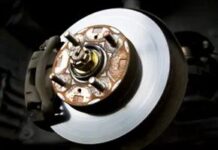
Cross-drilled and slotted rotors moved from the track to the street. They serve a specific purpose: airflow.
The holes and slots increase surface area. They allow air to pass over and away from the rotor. The moving air carries heat away from the disc. That helps prevent brake fade during sustained use.
However, quality varies wildly. Many enthusiasts report that drilled and slotted rotors wear out faster than heavy-duty smooth rotors. Why?
- Inferior materials.
- Structural compromise.
The perforations and gouges weaken the metal. Under high stress, the rotor is more likely to warp or crack. A cracked rotor is a dangerous failure point. Smooth rotors don’t have this weakness. They are often more durable for street use.
Pads and Calipers
You can upgrade pads and calipers. There are countless options. But it’s easy to overspend. You don’t need a full race-spec ensemble for daily driving.
How do you know what fits your needs? It depends on the application.
- Street/Weekend Warrior: A smooth or slotted rotor with performance pads is sufficient. You get better stopping power without sacrificing too much pad life.
- Track Day/Race Car: You need a robust package. High-temperature pads, larger calipers, maybe vented rotors.
There is a trade-off. Racing brake pads bite aggressively. They grab hard. On a track, that’s good. On the street, they wear out your rotors quickly. They can also be noisy and dust-heavy.
“Racing brake pads can ‘bite’ so aggressively that they quickly wear out your rotors in daily driving.”
Seek advice on enthusiast forums. Real-world data beats marketing brochures every time.
Drum to Disc Conversions
Some vehicles, especially older or heavier models, still use rear drum brakes. They are less effective than disc brakes. They fade faster. They are harder to cool.
If your truck or SUV has drums in the back, look for a rear disc conversion kit. You remove the factory drums. You install discs. The braking balance improves. The cooling capacity increases. It’s a cheap way to double your stopping power on the rear axle.
Truck Brake Upgrades
Should you bother upgrading brakes on a truck or SUV?
These vehicles are heavier. They carry more mass. They tow more weight. Inertia is the enemy of stopping distance.
A stock SUV might stop fine in the suburbs. But add a trailer. Or load it with gear. Or drive it down a long grade. The stock brakes will struggle. They will overheat. They will fade.
Upgrading the braking system on a heavy vehicle isn’t just about speed. It’s about control. It’s about ensuring that when you need to stop, the vehicle actually obeys.
The Physics of Stopping Power
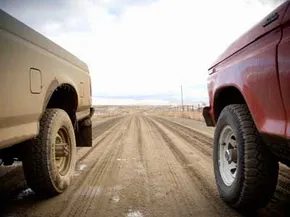
Most factory brakes on trucks and SUVs are an afterthought. They are small. They are underpowered. You can deck out your ride with chrome rims, oversized tires, and aggressive brush guards, but that stuff doesn’t help you stop. It just makes you look mean while you slide down the mountain.
Upgrading your braking system is one of the few modifications that actually improves functionality. It’s not about style. It’s about physics.
The core issue is leverage. Truck and SUV rotors are relatively small in diameter. When you pair them with heavy wheels and a massive vehicle frame, the calipers struggle. They don’t have enough mechanical advantage to slow down the rotational mass effectively. The result? Longer stopping distances. Less reaction time. Higher risk.
“A set of upgraded brakes will actually add to the vehicle’s functionality and safety.”
This is especially true if you’ve tuned your engine. If you’ve added power to make the truck faster, you need to manage that speed. You can’t accelerate harder than you can brake. That’s a recipe for disaster.
Off-Road Durability
SUVs rarely leave the pavement. But when you do, the environment gets nasty. Jutting boulders. Snagging logs. Debris that tears through standard rubber lines.
That’s where braided stainless steel brake lines come in. These weren’t invented for trail runners. They were designed for racecars. Tracks are filled with jagged debris. Rubber lines get severed. Steel-sheathed, Teflon-lined hoses hold up. They resist swelling under pressure and don’t burst on impact.
If you’re driving off-road, your undercarriage is taking a beating. A braided stainless steel brake line reduces the worry of a catastrophic brake failure caused by a stray rock. It’s insurance against the terrain.
Big Brake Upgrades
When the standard pads and rotors aren’t cutting it, you look at big brake upgrades. This isn’t just about slapping on bigger calipers for aesthetic reasons. It’s about heat dissipation and clamping force.
Bigger rotors increase the leverage point. More surface area means better cooling. Better cooling means consistent performance. You stop fading when you’re hauling heavy loads or climbing steep grades.
Which components matter most? Calipers. Rotors. Pads. The fluid.
Cooling and Fluid Management
Brakes generate heat. Massive amounts of heat. If that heat isn’t managed, the brake fluid boils. Once fluid boils, you get vapor lock. The pedal goes to the floor. You’re done.
Upgraded brakes often include vented rotors. They pull air through the hat and out the vanes. This keeps temperatures down. Some setups even add cooling ducts. Direct air to the rotors.
And the fluid? Don’t stick with DOT 3 or basic DOT 4. Use a high-performance synthetic fluid with a high boiling point. It’s cheap insurance.
Weight Reduction
Rotating mass is the enemy. Every ounce on the wheel is four times as heavy as an ounce on the chassis. Heavier wheels spin up slower. They slow down slower. They soak up energy.
Upgrading to lighter alloy wheels helps. Lighter rotors help. Less unsprung weight means the suspension can react faster. The tires stay in contact with the ground
Size usually doesn’t win awards in the automotive world. In fact, smaller is often sleeker. But when you hit the pedal, physics changes the rules. Larger brakes work because surface area dictates stopping power. More pad material biting into the rotor means shorter distances to zero velocity. It’s not magic. It’s geometry.
The bigger issue is heat. Friction generates insane amounts of thermal energy. Small brakes cook. Cooked brakes fade. Faded brakes don’t stop you. Large discs and oversized pads disperse that heat faster. They stay cool. They keep working. This is why high-performance kits exist. They aren’t just for show. They are thermal management systems.
Checking Wheel Clearance Before Buying
Before you spend hundreds on a big brake kit, look at your wheels. Factory rims often lack the internal depth to clear large calipers. You will hit the rotor. Or worse, the caliper will touch the rim. The kit description will list a minimum wheel diameter. This number is for the steel rim only. It ignores the tire sidewall.
You need to check specific clearances.
- Caliper-to-Rim: Is there enough gap?
- ABS Compatibility: Do the sensors align?
- Spacer Options: Can you add spacers if space is tight?
If your stock wheels are too small, you need new ones. Or a different brake kit. Don’t guess. Measure.
DIY Installation Risks
Can you install them yourself? Yes. You need tools. You need safety gear. The process is straightforward if you know what you’re doing. But old brakes are dangerous. Dust from pre-1980s pads contained asbestos. Asbestos fibers are microscopic. They lodge in lungs. They cause mesothelioma. If you are working on older cars, wet the dust down. Use a respirator.
Brake fluid is also caustic. It eats paint. It strips clear coat. If you spill fluid on your fender, wash it immediately. Do not let it sit.
The goal isn’t just stopping. It’s stopping consistently. Heat resistance matters more than initial bite for track use. For street driving, better heat dissipation prevents fade during heavy braking. That’s the real advantage.
Related Articles
- How Brake Pads Work
- How Brake Shims Work
- How Backing Plates Work
External Resources
- Edmunds.com
- Asbestos.com: Automotive Brakes and Mesothelioma
- Jalopnik: Bleed The Brakes
- AutoMedia: Performance Brakes
- AutoMedia: Brake Upgrade Tech Tips
- Bentley Publishers: Civic Duty