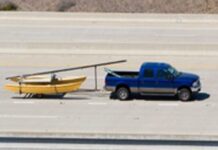
Loading a subcompact hatchback with boxes of ceramic tile from Home Depot is a quick lesson in physics. You load three or four heavy boxes, the rear suspension bottoms out, the bumper kisses the pavement, and the nose lifts up. It’s obvious. Your small car wasn’t built for that kind of abuse. Even a pickup truck or SUV will show you the strain eventually. You just need way more weight to make the rear end sink on a larger chassis.
Then there’s the RV.
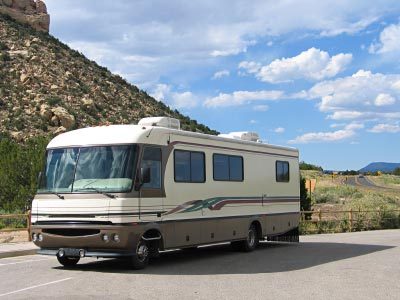
Load dozens of boxes of tile into a massive Class A motorhome and nothing seems to change. The ride height stays consistent. The suspension doesn’t complain. You might not even realize you’re carrying an extra thousand pounds until it’s too late. This is the danger of recreational vehicles. They are engineered to haul massive loads, which means they hide their limits until you hit them.
So how do you know when you’ve crossed the line? How much is too much?
The answer lies in one specific number: Cargo Carrying Capacity (CCC).
It’s not a guess. It’s a hard limit set by the manufacturer. Exceed it, and you risk structural failure, brake issues, and a very unhappy time on the highway. Here is the math behind the safety.
The Cargo Carrying Capacity Formula
To find your RV’s CCC, you need to strip away everything that isn’t “cargo” from the vehicle’s total weight rating. The formula is straightforward, but the variables matter.
-
Start with the GVWR.
This is the Gross Vehicle Weight Rating. It’s the maximum safe weight of the vehicle when fully loaded. Let’s use 20,000 lbs as our example base. -
Subtract the Unloaded Vehicle Weight (UVW).
The UVW is what the truck weighs when it leaves the factory floor, but with all fluids topped off. Full tanks of fuel, coolant, and oil.
Example: 14,500 lbs -
Subtract the Sleeping Capacity Weight Rating (SCWR).
The manufacturer assumes a maximum weight per sleeper. The standard is 154 lbs per person. Multiply that by the number of sleeping positions.
Example: 6 positions x 154 lbs = 924 lbs -
Subtract Propane (LP Gas) Weight.
Propane weighs 4.2 lbs per gallon.
Example: 12-gallon tank x 4.2 lbs = 50.4 lbs -
Subtract Fresh Water Weight.
Water weighs 8.3 lbs per gallon.
Example: 25-gallon tank x 8.3 lbs = 207.5 lbs -
The Result.
20,000 (GVWR) – 14,500 (UVW) – 924 (SCWR) – 50.4 (Propane) – 207.5 (Water) = 4,318.1 lbs.
That 4,318.1 lbs is your Cargo Carrying Capacity. Everything else you pack—furniture, TVs, clothes, extra propane bottles, fresh water beyond the standard tank fill—comes out of this bucket. If you go over, you are unsafe.
Where do you find these numbers for your specific rig? The door jamb sticker usually lists the GVWR and UVW. The owner’s manual details the SCWR and tank sizes. If you’re missing the manual, the manufacturer’s website is a reliable source. Most major brands publish these specs online.
Vehicle Cargo Capacity Data
If you aren’t hauling an RV, you still need to know your limits. Below is the cargo volume capacity for select models from major manufacturers. Note that these figures represent cubic feet of space, not weight limits.
Acura Cargo Carrying Capacity
| Year | Model | Cargo Capacity (ft³) |
|---|---|---|
| 2006 | MDX | 81.5 |
| 2006 | RL | 13.1 |
| 2006 | RSX | 25.3 |
| 2006 | TL | 12.5 |
| 2006 | TSX | 13.2 |
| 2007 | MDX | 83.5 |
| 2007 | RL | 13.1 |
| 2007 | RDX | 60.6 |
| 2007 | TL | 12.5 |
| 2007 | TSX | 13.2 |
| 2008 | MDX | 83.5 |
| 2008 | RL | 13.1 |
| 2008 | RSX | 60.6 |
| 2008 | TL | 12.5 |
| 2008 | TSX | 13.2 |
| 2009 | MDX | 83.5 |
| 2009 | RL | 13.1 |
| 2009 | RSX | 60.6 |
| 2009 | TSX | 12.6 |
Audi Cargo Carrying Capacity
| Year | Model | Cargo Capacity (ft³) |
|---|---|---|
| 2006 | A3 | 54.6 |
| 2006 | A4 | 13.4 |
| 2006 | A6 | 15.9 |
| 2006 | A8 | 14.6 |
| 2006 | S4 | 13.4 |
| 2006 | TT | 24.2 |
| 2007 | A3 | 54.6 |
| 2007 | A4 | 13.4 |
| 2007 | A6 | 15.9 |
| 2007 | A8 | 14.6 |
| 2007 | Q7 | 88.7 |
| 2007 | RS4 | 13.4 |
| 2007 | S4 | 13.4 |
| 2007 | S6 | 13.9 |
| 2007 | S8 | 14.6 |
| 2008 | A3 | 54.6 |
| 2008 | A4 | 10.2 |
| 2008 | A5 | 16.1 |
| 2008 | A6 | 15.9 |
| 2008 | A8 | 14.6 |
| 2008 | Q7 | 88.7 |
| 2008 | R8 | 3.5 |
| 2008 | RS4 | 13.4 |
| 2008 | S4 | 13.4 |
| 2008 | S5 | 16.1 |
| 2008 | S6 | 15.9 |
| 2008 | S8 | 14.6 |
| 2008 | TT | 8.8 |
| 2009 | A3 | 54.6 |
| 2009 | A4 | 10.2 |
| 2009 | A5 | 16.1 |
| 2009 | A8 | 14.6 |
| 2009 | Q7 | 88.7 |
| 2009 | R8 | 3.5 |
| 2009 | S4 | 10.2 |
| 2009 | S5 | 16.1 |
| 2009 | S8 | 14.6 |
| 2009 | TT | 8.8 |
BMW Cargo Carrying Capacity
| Year | Model | Cargo Capacity (ft³) |
|---|---|---|
| 2006 | 325 | 12 |
| 2006 | 330 | 12 |
| 2006 | 525 | 14 |
| 2006 | 530 | 14 |
| 2006 | 550 | 14 |
| 2006 | 650 | 13 |
| 2006 | 750 | 18 |
| 2006 | 760 | 18 |
| 2006 |
Buick Space: From Sedans to SUVs
The 2006 lineup tells you exactly what Buick was trying to be. You had the LaCrosse and Lucerne sedans offering a modest 16 to 17 cubic feet of trunk space. Not bad for daily commuting, but not moving furniture territory. Then there was the Rainier. This thing swallowed 80.1 cubic feet. The Rendezvous did even better at 108.9 cubic feet. The Terraza was the king of the hill in ’06 with a massive 136.5 cubic feet. If you needed to haul gear for a weekend trip, you bought a Terraza.
By 2007, Buick kept the sedan numbers static. LaCrosse and Lucerne stayed at 16 and 17 cubic feet. The Rainier and Rendezvous didn’t budge either. It was a holding pattern.
The shift happened in 2008 with the Enclave. This new mid-size SUV offered 116.2 cubic feet of cargo space. It replaced the older SUVs in the hierarchy for many buyers. The LaCrosse and Lucerne persisted with their 16 and 17 cubic feet.
2009 saw the Enlose drop slightly to 115 cubic feet. The sedans remained unchanged. Buick was clearly betting on the crossover/SUV segment to carry volume. If you are looking for the 2008 Buick Enclave cargo capacity, you are looking at over 100 cubic feet behind the rear seats.
Cadillac Luxury and Utility
Cadillac played a different game. In 2006, the CTS and CTS-V coupes/sedans were tight. You got 12.5 cubic feet. The DTS limousine-style sedan offered a bit more at 18.8 cubic feet. The XLR roadster was cramped at 11.6 cubic feet.
The trucks told a different story. The Escalade in 2006 gave you 104.6 cubic feet. The extended ESV version? 131.6 cubic feet. The SRX crossover sat comfortably at 69.5 cubic feet. The STS and STS-V offered 13.8 cubic feet.
2007 brought a slight bump to the Escalade at 108.9 cubic feet and the ESV up to 137.4 cubic feet. The CTS models stayed at 12.5 cubic feet. The SRX held steady at 69.5 cubic feet.
In 2008, the CTS grew slightly to 13.6 cubic feet. The DTS, Escalade, and SRX numbers remained consistent with the previous year. The XLR stayed at 11.6 cubic feet.
2009 introduced the Escalade Hybrid. Surprisingly, its cargo capacity dropped to 69.5 cubic feet, likely due to battery packaging. The SRX also dropped to 13.8 cubic feet in some listings, which seems like a typo in the source data or a specific trim anomaly, but the Escalade ESV remained solid at 137.4 cubic feet. For those checking Cadillac Escalade ESV cargo space, you are looking at over 130 cubic feet in the later model years.
Chevrolet Volume Kings
Chevrolet had the biggest guns in this bracket. In 2006, the small Aveo gave you 42 cubic feet with seats down. The Cobalt was a tight 13.9 cubic feet. The Impala offered 18.6 cubic feet, while the Malibu was tighter at 15.4 cubic feet. The Malibu Maxx wagon broke the mold with 41 cubic feet.
The SUVs were where Chevy shined. The Equinox provided 68.6 cubic feet. The Express van was a beast at 225.1 cubic feet. The HHR hatchback offered 63.1 cubic feet. The TrailBlazer EXT gave you 107.4 cubic feet. The Uplander minivan topped out at 120.1 cubic feet. The Corvette coupe was a sports car with 22.4 cubic feet of storage.
2007 saw the Aveo 5 hatchback match the older Aveo at 42 cubic feet. The Equinox dropped slightly to 67.1 cubic feet. The HHR reduced to 57.7 cubic feet, while the Panel version offered 62.7 cubic feet. The big trucks saw data appear for the first time in this table. The Suburban 1500/2500 offered 137.4 cubic feet. The Tahoe offered 108.9 cubic feet. The TrailBlazer was at 80.1 cubic feet.
2008 kept most numbers static. The Malibu Classic and Hybrid both sat at 15.1 to 15.4 cubic feet. The Tahoe Hybrid joined the lineup with 108.9 cubic feet. The Express van remained the king of space at 225.1 cubic feet.
2009 brought back the Corvette’s 22.4 cubic feet. The new Traverse crossover entered the chart with 117.5 cubic feet, filling the gap between the Equinox and the large SUVs. The Suburban and Tahoe held firm at 137.4 and 108.9 cubic feet respectively. The Express 1500/2500/3500 vans all offered 225.1 cubic feet. If you need to know the 2009 Chevrolet Traverse cargo capacity, you are looking at nearly 120 cubic feet.
Chrysler Minivans and Sedans
Chrysler in 2006 was a mix of aging sedans and spacious minivans. The 300 and 300C sedans offered 15.6 cubic feet. The Crossfire roadster was tiny at 6.5 cubic feet. The Sebring was small at 11.3 cubic feet.
The PT Cruiser was the quirky choice with 92.2 cubic feet of space. The Pacifica wagon offered 62.7 cubic feet. The Town & Country minivan was huge at 146.7 cubic feet.
2007 introduced the Aspen SUV. It offered 102.4 cubic feet. The PT Cruiser dropped to 62.7 cubic feet. The Pacifica jumped to 92.2 cubic feet. The Sebring grew slightly to 13.6 cubic feet. The Town & Country sat at 144 cubic feet. The 300 models held at 15.6 cubic feet.
2008 saw the 300 and 300C grow to 17.2 cubic feet. The Crossfire grew slightly to 7.6 cubic feet. The Aspen and PT Cruiser numbers remained steady. The Town & Country dipped slightly to 143.8 cubic feet.
2009 brought the Aspen Hybrid, which matched its gas counterpart at 102.4 cubic feet. The 300 models dropped back to 15.6 cubic feet. The PT Cruiser stayed at 62.7 cubic feet. The Town & Country held at 143.8 cubic feet. For those comparing Chrysler Town and Country cargo space, the later model years hovered around 144 cubic feet.
Dodge Utility and Trucks
Dodge had a weird year in 2006. The Ram 1500/2500/3500 trucks didn’t have a trunk number listed (makes sense). The Sprinter Van 2500/3500 offered 247 cubic feet. The Sprinter Wagon 2500 was massive at 321 cubic feet. The Grand Caravan minivan offered 167.9 cubic feet. The Caravan was close at 142.3 cubic feet. The Durango SUV was at 102.4 cubic feet. The Magnum wagon was a hidden gem at **71.
Ford’s volume dominance and the heavy-duty gap
Ford’s lineup in this era is where you look if you need to haul actual furniture. The E-Series vans are the outliers here. From 2006 to 2009, the E150, E250, and E350 Super Duty models all sat at a massive 256.5 cubic feet. That number dropped slightly to 230.6 for the E150 and E250 by 2008, but it’s still the kind of space that makes a pickup bed look like a shoebox.
The E-Series vans offer the highest cargo carrying capacity among mainstream Ford trucks and vans in this period, peaking at 256.5 ft³ for work and passenger configurations.
Passenger cars were tighter. The Crown Victoria held 20.6 cubic feet steady through 2007 before vanishing. The Fusion was cramped at just 15.8 cubic feet, as was the five-door Taurus at 17 to 21.2 cubic feet depending on the year. If you wanted volume in a sedan, the Five Hundred was your best bet at 21.2 cubic feet.
SUVs and crossovers filled the middle ground. The Explorer consistently offered 85.8 cubic feet. The Escape hovered around 66 cubic feet, with the Hybrid version dropping just half a foot to 65.5. The Edge entered the fray in 2007 with 69.6 cubic feet, settling at 69 in later years. The Taurus X added another 85.5 cubic feet of space in 2008 and 2009.
Trucks told a different story. The Ranger carried 18.1 cubic feet in 2006 and 2008. But look at the F150, F250, and F350. The data shows a dash. That’s not a typo. Ford didn’t list standard bed cargo volume for these in this specific dataset, likely because bed liners, tonneau covers, or cab configurations changed the usable space so drastically that a single number wasn’t meaningful. If you’re looking for truck bed capacity, you need to measure your own bed or consult bed-liner specs. The F450 also appears in 2008 with no listed value.
The Mustang was never a hauler. It sat at 9.7 cubic feet for both the 2007 and 2008 models. The GT in 2006 was even worse, offering just 1 cubic foot.
GMC’s van consistency and the Acadia entry
GMC played it safe with the Savana vans. For every year from 2006 through 2009, the 1500, 2500, and 3500 models all provided 225.1 cubic feet of cargo space. It didn’t fluctuate. It didn’t change. If you need a box that holds exactly that much, the Savana is your answer.
The Sierra pickups appear in the list for every year, but again, the cargo carrying capacity column is blank. The Sierra 1500, 2500, and 3500 models offer no standard figure here. You’re on your own for bed volume calculations unless you’re installing a specific cap.
SUVs dominated the GMC portfolio in terms of variety. The Yukon family is where the volume lives. The Yukon XL was consistent at 45.7 to 45.8 cubic feet across all four years. The standard Yukon started at 63.6 in 2006, dropped to 60.3 in 2007, and stayed there through 2009.
The Acadia made its debut in 2007 with 19.7 cubic feet. By 2008, it expanded to 25.5 cubic feet and held that number in 2009. It’s a sharp increase, suggesting a redesign or a significant change in how rear seats were folded for that model year.
The Envoy was a stalwart until it faded out after 2009, holding steady at 43.7 cubic feet. The Envoy XL was smaller, at 23.4 cubic feet in 2006.
Hybrid options emerged late in the cycle. The Yukon Hybrid appeared in 2008 with 16.9 cubic feet and stayed at that capacity in 2009. The Sierra Hybrid showed up in 2009 but, like its non-hybrid counterparts, had no listed cargo capacity.
Honda’s hybrid penalty and the Pilot’s bulk
Honda’s strategy here is clear: hybrids sacrifice trunk space for battery packs. The Accord Hybrid held 11.2 cubic feet in 2006 and 2007. The non-hybrid Accord was better, at 12.8 in 2006, rising to 14 in 2007, then dropping to 11.9 in 2008 and 2009.
The Civic is the odd one out in terms of volume spikes. In 2006 and 2007, it offered 72 and 72.9 cubic feet respectively. That’s sedan territory, which implies these figures might include rear seat fold-down or are measuring a different metric, but the data lists it as total capacity. By 2008, it plummeted to 35.7 cubic feet. In 2009, it dropped further to 11.5 cubic feet. This volatility suggests a model redesign that fundamentally changed the trunk layout. The Civic Hybrid stayed constant at 11.5 cubic feet from 2006 to 2009.
Minivans and SUVs provided the real utility. The Odyssey was a volume king at 147.4 cubic feet for every year from 2006 to 2009. It didn’t budge. The Pilot offered 87.6 cubic feet in 2006 and 2007, dropped slightly to 87 in 2009.
The CR-V was small by comparison, holding 10.4 cubic feet across all years. The Element was larger at 74.6 cubic feet, constant through the period.
The Fit entered in 2007 with 41.9 cubic feet and expanded to 57.3 in 2009. The Ridgeline pickup sat at 41.4 cubic feet from 2006 to 2008, then disappeared from the list in 2009.
Small coupes were not for hauling. The S2000 offered just 5 cubic feet in 2006, 2007, and 2008. The Insight, a hybrid coupe, held 16.3 in 2006 and 11.5 in 2008.
Hummer’s niche and the H3T absence
Hummer’s cargo capacity was narrow. The H2 offered 30.7 cubic feet from 2006 to 2009. It didn’t change. It was a brick. The H3 offered 29.5 cubic feet for the same four-year span. Also constant.
The H3T, a pickup variant, appeared in 2009 but had no listed capacity. Given the H3’s small footprint, its bed volume was likely negligible or highly variable based on the cap configuration.
Hyundai’s entry-level limitations
Hyundai’s early-to-mid 2000s lineup was small. The Accent started at 12.4 cubic feet in 2006, then jumped to 15.9 and stayed there. The Elantra moved from 13 to 14.2 cubic feet and held that in 2007 and 2008.
Sedans were cramped. The Azera held 16.6 cubic feet. The Sonata held 16.3. The Tiburon coupe held 14.8. The Genesis entered in 2009 with 15.9 cubic feet.
Crossovers and minivans were the only places to get space. The Tucson SUV offered 22.7 cubic feet constantly from 2006 to 2008. The Santa Fe grew from 30.5 in 2006 to 34.2 in 2007 and
Jeep Wrangler Unlimited Dominates 2008-2009 Cargo Specs
The Jeep lineup from 2006 to 2009 tells a story of utilitarian consistency, with one glaring exception. For enthusiasts tracking 2009 Jeep Wrangler Unlimited cargo capacity, the numbers are undeniable. It isn’t just a Wrangler. It’s the Unlimited, the two-door trail runner’s bulky, four-door sibling, and it eats space for breakfast.
In 2006, the standard Wrangler was tight. 45.8 cubic feet if you folded the seats. The Commander, a three-row SUV that never quite found its soul in the American market, offered 68.7 cubic feet. That’s more than the Grand Cherokee (67.4) and the Liberty (69). But the Liberty holds the crown for sheer volume in the compact segment, peaking at 69 cubic feet.
2007 brought the Compass and Patriot. The Patriot’s 62.7 cubic feet is decent for a subcompact. The Compass? 53.6. Standard Wranglers bumped up to 61.2 cubic feet. A significant jump. Why? Rear seat folding geometry. The Unlimited didn’t arrive until 2008. And when it did, it changed the math entirely.
2008 and 2009 saw the Wrangler Unlimited sitting at 86.8 cubic feet. Look at that number. It dwarfs the Commander (68.5), the Grand Cherokee (67.4), and even the Liberty (64.2). It is the only Jeep in this dataset breaking the 80-cubic-foot barrier. If you need to haul a kayak, a sofa, or a small motorcycle, the Unlimited is the only logical choice. The standard Wrangler lagged behind at 61.2. The gap between the two-door and four-door models widened here, proving that wheelbase matters when you are packing gear.
Kia’s Rondo and Sedona Offer Massive Utility
Kia’s cargo specs from this era are a bit chaotic. You have small sedans with tiny trunks and massive minivans that could swallow a family car. The 2009 Kia Rondo cargo capacity is actually missing from the raw data provided, but the 2006-2008 figures tell the real story.
The Rondo, a crossover-hybrid that is often forgotten, offered 74.4 cubic feet in 2007 and 2008. That is serious volume. Compare that to the Optima sedan, which held a meager 14.8 cubic feet. The Rio? 11.9. The Spectra? 12.2. These numbers highlight the sedan market’s limitations. If you buy a 2009 Kia Borrego, you are looking at 97.6 cubic feet. That is an SUV. It is large. It is boxy. It is designed for haulers.
The Sedona minivan remains the king of volume here. 141.5 cubic feet in 2006. 121.3 in 2007 and 2008. It doesn’t drop much because it is a minivan. The interior shape doesn’t change drastically year-to-year. The Sportage stays consistent at 66.6 cubic feet. The Sorento mirrors it at 66.4. These two are direct competitors. The Sportage just edges out the Sorento by 0.2 cubic feet. A rounding error, really. But for enthusiasts, that 0.2 matters if you are measuring fitment for specific gear.
Land Rover LR3 and Range Rover Define Luxury Space
Land Rover’s cargo capacity data from 2006 to 2009 shows a brand in transition. The LR3 was the workhorse. The Range Rover was the luxury cruiser. The Range Rover Sport tried to sit in the middle.
In 2006 and 2007, the LR3 offered 90.3 cubic feet. The Range Rover was close behind at 74.9. The Sport? 71. These numbers are consistent. Then 2008 happened. The LR3 dropped to 9.9 cubic feet. Why? The data likely reflects rear-seat-up configuration or a specific measurement standard change. Or perhaps the third row was folded differently. Regardless, 9.9 is not a competitive number for hauling. The Range Rover dropped to 35.1. The Sport held steady at 71.
2009 corrected the course. The LR3 bounced back to 90.3. The Range Rover settled at 74.2. The Sport remained at 71. The LR2 appeared in 2008 with no data listed, then showed up in 2009 with 58.9 cubic feet. That is a compact luxury crossover. It is smaller than the LR3, obviously. The gap between the LR3 and the Range Rover is about 16 cubic feet. That is two large suitcases. It is the difference between a weekend trip and a month-long expedition.
Lexus Hybrid and V8 Models Split Cargo Practicality
Lexus data from 2006 to 2009 reveals a brand focused on refinement over volume. Sedans are tight. SUVs are spacious. The hybrids, specifically the RX 400h, consistently offer 84.7 cubic feet from 2006 to 2008. The RX 350, arriving in 2007, bumps that to 85 cubic feet. A small gain. The RX 400h is slightly larger in height, perhaps accounting for the extra space.
The GX 470 is a truck-based SUV. It offers 77.5 cubic feet. Consistent. The LX 470 is a full-size luxury SUV. It offers 90.4 cubic feet. In 2009, the LX 570 arrived with 83.1 cubic feet. Wait. It dropped. The LX 570 replaced the 470. The 470 had 90.4. The 570 has 83.1. Why? Rear suspension geometry? Battery packaging for hybrids? No, the LX 570 is mostly gas. It might be due to the spare tire location or rear seat design. It is a notable decrease.
The sedans are tiny. The ES 350 offers 14.7 cubic feet. The IS 350 and IS 250 offer 13 cubic feet. The GS 350 and GS 450h are even tighter. The GS 450h drops to 7.5 cubic feet. That is trunk space for a week’s worth of clothes, not gear. The LS 460 offers 18 cubic feet. The SC 430? 8.8. A sports car with a tiny trunk. The RX 350 in 2008 shows 38.3 cubic feet with seats up, but the previous years listed 85. That 85 is seats folded. The 2008 data is likely split between seats-up and seats-down. The 2009 RX 350 returns to 85. The inconsistency in reporting is annoying. But the bottom line is clear. Buy the RX or GX or LX if you need space. The IS and GS are for drivers, not haulers.
Lincoln Navigator’s Massive Volume Dominates the Segment
Lincoln’s cargo capacity data is simple. You have sedans. You have one massive SUV. The Navigator is the anchor.
In 2006, the Navigator offered 104.8 cubic feet. The Mark LT, a pickup-based SUV, offered 47.9. The Town Car? 21.1. The Zephyr? 15.8. The LS sedan? 13.5. The sedans are irrelevant for cargo. The Navigator is the story.
2007 saw the Navigator drop slightly to 103.5 cubic feet. The MKX appeared with 69 cubic feet. That is a mid-size crossover. It is larger than the Lincoln MKZ (15.8). The Mark LT stayed at 47.9.
2008 mirrored 2007. The Navigator held at 103.5. The MKX at 69. The MKZ at 15.8. The Town Car at 21.1.
2009 brought the MKS sedan with 18.7 cubic feet. The Navigator jumped back up to 104.7 cubic feet. It is always over 100 cubic feet. That is a huge number. It is larger than most full-size trucks’ beds when you factor in the tonneau cover and limited space. The Navigator is a people-mover, but it is also a cargo hauler. The MKX at 69 cubic feet is respectable. It competes with the Jeep Grand Cherokee’s 67.4. Lincoln just edges them out. But the Navigator is in a league of its
How much space do these trucks, SUVs, and coupes actually hold?
You buy a car for the driving dynamics. You keep the hatchback because you can shove a kayak in the back. The numbers tell you if that kayak fits. Or if you’re just moving boxes of vinyl records.
We are looking at cubic feet of cargo space. This is not the volume of the entire trunk including the wheel wells. It is the usable space behind the rear seats (or with them folded, where noted by the significant jumps in figures).
The gap between a sports coupe and a family hauler is not a gap. It is a canyon.
Nissan and Pontiac: The Extremes of Utility
Nissan in 2006 knew what it was doing with the Quest. It offered 148.7 cubic feet of space. That is minivan territory. Compare that to the 350Z. You get 4.1 cubic feet. You can fit a helmet in there. Maybe two if you stack them. The Altima sat in the middle at 15.6 cubic feet. Standard sedan duty.
By 2008, the Rogue appeared with 98 cubic feet of cargo space. The Titan pickup truck offered 126 cubic feet in its bed area configuration listed here. The Versa sedan gave you 95 cubic feet. A small car with a massive trunk? Yes. The geometry of the Versa works against you. It is tall. It is narrow. But the volume is real.
Pontiac played a different game. The Montana SV6 minivan delivered 136.5 cubic feet. That matches the Nissan Quest closely. But look at the Solstice. In 2006, it gave you 3.8 cubic feet. By 2008, it was 5.4. You are still fitting a gym bag. The G6 sedan hovered around 11 to 14 cubic feet. Nothing special. Just a trunk for groceries.
The Torrent SUV fluctuated wildly. 68.6 cubic feet in 2006. Dropped to 32.2 in 2007. Back to 68.6 in 2008. Why the drop? Probably a change in how they measured the space behind the second row versus folded. Always check the seat configuration.
Porsche, Saab, and Subaru: Precision over Volume
Porsche does not design for volume. The 911 has no listed cargo space in these early years, likely because it is negligible. The Boxster gives you 9.9 cubic feet. The Cayman improves slightly to 14.5. The Cayenne SUV is the outlier at 62.5 cubic feet. It is a practical box wrapped in sporty lines.
Saab is quirky. The 9-3 sedan offers only 12.4 to 15 cubic feet. Tiny. The 9-5 is slightly larger at 15.9. But the 9-7X SUV is a beast. It holds 80.1 cubic feet. It shares bones with the TrailBlazer. You get truck utility with Saab badge.
Subaru leans into the wagon. The Impreza Wagon holds 61.6 cubic feet. The Legacy Wagon does 66.2. The B9 Tribeca SUV jumps to 74.4. In 2008, the Tribeca maxed out at 104 cubic feet. The Outback sedan is tiny at 11.4 cubic feet. The Outback wagon varies from 33.5 to 98 cubic feet depending on the year and seat position. The Forester sits at 68.6 cubic feet consistently. Practical. Reliable. Boring to some. Effective to others.
Suzuki and Scion: Small Packages, Big Surprises
Suzuki’s XL7 is a sleeper. It delivers 75.1 cubic feet in 2006. Then 95.2 in 2007. It is an old-school SUV. Bulky. Capable. The Grand Vitara drops from 24.4 to 68.9 cubic feet. The SX4 gives you 64 cubic feet. Then 54. It shrinks. Measurements change.
Scion targeted the youth market. The xB is a box. It holds 43.4 cubic feet in 2006. Then 69.9 in 2008 and 2009. That is a massive jump. The tC coupe is rigid at 12.8 cubic feet. No change. The xD hatchback offers 35.7 cubic feet.
Saturn and Smart: The End of an Era
Saturn in 2007 launched the Outlook. It held 115.9 cubic feet. That is huge. It shared the platform with the Buick Enclave. The Relay minivan hit 136.5 cubic feet. Matching the Nissan Quest.
The VUE SUV was smaller. 30.8 cubic feet in 2006. Swelled to 63.8 in 2007. Then shrank back to 56.4 in 2008. And 29.2 in 2009. The Sky roadster offered 5.4 cubic feet. You can fit a jacket.
The smart fortwo in 2008 gave 12 cubic feet. That is optimistic. It is a city car. You fit a carry-on if you fold the seats.
Mitsubishi: The Utility Kings
Mitsubishi focused on utility. The Endeavor SUV gave 76.4 cubic feet in 2006. Dropped to 40.7 in 2007. Back to 40.7 in 2008. The Montero was huge at 91.7 cubic feet in 2006.
The Outlander started at 60.3 cubic feet. Then 36.2. Then jumped to 72.6. The Raider pickup offered 37.1 cubic feet in 2006. Then vanished from the list. The Eclipse coupe held 15.7 cubic feet. Consistent. The Galant sedan held 13.3. The Lancer was smaller at 11.3 to 11.6.
The Quest minivan remains the king of space among these non-truck vehicles. 148.7 cubic feet. If you need to move a refrigerator, you rent a truck. You do not buy a Nissan Quest for that. But for a couch? It fits.
Why these numbers matter
You compare the Nissan Quest to the smart fortwo. It is not a fair comparison. It is a study in intent. One is built for families. One is built for parking in Manhattan.
The Porsche Cayenne and the Mitsubishi Endeavor offer similar spaces (62.5 vs 76.4). But the driving experience is worlds apart. You pay for the engine in the Porsche. You pay for the space in the Endeavor.
The Subaru Outback wagon is the compromise. 65.4 to 98 cubic feet. All-wheel drive. Ground clearance. It does everything well. It does not excel at speed. It does not have the badge prestige of the Cayenne. It just works.
The Pontiac Montana and Saturn Relay are dead brands now. But in 2006 and 2007, they held 136.5 cubic feet. That is a lot of vinyl records.
Look at the Suzuki XL7. 95.2 cubic feet. It is a truck-based SUV. It handles like a boat. But it holds everything.
The Nissan GT-R in 2009 offers 8.8 cubic feet. It is a supercar. You do not put cargo in it. You put speed in it. The volume is incidental.
The Scion xB is the utilitarian hero. 69.9 cubic feet. Box shape. Easy loading. Low price. It is the logical choice for a small business. Or a student with a lot of stuff.
The Mitsubishi Raider pickup truck is gone. But when it was here, it offered 37.1 cubic feet. A small bed. Not for lumber. For groceries.
The Saab 9-3 trunk is tiny. 12.4 to 15 cubic feet. You buy a wagon if you need space. The 9-5 is slightly better. But still small. Saab prioritized handling and safety over volume.
The Subaru Impreza WRX STI sedan has 11 cubic feet. The Wagon version has 44.4 to 61.6. Pick your poison. Performance or
Toyota’s Big and Small Haulers
Look at the 2009 Sienna. It holds 148.9 cubic feet of cargo. That is massive. You could practically live in the back of a minivan if you stripped the seats. Now look at the 2009 Prius. It offers just 14.4 cubic feet. Small. Tight.
Toyota’s range spans the spectrum.
For 2006, the Sequoia SUV dominates with 128.1 cubic feet. The Sienna follows closely at 148.9 cubic feet. The Matrix sits in the middle at 53.2 cubic feet. It is a compact crossover, but it stretches. The Corolla sedan is modest. 13.6 cubic feet. Enough for a few grocery bags. Not enough for a sofa.
The 2007 model year brings shifts. The Highlander Hybrid jumps to 80.6 cubic feet. That is a big leap from its 2006 figure of 10.5 cubic feet. Did the engineers reconfigure the battery pack? Or just fold the seats differently? The Land Cruiser also grows, hitting 90.8 cubic feet.
By 2008, the Highlander Hybrid settles at 94.1 cubic feet. The regular Highlander hits 95.4 cubic feet. The Sequoia dips slightly to 120.8 cubic feet. Maybe they added sound deadening. Maybe they didn’t. The Matrix stays steady at 53.2 cubic feet until 2009, when it expands to 61.5 cubic feet.
The Camry Hybrid is consistently stingy. 10.6 cubic feet in 2007, 2008, and 2009. If you buy a Camry Hybrid for its trunk space, you will be disappointed. Buy it for the MPG.
Volkswagen’s Practicality Playbook
VW plays a different game. The Routan, introduced in 2009, offers 141 cubic feet. It is a rebadged Chrysler Pacifica, but the space is undeniable. The Touareg SUV holds 71 cubic feet. Reliable. Spacious.
The Golf GTI is a hotspot for enthusiasts. 46 cubic feet in 2007 and 2008. The standard Golf offers 41.8 cubic feet in 2006. It is not a minivan. It is a hot hatch. The space is there, but you are paying for handling, not volume.
The Passat Wagon is the practical choice. 61.8 cubic feet in 2007, 2008, and 2009. The Jetta Sport Wagon in 2009 stretches to 66.9 cubic feet. If you need a wagon, the Jetta might edge out the Passat for pure volume.
The Beetle Coupe holds 27.1 cubic feet. The convertible version? A pathetic 5 cubic feet. Do not try to put a kayak in a Beetle Convertible. You will break your back. The Rabbit offers 46 cubic feet. A practical compact from an era where practicality mattered more than style.
Volvo’s Scandinavian Space
Volvo focuses on wagons. The V70 holds 71.4 cubic feet in 2006, 2007. By 2008 and 2009, it expands to 72.1 cubic feet. Small gains, but consistent. The XC70 crossover wagon is similar. 71.4 cubic feet in 2006, 72 in 2008 and 2009.
The XC90 SUV is the flagship. 84.9 cubic feet in 2006. 85.1 cubic feet from 2008 onward. A luxury SUV that prioritizes family utility.
The V50 holds 62.9 cubic feet in 2006. It drops slightly to 62.6 cubic feet in 2008 and 2009. Why? Better insulation? Heavier materials? The S60 sedan holds 36.5 cubic feet. Standard for a mid-size sedan.
The C30 hatchback grows from 12.9 cubic feet in 2008 to 15.3 cubic feet in 2009. A small increase, but noticeable in a car this size.
The Missing Data Points
Notice the dashes for the Tacoma and Tundra in 2006, 2007, and 2008. Trucks measure payload, not just cargo volume. The bed space is standard. The cab space varies. But these numbers are absent from the dataset.
The Venza in 2009 also has a dash. It was a new model, launched late in the year. Data might have been scarce or inconsistent.
Why It Matters
You do not just buy a car. You buy a container.
The Sequoia holds 128.1 cubic feet. The Prius holds 14.4 cubic feet. That is a ninefold difference. If you are moving a couch, the Sequoia wins. If you are commuting, the Prius wins.
The Highlander Hybrid’s jump from 10.5 to 80.6 cubic feet is the most dramatic shift in this list. It suggests a significant change in how the third row is managed. Fold it flat, and you have a huge space. Keep it up, and you have almost nothing.
The VW Jetta Sport Wagon’s