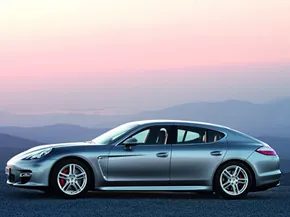
Porsche isn’t just about speed. It’s about survival. For six decades, the German automaker built a legend on rear-engine sports cars and track dominance. The 911 remains the crown jewel. But let’s be honest. Sports cars alone nearly bankrupted them in the early 90s.
Times change. Buyers don’t always want impractical toys when the economy tanks. So Porsche pivoted. They started with the Boxster in the mid-90s. That was the affordable entry point. Then came the Cayenne SUV ten years later. Co-developed with Volkswagen. Hardcore fans hated it. The sales numbers didn’t lie. The Cayenne is now their best-selling model.
Now they are betting everything on another shift. The Panamera. Porsche’s first production four-door sedan. It looks like a 911 that learned to share its doors. It launches later this year. It will go head-to-head with the Maserati Quattroporte and the Mercedes-Benz S-Class.
Here is the twist. You expect V-6s. You expect V-8s. You definitely don’t expect a hybrid.
“A hybrid from Porsche.”
Yes. The Panamera offers an electric-assist drivetrain alongside traditional combustion engines. This isn’t just about saving gas. It’s about relevance. It’s about protecting the environment while keeping the badge shiny. We are diving deep into the new Panamera. Specifically that hybrid powertrain. Let’s see if Porsche can make eco-friendly driving feel fast.
The Strategy Behind Diversification
Porsche has always walked a tightrope. Too many sports cars, and the balance sheet bleeds. Too many utilitarian vehicles, and the brand soul evaporates. The Cayenne was the gamble. It worked. It brought in cash. It allowed them to fund the next generation of 911s.
The Panamera is the next logical step. It targets executives who need backseat legroom. But also drivers who refuse to compromise on handling. The car shares its DNA with the 911. The sloping roofline. The muscular haunches. It’s not a boring office runner. It’s a performance sedan disguised as a luxury cruiser.
Why a hybrid? Why now?
Regulatory pressure is mounting. Buyers want efficiency without sacrificing torque. Porsche saw an opening. They could make a sedan that sips fuel in the city and bites hard on the highway. It’s not just about saving the planet. It’s about extending the range of their appeal.
What to Expect From the Panamera Hybrid
The standard Panamera comes with V-6 and V-8 options. These are predictable. They are powerful. They are loud. The hybrid version is different. It combines a conventional engine with an electric motor.
This setup isn’t just for show. It’s designed to deliver instant torque. Electric motors spin up instantly. No lag. No waiting for the turbo to spool. Just shove-back into your seat.
The system allows for electric-only driving at low speeds. Silent. Smooth. Perfect for navigating downtown or slipping into a hotel valet zone. Then you press the gas harder. The gas engine wakes up. The electric motor joins the party. You get the best of both worlds.
How does it handle? That’s the real question. Can a heavy hybrid sedan still feel like a Porsche?
Early tests suggest it can. The battery pack is likely located low in the chassis. This lowers the center of gravity. It reduces body roll. It keeps the car planted through corners. It’s not just a fuel-sipping cruiser.
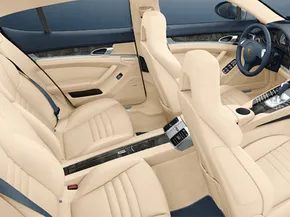
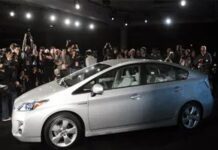
It finally happened. After nearly three years of blurry spy shots and heavily camouflaged prototypes haunting the internet, the new Panamera stepped out of the shadows at the Shanghai Motor Show in April. This isn’t just another luxury sedan update. It’s built on an all-new platform.
Yes, there are shared parts with the Cayenne SUV. The engines are cousins. But the Panamera is distinct. It features a long wheelbase and a cabin that refuses to compromise. Two front seats. Two full-sized rear seats. And a trunk that actually holds luggage.
Porsche didn’t want to just make a commuter car. With only four models in their current lineup, they had to be precise. They needed a “sports car for four.” That’s the phrase Gary Fong, Porsche Cars North America spokesman, keeps repeating. And it’s not just marketing fluff.
“We believe this car will do much of the same [as the Cayenne]. It allows the owner to share the sports car experience with three others.”
Think about the buyer. He already owns a 911 or a Boxster. He loves the Porsche badge. But he has kids. Or he has a date. Or he just needs to carry something other than a helmet. He buys a Cayenne because it’s practical. Now he has a third option. The Panamera sits between the track-focused 911 and the SUV utility.
Why does Porsche need a hybrid? You’d think a brand famous for exhaust notes and rear-weight bias wouldn’t care about emissions. They do. Fong put it bluntly. “We can’t survive by being a niche manufacturer.”
It’s simple economics. The cash flow from high-volume models like the Cayenne funds the 911 GT3. It funds Le Mans. It funds the racing programs that keep the brand relevant in the public eye. Without the mass appeal, the niche disappears. The Panamera Hybrid is the bridge. It lets fans keep buying Porsches instead of going to BMW or Mercedes. It’s eco-friendly enough for regulators, fast enough for enthusiasts.
But how does it drive? Can a four-door sedan really handle like a 911? The specs promise it will. The next section breaks down the mechanics. We’ll see if Porsche can keep its promise of performance without sacrificing the practicality that brought buyers to the showroom in the first place. The engine bay holds the answers. Let’s dig in.
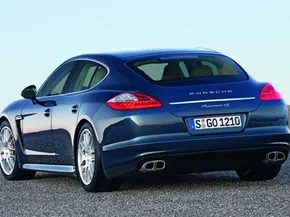
If it wears the crest, it has to move. That’s the rule. The Panamera is no exception, despite its four-door practicality. Under the hood, you’re looking at front-engine V-8s. Not rear-mounted like a 911, but up front, pushing weight forward. Two options to start.
Base and Turbo V-8 Powerplants
The entry point? The Panamera S and the all-wheel-drive Panamera 4S. They share the same heart: a 4.8-liter V-8. It pushes out 400 horsepower. Torque sits at 369 lb-ft (500.3 Nm). That’s enough to hit 0-60 mph in roughly 5 seconds. The 4S is slightly quicker. Porsche estimates matter here, but they’re usually close.
Then there’s the top dog. The Panamera Turbo. Same 4.8-liter block, but now with a turbocharger bolted on for extra juice. Output jumps to roughly 500 horsepower. Zero to sixty in 4.0 seconds flat. Track-tested top speed? 188 mph (302.6 km/h).
For a sedan weighing about 4,000 pounds (1,814 kg), that’s sports-car territory. A 3.6-liter V-6 version is also planned, though details are sparse so far.
“There’s not quite anything like it out there.” — Gary Fong, Porsche
Transmission and Suspension Tech
Engines don’t make the drive. Transmissions do. The Panamera defaults to Porsche’s PDK. It’s a seven-speed dual-clutch gearbox. It shifts automatically. Or you can grab the paddles. It’s fast. Efficient. If you’re a traditionalist, there’s a six-speed manual option. Rare, but available.
The suspension is where the magic happens. Air ride suspension replaces traditional springs and shocks. Air pumps inflate to different volumes based on driver preference. Soft for cruising. Firm for corners. It literally becomes a sports car on demand.
Designers didn’t forget comfort. Rear seats are full-sized. Legroom and headroom are ample. Trunk space hits 15 cubic feet (.42 cubic meters). That’s Camry-level cargo capacity. The rear end tapers, echoing the 911’s silhouette. It looks like a Porsche before you even see the badge.
The Panamera Hybrid: Parallel Power
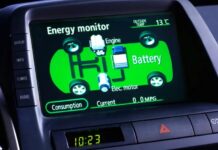
Porsche calls efficiency a hallmark. The hybrid system reflects that. It’s a parallel hybrid setup. Drive on gas. Drive on electric. Or both simultaneously. This flexibility allows for zero-emissions driving in specific scenarios.
Where is the hardware? The battery sits below the luggage compartment in the trunk. The electric motor is sandwiched between the engine and the transmission.
This isn’t a Prius. The electric-only mode goes up to 70 mph (112.7 km/h). Switching between gas and electric is seamless. You won’t feel the handoff. The electric motor adds surge to the gasoline V-6. Horsepower and torque race V-8 levels. Fuel economy? That of a much smaller car.
EPA ratings aren’t out yet. But look at the Cayenne Hybrid. It gets a 30% improvement. About 25 mpg (10.6 km/L). The Panamera weighs less. So 30 mpg (12.8 km/L) seems possible.
Even non-hybrid models get a green trick. Idle-stop system. Sit in traffic? The engine cuts out. Step on the gas? It restarts instantly. Saves fuel. Reduces emissions. Simple.
Competition and the Cayenne
The Panamera Hybrid isn’t alone in Porsche’s green lineup. The Cayenne Hybrid SUV hits the market first. Similar setup: 3.6-liter V-6 with an electric motor. Target efficiency? 25 mpg (10.6 km/L). That’s a 25% jump over the standard engine. CO2 emissions drop. European customers are obsessed with this. Americans are catching up.
The super-sedan segment is crowded. The Panamera enters with a unique mix of raw power and eco-efficiency. But how does it stack up against the Germans’ own rivals? And the exotics? That’s the next battle.
The High-End Hybrid Sedan Showdown
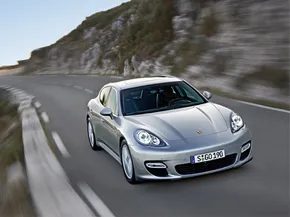
Porsche didn’t invent the premium four-door hybrid, but they certainly made sure everyone noticed. The Panamera sits in a sweet spot between $89,000 and $132,000. It offers serious performance with a side of environmental conscience. But let’s be clear. Porsche isn’t alone in this race. Several other manufacturers are fighting for the same buyer. The question isn’t if these cars work. The question is which one actually fits your garage.
Mercedes S400 Hybrid Efficiency
Mercedes-Benz took the S-Class. They stripped out the brute force for efficiency. The S400 Hybrid pairs an electric motor with a 3.5-liter V-6 engine. The result is roughly 30 miles per gallon. That’s 12.8 kilometers per liter. It’s a number that matters when you’re paying luxury prices.
The S400 Hybrid is priced to square up directly against the Panamera. You can also keep an eye out for diesel versions. They’ve been spotted on the auto show circuit. They offer a different kind of torque. A different kind of efficiency.
Fisker Karma’s Electric Range
Some buyers don’t want to compromise at all. They want the unconventional route. Enter the Fisker Karma. It’s a plug-in hybrid. You plug it into a socket in your garage. The batteries charge up. The electric motor takes over.
Fisker claims 50 miles of electric-only range. That’s 80.5 kilometers. Once those batteries drain, a four-cylinder engine kicks in. It doesn’t drive the wheels directly. It turns a generator. That generator drives the electric motors. It’s a series-hybrid setup.
Speed isn’t an afterthought either. The Karma hits 0 to 60 mph in the 5-second range. That’s 0 to 96.6 km/h. It’s quick. It’s strange. It’s definitely a statement.
Lexus LS 600h L Reliability
Maybe you don’t care about 0 to 60 times. Maybe you care about comfort. You care about luxury. You care about reliability. The Lexus LS 600h L might be your answer. It was the world’s first V-8 hybrid. It’s been around for a while. Lexus has a proven track record. This car will stay in your garage for decades if you let it.
The V-8 hybrid engine pushes out 439 horsepower. It’s faster than the standard LS. But the fuel economy doesn’t jump dramatically. You’re looking at 22 miles per gallon on the highway. That’s 9.4 kilometers per liter. It’s not a fuel miracle. It’s a luxury cruiser with a conscience.
Who Wins the Speed Test?
All these cars offer a lot for the money. They all have their own strengths. The S-Class has efficiency. The Fisker has range. The Lexus has longevity. But none of them seem to match the Porsche Panamera Hybrid in terms of pure, unadulterated speed.
Time will tell. We don’t know yet if the Panamera is the ultimate hybrid sport sedan. Or if something else will take the crown. The market is still shifting. The technology is still evolving. Wait and see.