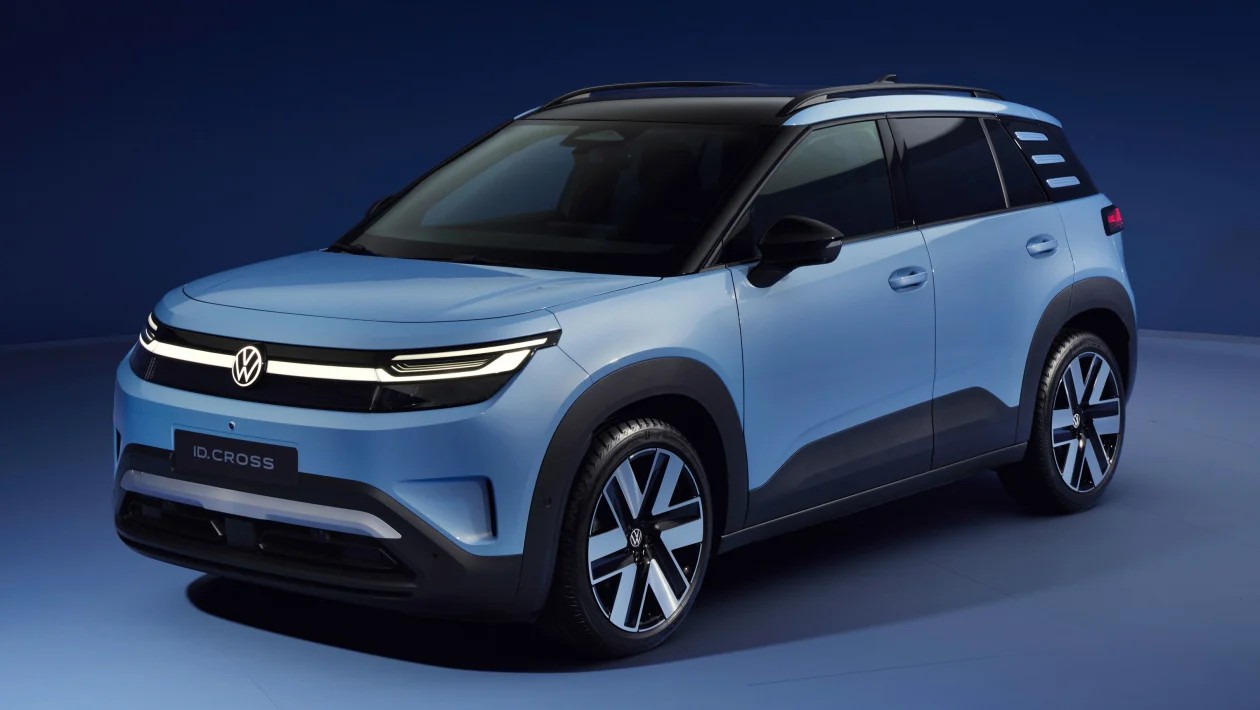
It’s 2026. Or soon will be. And if you are waiting for Volkswagen to make an electric SUV that actually feels like an SUV rather than a weird hatchback with training wheels, look here. The ID. Cross arrives. Not as a prototype. Not as a dream. As a car with a price tag. Around £28,000 for the base model. UK launch is early 2027. It shares its soul with the new ID. Polo. But it stands taller.
People love this vehicle for one simple reason. It fixes what they did wrong with the first wave of electric vehicles.
What is the VW ID. Cross and how much does it cost?
This is a small family electric car. It fits squarely between the ID. Polo and the Skoda Epiq. It sits on 17- to 20-inch wheels. That elevation matters. Plastic body cladding. Roof rails. It screams urban utility. Florian Schrader, the product manager, doesn’t use corporate speak when describing it. He calls it a true SUV. “Bigger car,” he said. “More space. More usability.”
Compare it to the Renault 4. That’s the main rival. Also the Skoda Epiq inside the Volkswagen Group itself. If you loved the petrol T-Cross but hate the noise, this is your zero-emission replacement. The dimensions are specific. 4,153 millimeters long. The wheelbase stretches by 50 millimeters compared to its siblings. Wider. Taller. Every metric points inward, to the cabin. Even the bonnet opens to hide a 22-liter storage box. Where do you keep the charging cable? Right there. It is tidy. It makes sense.
How many miles can the new Volkswagen ID. Cross go on one charge?
The range depends entirely on which battery you choose. This is the crux of the Volkswagen ID. Cross specs. There are two options. No more complicated third tier that confuses everyone. Just two batteries.
One holds 37 kilowatt-hours. The other holds 52 kilowatt-hours.
If you pick the bigger 52kWh unit, you get the headline number. 273 miles. This is the WLTP range figure. It also carries the strongest motor. Two hundred and eight horsepower. That sounds like a lot for a city car. It hits 62 miles per hour in 7.4 seconds. Fast enough for motorway mergers. Slow enough to remain civilized in town. The charging speed here is also best-in-class for its size. It gulps 105 kilowatts of DC power. You can charge from 10 to 8 percent in 24 minutes. Twenty-four minutes. That’s a coffee and a walk.
The smaller battery lasts about 195 miles. It powers a weaker motor. 114 horsepower for the base Trend model. Or 133 horsepower in the Life and Style trims. The sprint to 62 mph drops from 11 seconds to 9.8 with the extra torque. Charging tops out at 90 kilowatts. You lose three minutes compared to the big battery version for that same 70-percent top-up. The price difference reflects that power gap. Which battery do you need? That depends on your daily commute. But the VW ID. Cross electric range on the small pack feels short for a national run. The large pack fixes that anxiety.
Why are these batteries so efficient? They share parts. Eighty percent of the components inside the MEB+ platform are shared with the Polo, the Epiq, and the Cupra Raval. This is called economies of scale. It lowers costs. It means if one car breaks down in 2030, the repair parts likely already exist on the shelf.
Production begins in October at the plant in Pamplona, Spain. They build the 52kWh cars first. The smaller ones follow. There is no long wait between trims. Both arrive quickly.
There is another shift under the hood. Or rather, under the front. The electric motor sits there. It turns the front wheels. The previous IDs were rear-wheel drive. This feels more traditional. More stable when the roads are wet. One-pedal driving is standard too. You can coast without touching the brake pedal. It conserves energy.
Can it tow? The 52kWh model pulls up to 1,201 kilograms. Don’t plan a long holiday with a boat though. The range plummets. You are better off leaving the caravan at home.
Which interior features does the ID. Cross offer families?
Step inside and you see the lessons learned from the ID.3 disaster. Do you remember those haptic buttons that made a fake clicking sound but never worked correctly? Volkswagen deleted them. Proper physical buttons return. Air-con controls. Volume knobs. Buttons you can feel blind. Customers revolted. Volkswagen listened. This response to feedback is rare. It feels human.
The dashboard fabric is soft. The dual screens show what matters. The steering wheel holds the controls you expect. On the Style trim, a lightbar stretches across the dash and into the doors. Thirty color variations. It glows in whisky tones or cool blue. It adds life. Above this bar sits taller cabin space. Vertical air vents look chunky. Appropriate for a larger machine.
The rear seats surprise me. Four adults. Six-footers. We fit in the prototype during a sneak peek in Hamburg. Legroom was adequate. Not spacious. But enough. The floor is flat. If a child sits in the middle, they aren’t perched on a ridge. However. The headroom felt tight without the panoramic glass roof option. That optional sunroof adds light and headroom. Consider it mandatory. The claustrophobia was real with the metal ceiling.
Do you need luxury? VW offers a three-stage seat massage function. Unique in the compact class. A Harman Kardon system pumps 425 watts through ten speakers. The subwoofer lives in the boot floor. It eats storage space. Weigh that luxury against cargo room.
What about cargo? The boot measures 475 liters. This beats the petrol T-Cross by 20 liters. Fold the rear seats and that volume jumps to 1,34 liters. It swallows luggage. The rear door opens by hand. No foot sensor. Thank goodness. Those automatic tails get confused by leaves, rain, or their own incompetence. Simple is better.
Base models come with 17-inch wheels. Seven-speaker stereo. LED headlights. Upgrade to the Life trim for 18-inch alloys, twin-zone air-conditioning, a rear-view camera, and adaptive cruise control. The Style trim adds keyless start.
The design follows a strategy called “True Volkswagen.” Think horizontal lines. Stable proportions. The face of the car looks friendly. The headlamps are eyes. The lower grill is a smile. No confusing alien shapes. No dark glass tunnels. It is an object with visual stability. You look at it and you know exactly what it is.
Will this car change minds about electric driving? Perhaps. The price is accessible. The buttons work. The range is honest. The towing ability is present if you ignore the battery drain. It is a step forward. Is it enough to beat the Renault 4? Time will tell. But Volkswagen finally stopped guessing.