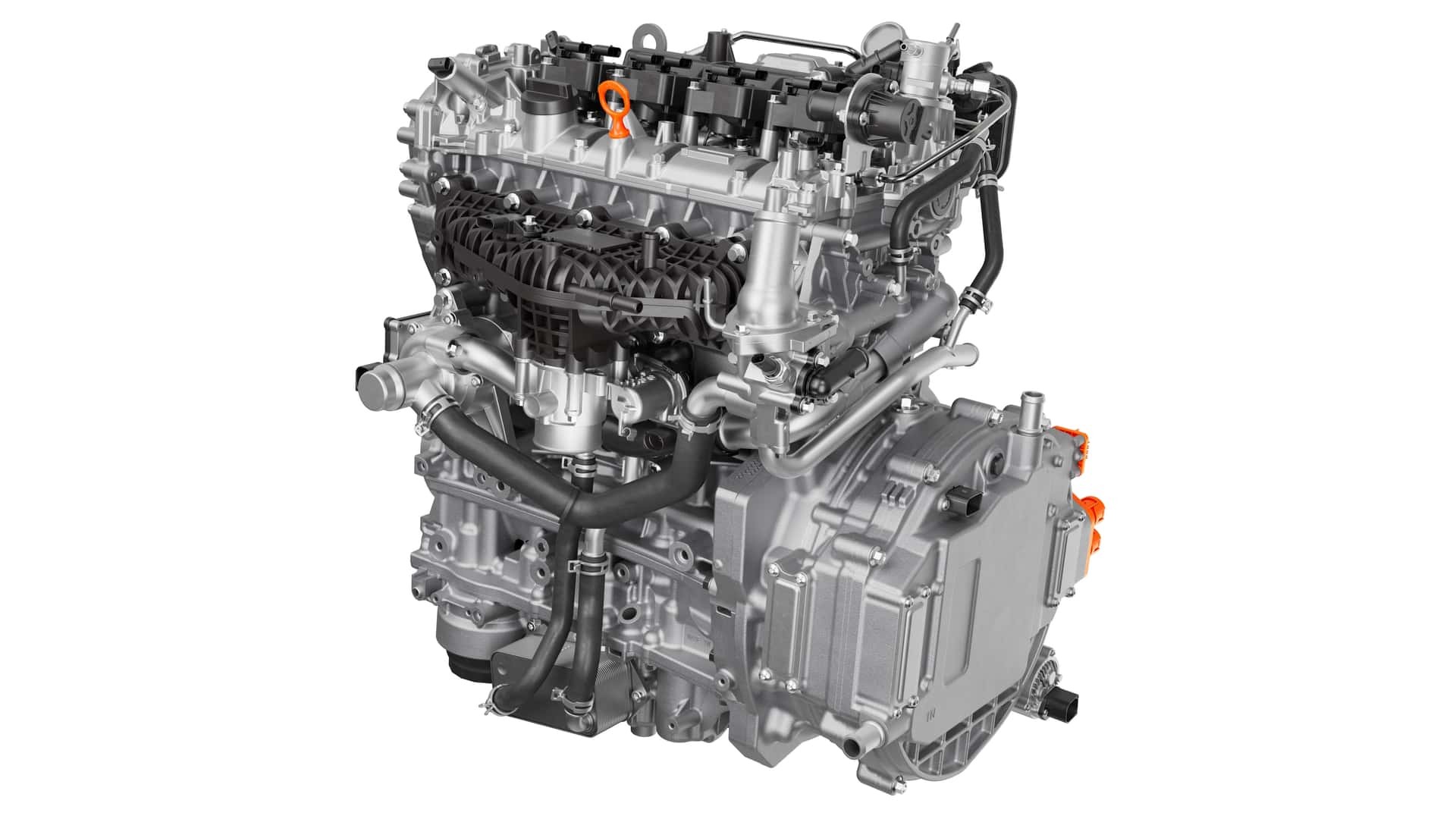
Horse Powertrain built something odd.
A range-extending generator that drinks methanol. It feeds battery-electric vehicles. Not the whole car, just the battery. A backup for the backup, if you will.
The Guts
This is a joint venture between Renault and Geely. Big names. Quiet movement. They call the unit the D20.
It weighs 375 pounds. Looks like a heavy block, maybe a bit less. Inside, it punches up to 141 horsepower into the electrical grid. That sounds loud. It isn’t really, it just flows through wires.
Here is the tricky part. Efficiency.
The conversion ratio sits at 47 percent. Roughly half the fuel turns into useful energy. You need about 5.2 gallons to fully juice a 40 kWh battery. That is decent for combustion, arguably better than most gas cars we drive around today.
The secret sauce is the burn. Ultra-lean. Methanol hates being sloppy with fuel. This engine handles it with a high-energy ignition system. Clean burns mean lower emissions. It meets EU rules. It clears Chinese standards too.
“The Horse D20 Methanol… [delivers] a powertrain of unparalleled compactness” — Fortune Zhao
Fortune Zhao says this is a staging ground. He believes this setup marks one of the first mass-market uses of this tech. He seems excited. Can’t blame him.
Flat Is Good
The magic happens in the shape.
Traditional motors are cylindrical. Big. Bulky. They need length.
Axial-flux motors look like pancakes. Layers of discs stacked on a spine. Short. Wide. Densely packed with power.
Horse claims these new motors are 46 percent shorter. At the same time they produce 63 percent more power than similar radial-flux setups. That feels impossible. It isn’t. The geometry changes everything.
There is a single stator in the middle. Two rotors wrap around it like rings on a finger. A yokeless design. This allows direct mounting to the crankshaft. Direct coupling saves space. Space equals weight saved. Weight saved equals better range.
Efficiency hits 96.4% on the electrical side. About 2.1 kWh of methanol burned gets you 1 kWh into the battery. Simple math. Harsh reality of thermodynamics, though not nearly as harsh as old diesel engines.
No American Plans
You won’t see this in your next Toyota. Not anytime soon.
Horse focuses on emission lowering. They iterate. They test. This methanol bit is just another entry in a long line of efficiency tweaks. Some might end up on US soil eventually. This specific one likely won’t.
The infrastructure just isn’t here for methanol vehicles yet. But the motor architecture? The flat design? That might catch on.
Why bother with fuel when we have batteries?
Because sometimes the grid is down. Sometimes the charger is broken. Sometimes you just need power now and can’t wait three hours for an outlet to finish its job.
Maybe the end of the combustion engine wasn’t the end, but the pause. A strange hybrid pause powered by wood alcohol and stacked discs.