Another electric Ford. This time, it’s a van.
We already knew about the Bronco New Energy SUV. That beast is likely arriving late this year or in 2027. But the paperwork doesn’t stop there.
Ford Transit City EV Australia approval docs have surfaced. They show a Chinese-built electric van is getting the green light for local sale. It’s developed with Jiangling Motors Corporation (JMC), Ford’s joint-venture partner. If the timing holds up, you could see this vehicle on Australian roads within the next year.
Ford won’t say much yet. A spokesperson told CarExpert that government approvals don’t equal a confirmed launch. “We have no new-model announcements to make at the time.” Standard corporate speak, sure. But why hide the lights if you’re not turning them on?
Why is Ford importing a cheaper Chinese electric van?
The simple answer: price.
The existing E-Transit Custom in Australia starts at $77,890 before on-road costs. That’s steep. The Transit City could undercut that significantly.
In the UK, the short-wheelbase (SWB) Transit City kicks off at £29,000 (around A$55,000). Compare that to the SWB E-Transit Custom there, which costs £43,630 (approx. A$83,000). The gap is massive.
For small businesses needing a commercial EV, that price difference isn’t just nice. It’s the difference between “maybe” and “done.”
Ford Australia marketing director Ambrose Henderson admits China offers a “cost advantage.” But he also warns it’s not a free pass. The Australian market has strict safety standards (ADRs). It’s not about dumping products; it’s about picking winners. “We want it to win in that segment,” he says.
Specs: How does the Transit City compare to the E-Transit Custom?
Don’t expect the Transit City to out-muscle the current lineup. It’s positioned below the Custom in both performance and payload.
Key differences at a glance:
- Dimensions: The 300S variant is 4985mm long. The Custom is 5050mm. The Transit City is also narrower (1885mm vs 1999mm). It’s smaller, tighter, easier to park.
- Payload: The Transit City offers 1085kg (tare mass 1915kg, GVM 3000kg). Some global variants hit 1275kg. The Custom SWB manages 1027kg. Roughly even, slightly better for the City.
- Battery & Range: Here’s the trade-off. The Transit City uses a 56kWh LFP (lithium iron phosphate) battery. The Custom uses a 71.45kWh NMC battery.
- Power: Front-wheel drive with a 110kW motor. Rear-wheel drive Custom has 160kW.
- Range: WLTP rating sits around 254km for the City. The Custom pushes 340-346kms.
- Charging: DC fast charging peaks at 87kW for the City. The Custom can take 125kW.
So, why buy it?
Because you don’t need 350km of range. You drive 50km a day. You need a payload for deliveries. You want to spend less.
The LFP battery chemistry is a plus for longevity, though the smaller pack limits how far you can go before plugging in. It’s a city runner, not a highway hauler.
What does the Transit City EV look and feel like?
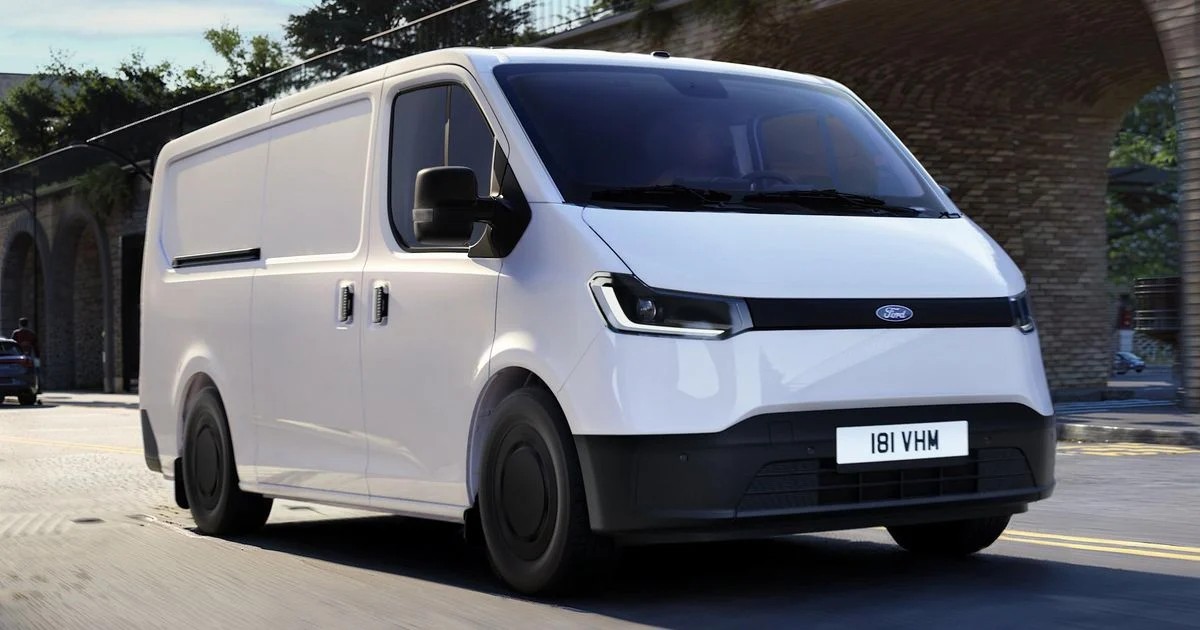
It’s based on the JMC Touring EV but wears a Ford face. Unique exterior panels mean it doesn’t look like a generic Chinese import. Cleaner surfaces, new lights. It looks like a Transit.
Inside, the tech upgrade is noticeable.
A larger 12.0-inch touchscreen anchors the cabin, supporting Apple CarPlay and Android Auto.
Standard kit includes push-button start, air-con, a reversing camera, and a heated seat. Not lavish, but competent. The European E-Transit Custom feels more rugged in comparison, but the City aims for simplicity.
Currently, Australian docs only list the L1H1 body style. Short wheelbase, regular height. No tall roofs or cab-chassis options listed yet. If those arrive later, Ford might expand its commercial EV play.
Will Ford bring more Chinese EVs to Australia?
The Bronco New Energy is already expected. The Transit City is now in the pipeline. Rumors swirl about the Equator Sport (essentially a Territory) from the right-hand drive market.
Ford has a global portfolio. It has choices.
“It’s not as easy as I think many people would hope,” Henderson notes. Importing isn’t just slapping a logo on a car. It’s a specific investment. Regulatory hurdles are high.
The strategy seems clear: bring in products where the brand is strong, where the price makes sense, and where local customers actually need it.
The Transit City fits that niche. It’s affordable. It’s practical. It’s electric.
Ford isn’t shouting about it. They rarely do until the ink is dry. But the paperwork is public. The car is coming.
Whether it arrives this year or next, one thing is certain. The price war for Australian electric vans just got more interesting.