Xiaomi isn’t playing it safe. Not with the SkyNomad N90.
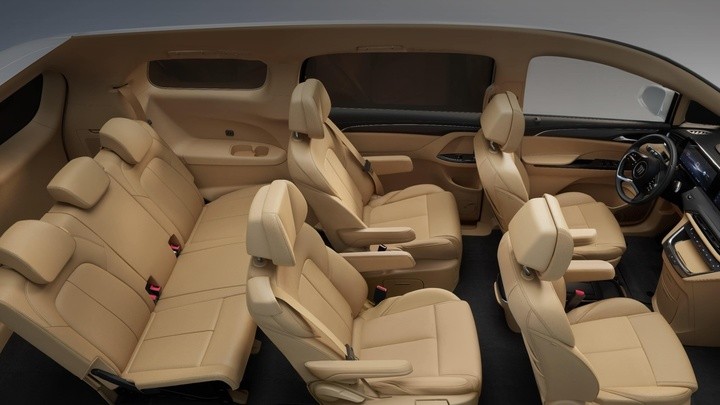
While every other premium SUV brand is scrambling to fit captain’s chairs into three rows, Lei Jun is going back to the seven-seat format. The Xiaomi SkyNomad N90 2-2-3 seating configuration is the headline here. It’s the layout first popularized by the Buick GL8 in China, not the 2-2-2 setup found in the BYD Tang.
The official launch is coming in late July. The interior was just revealed after the car filed with the Ministry of Industry and Information.
Why choose the Xiaomi SkyNomad 2+2+3 seat layout
Most buyers expect luxury SUVs to have three isolated seats. It’s the status symbol of the moment.
Xiaomi disagrees. Lei Jun argues that the 2-2-3 arrangement is just more honest for actual life.
Think about it. You have a family of three. You bring two sets of grandparents. That’s six people. Add a nanny for a two-child family, and you’re at seven. The middle row in a 2-2-2 config leaves one person standing or squeezed. The third row in the SkyNomad handles this. It’s not just about family. Lei Jun pointed out the business utility too. It works for reception vehicles. It’s versatile.
Is it less “premium” than the captain’s chair route? Maybe. Is it more practical? Definitely.
Living Space design and exterior details
The car is big. Really big.
- Length: 5,285 mm
- Width: 1,998 mm
- Height: 1,825 mm
- Wheelbase: 3,080 mm
Xiaomi calls it an “intelligent variable large-space SUV.” The design language is heavy on the “Mi” branding. The front grille has those signature Mi-shaped LED clusters. They form a unified panel right there with the SkyNomad logo.
On the roof? LiDAR. It’s there for the advanced driving features. No hiding that tech.
Inside, the floor is completely flat. Rails run the length of the cabin. This supports the “Living Space” philosophy. It’s meant to be modular.
Interior flexibility and entertainment tech
The flexibility goes beyond just having seats.
Front seats rotate 180 degrees. You can face the rear. It turns the cabin into a conference room or a lounge.
The second row gets zero-gravity comfort seats as standard. Not optional. Standard.
For entertainment, they mounted a screen on the ceiling. It slides forward and back. You can also add a projection kit. There’s even an optional PAD expansion for third-row passengers. Nobody gets left out.
The Xiaomi SkyNomad interior isn’t just about comfort. It’s about reconfiguring space. Flat floor plus sliding rails means you can move things around.
Powertrain and range specs
It’s a range extender. Not a pure EV. Not a hybrid in the Toyota sense.
The setup uses a 1.5T engine as a generator. It makes 112 kW.
The wheels are driven by motors.
* Front/Peak Power: 210 kW (about 282 hp)
* Rear Power: 100 kW (about 134 hp)
Top speed is 190 km/h.
Battery size is 76 kWh. This gives you a WLTC pure electric range between 363 km and 370 km. That’s a decent commute distance before the gas engine wakes up.
You get two versions. Five-seat or seven-seat. But if you want that specific Buick-like versatility, you’re going for the seven.
The car is ready. July is coming. The question isn’t if Xiaomi can build a car. It’s if anyone else will dare to copy this layout. Or if they’ll stay stuck on the 2-2-2 trend while families keep packing seven people into cars meant for six.
We’ll see.