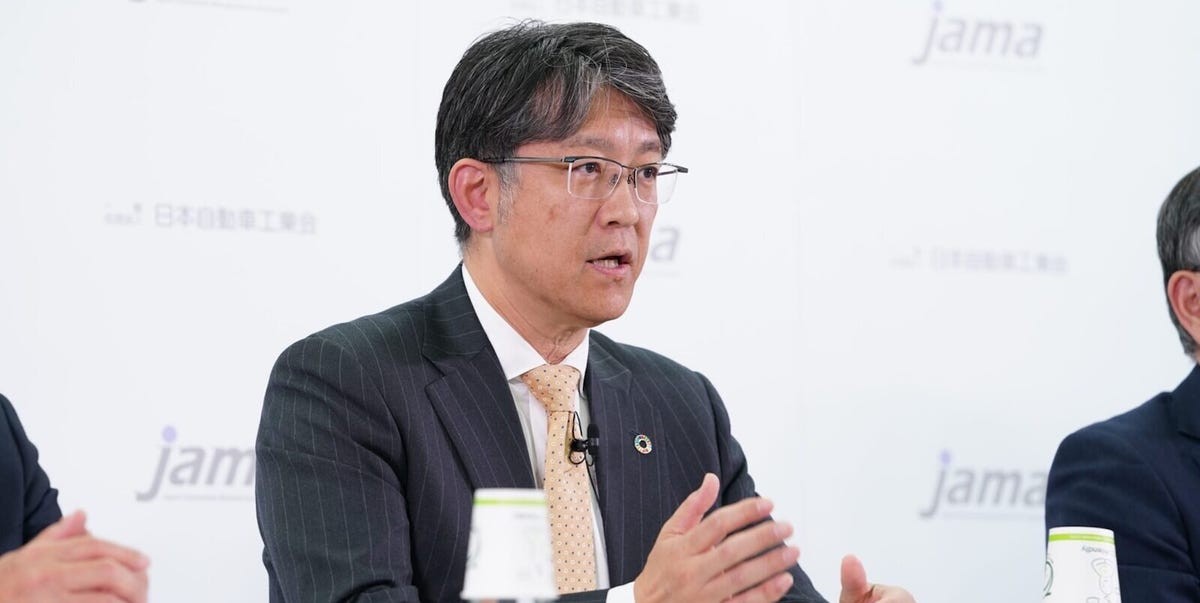
Koji Sato has a proposition for the automotive industry. He wants rivals to stop fighting so much. Instead of tearing each other apart for market share, Toyota, Nissan, Honda, and Subaru should share more parts.
It sounds boring.
It isn’t.
This is about survival. The Chinese electric vehicle revolution is not coming; it is already here, knocking at the gates with price cuts and battery tech that outpaces legacy Western and Japanese incumbents. Sato, who serves as vice chairman at Toyota and heads the Japanese Automobile Manufacturers Association (JAMA), says the old rules of hyper-competition no longer apply. Not anymore.
The Case for Shared Wiring Harnesses
Sato isn’t talking about building the exact same cars. He is not proposing that a Mazda Miata becomes a Honda Civic on wheels. That would kill the soul of Japanese driving.
Instead, he is talking about the unglamorous skeleton beneath the bodywork. Think wiring harnesses. Cooling components. Standard fasteners. These are the blood and bone of manufacturing. If every maker uses a standardized set of under-the-hood components, costs plummet. Supply chains simplify.
Why does this matter to the consumer or the industry? Because those saved R&D dollars can go elsewhere. Elsewhere like software. Elsewhere like next-gen electric platforms.
Historically, Japan has done this before. Remember the 1990? Mitsubishi and Subaru were bitter rally rivals. Pop the hood on a vintage WRX STi, and you will find a diamond-star logo on at least one critical part. They were friends at the parts counter and foes on the tarmac. That symbiosis allowed both smaller giants to compete with the Nissan GT-R and Honda Type R without going bankrupt.
Can Consolidation Work in the 2020s?
Critics argue that standardization creates a homogeneity. They say we will lose the quirks. The eccentricities that make buying a used Japanese car from 2010 feel like an archaeological dig into specific engineering philosophies.
Enthusiasts crave variety. They want oddballs. But look at the data.
Japanese automakers are facing a double-edged sword: an aging domestic demographic and an aggressive, state-backed Chinese sector that moved from “cheap and broken” in the 1970s to competitive in a single decade.
In the 1954, Japanese cars were joke materials. That phrase from Back to the Future where Doc Brown scoffs at a circuit labeled “Made in Japan”? It reflects an era where durability was not a given. Today? China leads in battery production and EV integration.
Sato argues that the only way to weather this storm is not individual survivalism, but group strength. By sharing standardized parts across brands, automakers can streamline production. They can reduce inventory bloat. They can react faster to market shifts.
Why Small Makers Need This Now
Nissan and Mazda are not Toyota. They are smaller. They are leaner. They are also more vulnerable to global supply chain shocks.
Consider the resource allocation. If Mazda can spend less on developing its own basic wiring infrastructure because the framework is compatible with Honda’s or Subaru’s standards, those engineers have more time. What do they do? They focus on the rear-wheel drive dynamics of the next MX-5. They work on the flat-six sound.
If Toyota absorbs more basic R&D overhead via JAMA-wide standardization, does it mean we get bland cars? Unlikely. It means we get efficient cars that don’t cost three times what they used to.
Think of past mergers as case studies. When Toyota integrated Hino, they gained heavy-duty capability without building it from scratch. That partnership gave us robust commercial trucks that don’t dominate the consumer passenger space directly. When Nissan absorbed Prince, we got the Skyline. The consolidation created the conditions for iconic engineering later on.
The Chinese model proves that state-coordinated or tightly-knit industry groups can advance rapidly. They standardized platforms early. They dominated the battery supply chain before the rest of the world caught up. Japan cannot match this via free-for-all capitalism. Not when margins are thinner than ever.
The Silver Lining for Drivers
Some fear a future where all Japanese cars look the same inside the engine bay. A loss of character.
Maybe there is truth to that.
But consider the alternative: market exit. Decline. Irrelevance.
If sharing wiring and basic structural components allows smaller brands to stay in the game, that is a win for choice in the long run. Without this consolidation, will Honda even be around to make a new Integra in five years? Will Suzuki continue to develop micro-vehicles if it cannot leverage a broader network?
Consolidation pays dividends for corporate survival. And by extension, automotive culture.
We used to have distinct personalities in every segment. Today, that is harder to find. Sato’s suggestion is not to eliminate those differences, but to ensure there are enough companies left to make them.
Will Toyota yield the wheel to a collective? Probably not fully. But a little cooperation goes a long way. The question is not whether competitors want to work together. The question is whether they can afford not to.