Owning a car is freedom. It is also a liability.
You are responsible for the machine. If you ignore it, it breaks. That is the basic deal.
Drivers often focus on the big stuff. Oil changes. Tires. Brakes. But the cooling system is where engines die quietly. Or loudly. Usually loudly.
Knowing how to add coolant to car is not just a tip for beginners. It is a survival skill. You need to understand what that fluid does. You need to know what happens when it runs dry.
The Chemistry of Keeping Your Engine Alive
Coolant is not just water with a color dye.
It is a chemical solution. A mix of water and antifreeze agents like ethylene glycol or propylene glycol. Additives get thrown in there too.
Why? Because water alone is useless in winter and dangerous in summer.
Pure water freezes at 32°F. Ice expands. It cracks blocks. It destroys engines.
Pure water boils at 212°F. Modern engines run hot. Much hotter. Without additives, water boils in a stock system. Steam is bad for seals. It is bad for gaskets.
The antifreeze raises the boiling point. It lowers the freezing point. It also contains inhibitors. These stop rust. They stop corrosion. They protect the aluminum, steel, and copper inside the radiator and engine block.
When you circulate this fluid, it absorbs heat. It moves it away from the pistons and cylinder heads. The radiator dissipates that heat into the air. Simple physics.
The Cost of a Dry System
Running low on coolant is not a minor inconvenience. It is a trajectory toward catastrophe.
Here is what happens when the reservoir drops below the safe line.
1. Thermal Runaway
The engine temperature gauge spikes. You might see steam. You might smell burning.
If you keep driving, the metal expands unevenly. Pistons seize. Cylinder heads warp. The head gasket blows.
That is a $2,000 to $5,000 repair. Or a new engine. All because the fluid level was low.
2. Cabin Comfort Collapse
Your heater core is a small radiator inside the dashboard. It uses hot engine coolant to warm the air you breathe in winter.
Low coolant means no hot fluid. You get cold air. In January. That is miserable.
3. Silent Wear
The water pump is a mechanical part. It spins. It relies on the fluid for lubrication and cooling of its seals.
Low fluid causes friction. The seals fail. The pump leaks. Then the pump stops. Then the engine overheats. Then you are towed.
There are other costs too. Poor combustion efficiency when the engine is running hot. Higher emissions. Worse fuel economy.
Your car runs poorly when it is stressed.
Why Drivers Ignore It
It is easy to ignore.
The reservoir is often translucent plastic. It sits in a corner of the engine bay. You might see the line drop a quarter-inch and think “it’s fine.”
It is not fine.
Evaporation happens. Slow leaks happen. A hose might crack. A clamp might loosen.
If you don’t check, you won’t know.
The Reality of Maintenance
You do not need to be a mechanic to check this.
You just need to look.
Check the level when the engine is cold. Always. Opening a hot system releases steam. Steam burns. Badly.
Top it off with the correct mixture. Not just water. Water dilutes the protections. Use pre-mixed coolant if you are unsure of the ratio. A 50/50 mix is standard for most climates.
Keep the reservoir full.
Your engine will thank you. Your wallet will thank you. The people in your car will thank you.
It is that simple.
You don’t need a master’s degree in mechanical engineering to keep your engine from cooking itself. You just need to know where the translucent plastic jug is and how to pour fluid without making a mess.
Check your owner’s manual first. Always. But if you’re already under the hood with a bottle of coolant in hand, here’s the straight talk on getting the levels back up.
Find the Reservoir
Look near the radiator. It’s usually a semi-transparent plastic tank. Some cars label it “coolant.” Others use a symbol that looks like a thermometer submerged in liquid. If you can’t find it, stop. Look at the manual. Don’t guess. The location varies wildly between manufacturers.
Check the Level (When Cold)
This is non-negotiable. Never open a hot cooling system. The pressure inside can blast boiling fluid into your face. Wait for the engine to cool completely.
Pop the cap. Look at the side of the reservoir. You’ll see two lines. “Min” and “Max.” Or “Low” and “Full.” If the fluid is below the fill line, it’s time to top it off.
Mix It Right
Most modern cars use a pre-mixed 50/50 blend. If your bottle says “concentrate,” you need to add distilled water. Tap water has minerals. Minerals cause scale. Scale kills radiators. Use distilled.
Mix it in a clean container before pouring. Don’t just squirt concentrate into the tank and hope for the best. Follow the ratio on the bottle. Usually 1:1.
Pouring the Fluid
Grab a funnel. Yes, really. Pouring from the bottle is messy and risky. You don’t want to spill ethylene glycol on your paint or your skin.
Fill the reservoir up to the “Max” line. Do not overfill. Coolant expands when it heats up. If you pack it too tight, the excess has nowhere to go. It’ll spill out onto your hot engine block. That’s just poor planning.
Secure and Inspect
Snap the cap back on. Make sure it clicks. Wipe up any spills with a clean rag. Ethylene glycol is toxic. It looks like syrup. If it gets on the ground, it attracts pets. Keep it clean.
Pressure Test It
Start the engine. Turn the heater to max. This forces the coolant through the cabin heater core, ensuring there are no air pockets trapped in the system. Air pockets are bad. They cause hot spots. Hot spots warp heads.
Wait a few minutes. Look under the car. Look at the reservoir. Watch for drips. If you see a leak, shut it off. Drive it to a mechanic. Do not drive it home if it’s leaking.
Why It Matters
Regular maintenance prevents catastrophic failure. Coolant doesn’t just keep things cool. It raises the boiling point of water. It lowers the freezing point. It prevents corrosion inside the aluminum and steel components of your engine.
If your engine runs hot, or if you see steam under the hood, you’re already too late. Check the level monthly. It takes two minutes.
Antifreeze vs. Coolant
People use these terms interchangeably. They’re close, but not identical.
Antifreeze is the concentrated chemical. Its main job is to stop the fluid from freezing in winter. It also raises the boiling point.
Coolant is the final mixture. It’s antifreeze mixed with water.
You buy antifreeze. You mix it with water. You put the coolant in the car.
Common Questions
Can I just use water?
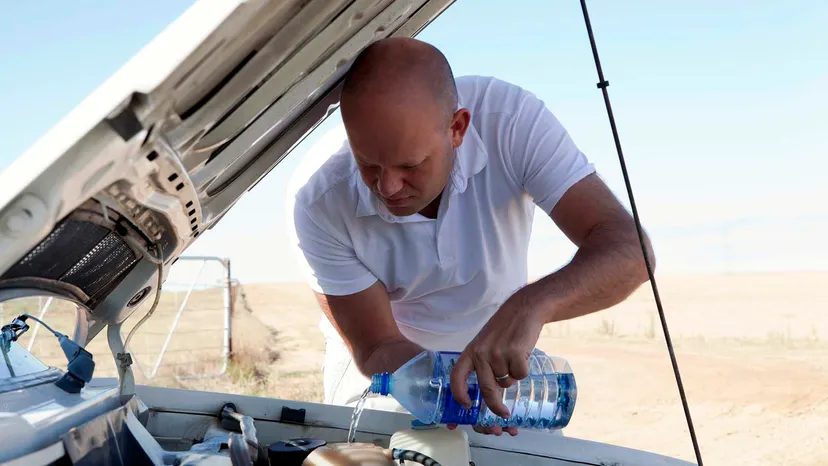
In an emergency, yes. Water boils at 212°F (100°C). Coolant handles much higher temperatures. If you’re stranded and overheating, water keeps the engine from seizing. Get to a shop ASAP. Replace the water with proper coolant immediately. Water causes corrosion. It doesn’t lubricate the water pump.
Where do I add fluid if the car is overheating?
If the system is pressurized and hot, do not open the radiator cap. You will get burned. If the engine is cool, you can add to the reservoir. If the reservoir is empty and the engine is cool, you can carefully open the radiator cap and fill it directly. But be careful. Steam can escape.
What liquid prevents overheating?
Properly mixed coolant. It has additives that protect aluminum and steel. It has a higher thermal capacity than plain water.
Signs of low coolant?
The dashboard warning light. The temperature gauge creeping into the red. Steam from under the hood. A sweet smell inside the cabin or outside the car. Ethylene glycol smells sweet. Like maple syrup. If you smell it, you have a leak. Fix it before the engine blows.
Keeping the levels up is simple. But neglecting it is expensive. Don’t be that person.