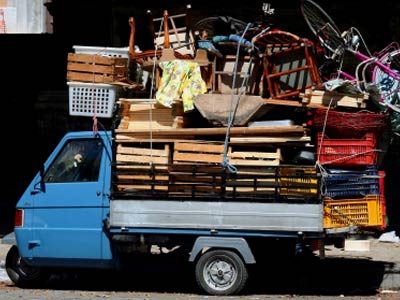
Buying a new car can seem like a spreadsheet exercise. You are looking at MSRP. You calculate zero-to-sixty times. Measure the cubic feet of the trunk. You obsess over horsepower and torque curves. These are car sales numbers. The figures are presented in a beautiful booklet. However, when actually loading suitcases and a boat, different calculations are needed.
Most people ignore gross axle weight rating (GAWR). It sits quietly on the sticker on the door frame. No one talks about this at car shows. However, misusing this number can result in a blown tires, damage to suspension components, or worse, loss of vehicle control. This is more than just a suggestion. This is a hard limit defined by the manufacturer.
Defining the Limit
GAWR stands for gross axle weight rating. This is the maximum weight allowed by the manufacturer for one axle. Your car has at least two. A front axle. A rear axle. Each has its own specific limit. Think of it as a structural ceiling. Exceeding this will cause problems.
This rating does not apply to empty weights. It accounts for everything resting on that axle. This includes the weight of the vehicle itself. This includes the driver and passengers. This includes any bags in the back seat and any tools in the bed. If you’re towing, it also includes some of the weight of the trailer tongue. All this mass is distributed between the front and rear axles. GAWR indicates the absolute maximum value that one of these axles can withstand without risk of catastrophic failure.
Don’t confuse GAWR with actual axle weight. This is called Gross Axle Weight (GAW). The GAW changes every time you pick up or drop off an item. GAWR is static. This is integrated into the engineering of the chassis.
Consider a pickup truck. You load four one-hundred-pound boulders into the bed. The rear axle GAW jumps by four hundred pounds. With the stone removed, the GAW drops by four hundred pounds. GAWR never moves. No matter how much luggage is loaded, the GAWR never moves. Understanding this difference is the first step in ensuring vehicle safety.
Danger of overloading
Manufacturers set these limits for safety reasons. Period. Axle overload compromises the vehicle’s dynamics. These problems are rarely subtle. They manifest quickly on the road.
If the rear axle is overloaded, the steering becomes numb. The front tires lose traction. You lose responsiveness. Since the front brake takes most of the braking force, the braking performance is significantly reduced. If the rear is overloaded, the front alone cannot do the job. The rear tire can blowout. Rubber cannot withstand pressure. Suspension parts can be bent or damaged. Leaf spring or control arm failure can result in losing control of the vehicle entirely.
The same rules apply to trailers. They have their own GAWR. An improperly loaded trailer is a death trap. The weight distribution must be balanced. If one axle is overloaded and the other is light, the trailer will sway. It will jackknife. When using a trailer, the risk is greater because you are adding another, unstable unit to the train. Proper loading is not an option. It is mandatory for survival.
Where to find GAWR
No need to guess. This information is available. Check the sticker on the driver’s door frame. This is the standard location for tire and load data labels. It lists cold tire pressures and gross axle weight rating for the front and rear. If the sticker is faded or missing, look for it online. Most manufacturers publish detailed specification sheets about their models. You can find GAWR in your owner’s manual or on your brand’s technical support page.
Knowing your specific limits, you can calculate the payload accurately. This will help you avoid the common mistake of thinking that “ton capacity” is free pass to load every ounce of steel you own. it is not. The axle limits are the true constraint.
Vehicle GAWR specifications
Below are the gross axle weight ratings of some Acura and Audi models from the mid to late 2000s. These numbers represent the maximum weight that each axle can safely support. Use them as a baseline for your own calculations.
Acura GAWR Data
The table below shows the combined front and rear gross axle weight ratings for Acura models. Note that some entries are missing from the source data.
| Year | Model | GAWR (front/rear) |
|---|---|---|
| 2006 | MDX | – |
| 2006 | RL | – |
| 2006 | RSX | – |
| 2006 | TL | – |
| 2006 | Toronto Stock Exchange | – |
| 2007 | MDX | 2888 / 3175 lbs |
| 2007 | RL | – |
| 2007 | RDX | 2546 / 2381 lbs |
| 2007 | TL | – |
| 2007 | TSX | 2335 / 2030 lbs |
| 2008 | MDX | 2888 / 3175 lbs |
| 2008 | RL | – |
| 2008 | RSX | 2546 / 2381 lbs |
| 2008 | TL | – |
| 2008 | TSX | 2335 / 2030 lbs |
| 2009 | MDX | 2888 / 3175 lbs |
| 2009 | RL | – |
| 2009 | RSX | 2546 / 2381 lbs |
| 2009 | TSX | £2325 / £2090 |
Acura Detailed Specifications: Acura GVWR, Acura GCWR, Acura Cargo Capacity, Acura Curb Weight, Acura Payload, Acura Towing Capacity
Audi GAWR information
Information about Audi models from this period is basically not available in the original text.
| Year | Model | GAWR (front/rear) |
|---|---|---|
| 2006 | A3 | – |
| 2006 | A4 | – |
| 2006 | A6 | – |
| 2006 | A8 | – |
| 2006 | S4 | – |
| 2006 | TT | – |
| 2007 | A3 | – |
| 2007 | A4 | – |
| 2007 | A6 | – |
| 2007 | A8 | – |
| 2007 | Q7 | – |
| 2007 | RS4 | – |
| 2007 | S4 | – |
| 2007 | S6 | – |
| 2007 | S8 | – |
| 2008 | A3 | – |
| 2008 | A4 | – |
| 2008 | A5 | – |
| 2008 | A6 | – |
| 2008 | A8 | – |
| 2008 | Q7 | – |
| 2008 | R8 | – |
| 2008 | RS4 | – |
| 2008 | S4 | – |
| 2008 | S5 | – |
| 2008 | S6 | – |
| 2008 | S8 | – |
| 2008 | TT | – |
| 2009 | A3 | – |
| 2009 | A4 | – |
| 2009 | A5 | – |
| 2009 | A8 | – |
| 2009 | Q7 | – |
| 2009 | R8 | – |
| 2009 | S4 | – |
| 2009 | S5 | – |
| 2009 | S8 | – |
| 2009 | TT | – |
Audi Detailed Specifications: Audi GVWR, Audi GCWR, Audi Load Capacity, Audi Vehicle Weight, Audi Load Capacity, Audi Towing Capacity
BMW GAWR Specifications (2006-2009)
BMW information is scarce. Most entries are empty. This window does not have the front or rear axle restrictions of the standard 325, 330 or 5 Series models. Manufacturers don’t seem to release these specific GAWR numbers for sedans and coupes.
Exceptions exist. The 2007 Z4 has a rated front wheel capacity of 2,767 pounds and a rear wheel capacity of 3,770 pounds. That’s specific. Z4, M3, M5, M6 and most other X-series positions are left blank in this data set. If you are looking for exact axle weights for an E90 or E60 chassis, this information is not included in this chart.
Buick GAWR Data (2006-2009)
Buick offers even more numbers, mostly for its large SUVs. Discontinued in 2007, the Terraza weighed 1,148 pounds on the front axle and 960 pounds on the rear axle. It feels light for a crossover.
In 2006 and 2007, the Rainier held steady at 2,950 pounds in the front and 3,200 pounds in the rear. Introduced in 2008, the Enclave weighs 3,197 pounds in the front and 3,527 pounds in the rear. The sedans—LaCrosse and Lucerne—are left blank. Again, there is no axis information.
Cadillac GAWR Specifications (2006-2009)
Cadillac trucks and SUVs will transport your goods here. According to CTS, the 2006 and 2007 weights are 2232 pounds in the front and 2379 pounds in the rear. After 2007, the sedan information disappears.
The Escalade family is a treasure trove of numbers. The standard 2006 Escalade has a listed weight of 3,350 pounds with the front wheels and 4,000 pounds with the rear wheels. The ESV version dropped to 3060/2809. EXT jumps to 3800/4000. As of 2007, GAWR information for Escalade models has been removed from this list, although the model year is present. CTS-V, DTS, STS and XLR models are empty.
Chevrolet GAWR Specifications (2006-2009)
Chevrolet offers the most detailed data here, especially in the truck division. The 2006-2008 Colorado weighed 2533 lbs front and 2896 lbs rear. For 2009, the front axle jumps to 5,000 pounds, while the rear axle remains at 2,633 pounds. That rear drop is odd.
The Silverado lines are detailed. 1500 models typically weigh around 3600-3950 pounds in the rear and 3650 pounds in the front. The HD versions are heavier. The 2500 HD can handle 4200-4410 pounds in the front and up to 6084 pounds in the rear. In 2006, the 3500 HD had a maximum front weight of 4,670 pounds and a rear weight of 8,550 pounds.
The front axle load capacity of the 2009 Silverado 1500 is up to 6800 lbs. That’s an outlier. The Tahoe and Suburban models weigh about 3200-3300 pounds with the front wheels and about 4000-4200 pounds with the rear wheels. The Travers ranked 3197/3527 in 2009, while the Trail Blazers fell to 2450/3200 in 2009.
Chrysler GAWR Specifications (2006-2009)
Information on Chrysler is scarce. Aspen SUV is the sole source of specific information. Prices for the 2007, 2008 and 2009 models are listed at £3100 for the front and £3900 for the rear. The 2009 Hybrid Aspen raises the front wheel limit to 3,600 lbs.
300, Pacifica, PT Cruiser, Sebring, Town & Country are all empty. If you’re hauling in a Sebring, you’re on your own with these stats.
Dodge GAWR Data (2006-2009)
Dodge copied Chrysler, but adds the Ram trucks and Sprinter vans. The Ram 1500 always carries 3700/3900 lbs. The Ram 2500 weighs 4,410 pounds in the front and 4,630 to 6,000 pounds in the rear, depending on the model year. The Ram 3500 listed at £4110/9350 from 2006 to 2008, then moved to £4750/6200 in 2009.
Sprinter vans have a clear front/rear division. In 2006, the 2500 wagon had a payload of 3857/5356 pounds, but a few changes were made in subsequent years. The maximum payload of the 3500 van is 4080/7060 lbs. Van models vary, and the 2006 2500 van’s rear axle weight is 7,053 pounds.
The Durango has a weight capacity of 3100/3900 lbs. The Dakota stays at 3100/3600 lbs. The Expedition was added in 2009 and has a weight capacity of 2750/2900 lbs. Caliber, Avenger, Challenger, Charger and Viper are left blank.
FORD GAWR DATA
From 2006 to 2009, Ford’s lineup showed a clear distinction between heavy utility vehicles and passenger cars. E-Series vans dominate the high-capacity ranking. If you buy a 2006 E-350 Super Duty, the front axle will carry 3,700 pounds and the rear axle will carry 6,195 pounds. The E-250 has a rear weight of 5520 lbs and the E-150 has a rear weight of 3800 lbs. In both 2006 and 2007, the F-350 picks up the slack with a rear GAWR of 7,000 pounds. By 2008, the rear GAWR of the F-350 had dropped slightly to 6,262 lbs. The F-450 is in a class of its own. In 2008 we added 9,500 pounds to the rear axle. Over the years, the F-150 … rear GAWR has remained steady at 3,800 lbs. Light trucks such as the Ranger don’t have published GAWR figures here. The Explorer varies from year to year. rear GAWR dropped from 3,600 pounds in the 2006 model year to 3,340 pounds in the 2007 and 2008 models. The Escape Hybrid is surprisingly sturdy, weighing in at 2,380 pounds at the front wheels and 2,175 pounds at the rear wheels. Most sedans and coupes, including the Mustang, Fusion and Crown Victoria, have no information listed.
GMC GAWR Breakdown
GMC follows a similar heavy truck hierarchy. The Sierra 3500 is a flagship product. In 2006, it weighed 4,800 pounds with the front wheels and 6,500 pounds with the rear wheels. By 2007, the front weight was reduced to 4,200 pounds, where it remained until 2009. Rear weight remains unchanged from 2007 at 6,390 lbs. The Sierra 2500 offers a comprehensive rear payload of 6,084 pounds. The Canyon is a bit narrow. Rear weight remained at 2,896 pounds from 2006-2008 and increased to 2,896 pounds in 2009. (Note: Source says 2009 front weight was 2633/2896, which could mean front end growth or a typo in the source, but we’re sticking to the 2633/2896 figure) strong. The Yukon XL’s year-round rear wheel weight is 4,200 pounds. No information is available for the 2009 Sierra Hybrid. Introduced in 2007, the Acadia can carry 3,527 pounds in the back. From 2006 to 2009, the Envoy’s rear weight remained at 3,200 pounds. Savana vans has no GAWR numbers listed for any year.
Honda GAWR Specifications
There is little information about Honda. The Ridgeline is the only truck with consistent numbers. From 2006 to 2009, the rear weight capacity was 3,252 pounds. The front changed slightly, starting at 3,099 lbs in 2006 and settling at 3,105 lbs in 2007 and 2008. Rear weight rose to 3,155lbs in the Pilot in 2007 and 3,196lbs in 2009. The Odyssey has been steady performer, holding 3,197 lbs rear since 2006 The Civic, introduced in 2007 and 2008, with 2,290 lbs rear. That same year, the Element’s holds 2,205 pounds. Most of the company’s product lines, including the Accord, CR-V and Fit, do not publish GAWR numbers. The S2000 is also not on the market yet.
HUMMER GAWR Data
Hummer hasn’t changed much. H2 gets stuck in a time loop. From 2006 to 2009, 4,000-pound front wheels and 5,000-pound rear wheels were offered. The 2006 H1 Alpha has even more rear capacity, topping out at 6,800 pounds. H3 and H3T do not show data for any year within the period. Since the list is small, the numbers rarely change.
Hyundai GAWR Listings
Hyundai’s business is limited to SUVs and Entourage minivans. The Santa Fe’s rear cargo capacity was 3,197 pounds in 2007 and 2008. The same year, the Entourage’s rear cargo capacity was a standard 3,064 pounds. No data available for Veracruz and Tucson. The 2009 Genesis and Sonata are also unlisted. This is a data gap, not necessarily a capacity gap, but no data was provided.
INFINITI GAWR information
Infiniti is almost entirely blank. No information for 2006, 2007 or 2008 models G35, M35, M45, Q45, QX56, FX35 and FX45. The FX35 and FX45 will be carried over to 2009, but no information is available. The FX50 was introduced in 2009, also with no data. The QX56 was released in 2009 but without GAWR numbers. It is a mystery why luxury sedans and crossovers are lack these specific axle ratings in this dataset.
ISUZU GAWR information
Isuzu is small but stable. From 2006 to 2008, the Ascender had a rear weight of 3,200 pounds. offer 2,896 lbs rear for the i-290 and i-370 models. These light trucks have a front axle weight of 2,533 lbs. Introduced in 2006, the older i-280 and i-350 had similar specifications, with the i-350’s front at 2,753 pounds. The data ends after 2008.
Jaguar GAWR Records
Jaguar’s luxury models are absent. The S-Type, X-Type, XJ8, XJR, XK8, XKR and XF have no published GAWR data in any year between 2006 and 2009. The 2009 XK Coupe is also unlisted. These vehicles are believed to operate within the limits of normal passenger cars, but since exact numbers are not listed, they remain off the record for heavy-duty comparisons.
Ford Detailed Specifications:
– Ford GVWR
– Ford GCWR
– Ford cargo capacity
– Ford vehicle weight
– Ford payload
– Ford Towing Capacity
GMC Details:
– GMC GVWR
-GMGCWR
– GMC cargo capacity
– GMC vehicle weight
– GMC payload
– GMC towing capacity
Other Honda specifications:
– Honda GVWR
– Honda GCWR
– Honda cargo capacity
– Honda vehicle weight
– Honda payload
-Honda’s traction
Lobster Details:
– Lobster GVWR
– Lobster GCWR
– Hummer’s cargo carrying capacity
– Hummer own weight
– Lobster payload
– Hummer towing capacity
Newer specifications:
– Hyundai GVWR
– Latest GCWR
– Latest cargo features
– Latest self-publishing
– Latest payload
– Latest towing features
Infiniti detailed specifications:
– Infiniti GVWR
– Infinity GCWR
– Infiniti cargo capacity
– Infiniti vehicle weight
– Infinity payload
– Infinity towing capacity
Isuzu detailed information:
-Isuzu GVWR
– Isuzu GCWR
– Isuzu cargo capacity
-Isuzu vehicle weight
– Isuzu payload
– Isuzu towing capacity
Jaguar Detailed Specifications:
– Jaguar GVWR
– Jaguar GCWR
– Jaguar loading capacity
– Jaguar curb weight
– Jaguar payload
– Jaguar towing capacity
Jeep load limits and GAWR specifications
There were clear differences in the Jeep range between 2006 and 2009. Wrangler and Liberty have specific payload specifications. Commander, Grand Cherokee, Compass and Patriot often lack the Gross Axle Weight Ratings listed in this data set. We need to take a closer look at the Wrangler. The 2006 Wrangler sat at 2200 pounds up front and 2,650 pounds with the rear wheels. By 2007, the number had skyrocketed. The front increased to 2650 and The rear climbed to 3400. These figures remain stable in 2009 for both Wrangler and Unlimited. In 2006 and 2007, Liberty’s sales were flat, with 2,750 tickets in the front row and 3,150 tickets in the back row. Information on later Liberty and Commander models will be removed from this source.
Kia axle weight
Kia, meanwhile, offered more accurate GAWR numbers than Jeep. The 2006 lineup had clear numbers for the Sedona and Sorento. The Sedona carries 2,998 pounds on the front axle and 3,064 pounds on the rear axle. The Sorento is evenly balanced and weighs 3,307 pounds per axle. The Sportage is heavier in the front than the rear, weighing 2579 in the front and 2425 in the rear. The Rio entered the market in 2007. The weight capacity of the Rio and Rio 5 is 1918 pounds in the front and 1874 pounds in the rear. The Sedona and Sorento retained their 2006 ratings. The Sportage remains the same. By 2008, information on the Sedona, Sorento, and Spectra models was gone. Rio and Sportage retain the previous specifications. The 2009 catalog only shows the Borrego and Spectra versions and does not have GAWR data attached.
Land Rover weight rating
Land Rover’s presence in this data set is minimal. From 2006 to 2008, the LR3, Range Rover, Range Rover Sport and the new LR2 lacked specific front/rear GAWR ratings. This indicates that there are no standardized assessments or gaps listed here. The only concrete numbers for the LR2 were released in 2009. It carries 2,885 pounds on the front axle and 2,995 pounds on the rear axle. In this particular snapshot, the rest of the Land Rover fleet is unspecified.
Lexus GAWR data
Lexus is another brand that does not list a specific axle weight in its 2006-2009 records. Models ES 330 – IS-F and LX 570 – RX 400h do not display front or rear GAWR information. This includes heavy-duty trucks like the LX 470 and luxury sedans like the LS 460. If you’re looking for exact axle weight limits over the years, this chart doesn’t include that information.
Lincoln Load Specifications
Lincoln offers more practicality, especially for a truck-based SUV. Mark LT and Navigator dominate the data. From 2006 to 2008, the front axle limit for the Mark LT was always 3,450 pounds and the rear axle limit was 3,850 pounds. In 2009, the rear axle limit has dropped slightly to 3850 (see 2009 Navigator vs. Mark LT). Let’s take a closer look.
The 2006 Navigator has a sat at 3300 front and 4128 rear.
2007 and 2008 Navigators bumped the front to 3350 and the rear to 4300.
The 2009 Navigator has changed again, with a 3450 in the front and a 3850 in the rear.
From 2006 to 2008 the Mark LT remained stable at 3450/3850. No Mark LT is listed for 2009, only Navigator, MKS, MKX and MKZ. Sedans and crossovers (with the exception of the Mark LT) generally do not have GAWR data listed here.
Mazda load and axle limitations
Mazda presents some interesting asymmetries in its weight classification. 2006-2009 B Series trucks (B2300, B3000, B4000) always had a rear axle limit of 2750 pounds. The previous limits are different. The B2300 takes 2400 pounds front. The B3000 takes 2625. The B4000 takes 2850.
Passenger cars and crossovers are very different. The 2006 Mazda5 has 2218 in the front and 2355 in the rear. The Mazda6 was rear-biased in load capacity? No, it says 2372 on the front and 2119 on the back. The powerful MazdaSpeed6 dropped the rear to 2103. The 2007 MazdaSpeed3 listed 2216 front and 2064 rear. The MX-5 held 2449 front and 2103 rear.
By 2008, the Mazda6 returned to 2216 front and 2064 rear. The 2009 Mazda 6 shifted slightly to 2286 front and 2062 rear. B-series trucks retain the 2400/2750 and 2850/2750 splits. The CX-7, CX-9, Mazda3 and RX-8 do not have specific GAWR numbers in this range.
Mercedes-Benz GAWR Overview
2006-2009 Mercedes-Benz models do not have specific front/rear GAWR values in this data set. These include C-Class, E-Class, S-Class, SL-Class, SLK-Class, CLS-Class, CLK-Class, CL-Class, SUVs (ML, GL, G-Class) and R-Class. Even the high-performance ML63 AMG and SLR McLaren are unlisted for axle weights. The data just isn’t there.
Mercury and MINI weight limits
Mercury only offers information on one model, the Mountaineer. In 2006, it carried 2,860 pounds on the front axle and 3,340 pounds on the rear axle. All other Mercury models (Grand Marquis, Mariner, Milan, Montego, Monterey, Sable) do not have GAWR data for 2006-2009.
MINI offers precise, albeit lower, weight ratings. 2006 Cooper models do not have GAWR listed. By 2007 Cooper hardtops handled 1929 front and 1653 rear. The Cooper convertible has 1918 in the front and 1697 in the rear. The 2008 Clubman balanced the axles at 1830 each. The hardtop and convertible retain the 2007 specifications. The 2009 John Cooper Works hardtop matches the previous year’s 1918/1676 hardtop. The JCW Clubman is listed with a 1929 front wheel and an 1863 rear wheel.
Notes on other technical data
This information focuses strictly on the total weight of the axle. This does not include gross vehicle weight (GVWR), combined weight class (GCWR) or cargo capacity. Without knowing the vehicle’s weight and GVWR, you cannot directly derive towing capacity or payload from these numbers. The lack of data on many popular models, such as the Jeep Commander and Lexus RX series, limits the usefulness of this table for calculating full loads.
Why do so many luxury brands ignore these numbers? Manufacturers typically consider GVWR to be a hard limit and leave it up to axle distribution design, assuming the suspension can handle the normal weight distribution. For off-road vehicles like Wranglers and B-Series trucks, the specified GAWR is even more important. Axle limits can be reached before GVWR is reached. That’s why Jeep and Mazda numbers are so special. The rest is just noise.
Load limits for Nissan and Pontiac
The 2006 Nissan Altima has a front axle limit of 2399 pounds and a rear axle limit of 1991 pounds. Not designed to tow large trailers. Titan more than makes up for it. By 2007, the Titan’s GAWR had increased to 3,300 pounds in the front and 3,800 pounds in the rear. That’s a huge carrying capacity. From 2007 to 2009, the Frontier’s front weight remained stable at 3,296 pounds, and the rear weight remained stable at about 3,197 pounds.
Pontiac went into decline. In 2006 and 2007, the Torrent carried 2,535 pounds per axle. The 2007 Grand Prix was a strange 62/38 year. This looks like a data entry error or specific trim anomaly. Until 2008, most models did not publish GAWR data. Brands die. The Vibe is built on the Toyota Tundra platform and has no stated axle weights for the model year shown.
Porsche and Saab Engineering
Porsche did not issue a GAWR for the 2006 Cayenne. The 911, Boxster and Cayman have specs for 2008 and 2009, but no numbers for these. A performance brand. You buy it for handling, not towing.
Saab was different. The 9-7X is basically a 2008 and 2009 Chevrolet TrailBlazer EXT with a 2,950-pound front axle and a 3,400-pound rear axle. 9-3 and 9-5 rarely contain these numbers. The 9-2X is a disguised Subaru Impreza. No data there either.
Niche specs for Saturn and Scion
The Saturn Outlook shares its underpinnings with the GMC Acadia. 2007-2009 models weigh 3,197 lbs. front and 3527 lbs. rear. There is no GAWR code written on the van. Sky and VUE are small crossovers or sports cars. No axle weights provided.
Scion is still young. The tC, xA, xB and xD appeared between 2006 and 2009. GAWR data is not listed. These are entry-level sports cars and boxy compact cars. You weren’t using them for heavy hauling.
Smart and Subaru AWD systems
The 2008 Smart Fortwo is small. GAWR is not listed. Not necessary. This is a city car.
Subaru focuses on symmetrical All-Wheel Drive. GAWR data for the 2006-2009 B9 Tribeca, Baja, Impreza, Legacy and Outback models is not publicly available. The Forester followed suit. It’s designed with grip in mind, not weight distribution metrics.
Suzuki and Toyota reliability
Suzuki’s 2006 Aerio weighs 1,918 pounds in the front and 1,940 pounds in the rear. The Forenza is light at 1764 lbs in the rear. The XL7 is a workhorse. In 2006, it had a capacity of 2,205 pounds in the front and 2,866 pounds in the rear. By 2007, the weight limit for the XL7 increased to 2,590 pounds front and 2,921 pounds rear. Introduced in 2007, the SX4 weighs 2,050 pounds in the front and 1,786 pounds in the rear. 2009 Equator specifications are not listed.
Toyota dominates this list with consistent numbers. The 2006 Land Cruiser weighs 3,595 pounds in the front and 4,220 pounds in the rear. The RAV4 weighs 2535/2435 lbs. The 2007 RAV4 jumps to 4430/4730 lbs. This is a significant increase. The 2007 Tundra adds 3,900 pounds to the front and 3,800 to the rear.
By 2008, the Land Cruiser and Tundra had lower listed GAWR numbers. The RAV4 weighs 2535/2435 lbs. In 2009 configuration, the RAV4 still weighs 2535/2435 lbs. Venza and Yaris do not show GAWR numbers.
Why this information matters
Most of these tables are empty. Why? Because GAWR is not a marketing point for most passenger cars. It’s a safety limit. If you want to modify your suspension or carry heavy duty aftermarket parts, check it out. If the table has a dash, manufacturers do not make it a priority to release it to consumers.
GAWR is the specified maximum weight that one axle can carry.
This does not indicate the total weight that the vehicle can carry. This is the payload. Payload is GVWR minus Curb Weight. GAWR distributes the payload between the front and rear axles. You can’t just load the rear. You’ll break the leaf springs or the control arms.
Comparison of different brands
Look at Titan and Altima. Titan is a truck. It has higher axle ratings. Altima is a sedan. Lower ratings. Pontiac Torrent vs. Saturn Outlook. Both crossovers. Both range from 2500-3500 lbs. The Saturn is based on GM’s truck platform, because it’s based on a GM truck platform. The Pontiac was also made by GM, but it was smaller.
Suzuki XL7 vs Toyota Land Cruiser. The Land Cruiser has a higher rear axle limit (4220 vs. 2921). It’s built for off-road durability. The Suzuki is a family hauler.
Where to Find Missing Data?
If a cell has a dash, don’t think the car can’t handle the weight. This simply means that a particular GAWR is not included in this data set. you have to calculate it.
- Find the GVWR (Gross Vehicle Weight Rating) for a specific year and model.
- Find the Curb Weight.
- Subtract the Curb Weight from the GVWR to get the total payload.
- Look for Tire Placard or Door Jamb Sticker. Front and rear GAWR are listed.
Without this sticker, you’ll just have to guess. Guessing weight limits can lead to lawsuits. Or worse, a broken axle.
Change 2009
The year 2009 was chaotic. Toyota added the Venza. Saturn adds rings. Nissan adds GT-R, Pontiac is gone. Scion is expanding xD.
GT-R has no description of GAWR. Not necessary. This is a supercar. The Aura Hybrid tries to be efficient and fails. The Venza is a crossover vehicle.
If you’re restoring a 2006-2009 vehicle, don’t just rely on internet charts. Check the door frame. Metal stickers are legal. The internet is just a suggestion. And often imperfect.
Volkswagen GAWR data breakdown
The 2006 line-up is already very versatile. No specific front/rear axle weight rating numbers are listed for this year for the Golf, GTI, Jetta, Rabbit and Beetle versions (convertible and coupe). The Passat sedan and Phaeton were also missing. Only the Touareg has a different record.
By 2007, Eos joined the list. The GTI, Jetta, Rabbit, Passat Sedan and Passat Wagon do not yet have clear GAWR numbers in this data set. The Beetle convertible and coupe have also been silent on the matter. In this snapshot of the table, the Touareg does not yet have a specific axle classification.
In 2008, the R32 was updated along with the GLI and GTI. Eos, Jetta, Rabbit, Passat Sedan and Passat Wagon are still not displaying data. Beetle models are also not listed here. The Touareg 2 also remains on this year’s list.
The year 2009 expands even further with the introduction of Routan and Tiguan. GLI, GTI, Rabbit, Passat Sedan and Passat Wagon models do not yet have specific GAWR values stored in this source. Tiguan and Routan are new models without listed axle weight values. Precise information is also missing for Eos, Beetle Convertible, Beetle Coupe and Touareg 2.
The most important axle rating tracking metrics are GVWR, GCWR, cargo capacity, vehicle weight, payload capacity and towing capacity. These numbers define the vehicle’s operational limits beyond just the axles.
Volvo GAWR data breakdown
There are clear differences in Volvo’s model year 2006. The front/rear GAWR of the S80 is 2230/2290. The XC90’s score was even higher, 2820/3150. C70, S40, S60, V50, V70 and XC70 have no special data points in this table.
The same pattern continues in 2007. The S80 and XC90 retained their ratings. Information is not available for other models (C70, S40, S60, V50, V70, XC70).
The C30 was launched in 2008. The V70 currently shows a specific rating of 2690/2513. The XC70 jumps to 2800/2646. XC90 settled at 2820/3150. For the C70, S40, S60, S80 and V50 models, axle weights are not yet listed.
The Volvo system continues in 2009. The V70 remains at 2690/2513. The XC70 stays at 2800/2646. The XC90 stays at 2820/3150. C30, C70, S40, S60, S80 and V50 do not yet have specific GAWR information in this data set.
Knowing these numbers will help you calculate your payload. Prevents overloading of certain axes. A mismatch between tire capacity and axle rating can lead to structural damage. It’s not just about total weight. It’s about where the weight is.
Why GAWR is important to hobbyists
Most drivers check the towing capacity. Little attention is paid to the limitations of the front axle. This is a mistake when loading heavy items in the trunk or changing the suspension. GAWR defines the maximum weight that each axle can support. Exceeding this will cause strains components. Affects maneuverability. Increases uneven tire wear.
In high-performance cars like the Volvo S60 or Volkswagen GTI, suspension tuning is very important. Adding heavy wheels or a supercharger adds weight. If this weight were on the front axle, it could push through the GAWR. The rear part may be underutilized. Front pressure is too strong. This can lead to premature failure of the bushing. Uneven wear occurs on the tires and cannot be corrected with normal alignment.
The lack of information in the old models is frustrating. They force owners to estimate.