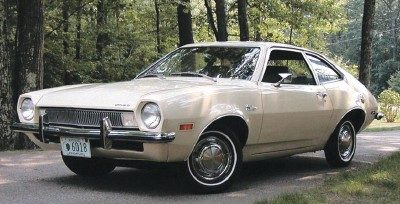
Lee Iacocca gets all the credit for the Mustang. It’s easy to see why. He pushed that sporty compact into existence in the mid-sixties and ignited the pony car craze. Dozens of accounts celebrate his foresight. But Iacocca had another horse in that race. It didn’t win the same praise. It didn’t avoid the bad press. It was the Ford Pinto.
Ford’s fourth equine-themed product line. A subcompact that arrived on a wave of bad publicity the Mustang never had. Iacocca isn’t exactly eager to talk about it. Maybe he should be. Or maybe he prefers to let the Pinto speak for itself. And the Pinto had plenty to say.
A $2,000 Bet on Economics
The Pinto wasn’t fancy. It wasn’t trying to be. Its mission statement was brutally simple. Provide reasonable comfort. Offer adequate performance for modern freeways. Keep the buy price low. Keep maintenance costs down. That was it.
Iacocca watched over this car with a vigilance he didn’t show for the Mustang. His constraints were rigid. Hard numbers. No more than $2,000. No more than 2,000 pounds. Every ounce and every cent counted. It was an exercise in extreme efficiency.
Ford had toyed with the idea of a smaller domestic car since the mid-sixties. By 1967, the gears were turning. They were looking at an 85-inch wheelbase. Something with fewer than six cylinders. Iacocca, then executive vice president for North American Vehicle Operations, saw the writing on the wall. Volkswagen was eating alive. Japanese compacts were rising. They would soon capture the entire U.S. subcompact market. Ford needed to fight back. Head-on.
The Battle for the Presidency
The Mustang launch was a smash. Sales were up. Everyone assumed Iacocca was next in line for the top job. Then Arjay Miller left in late 1967. Henry Ford II pulled a curveball. He went outside the company to General Motors. He hired Semon “Bunkie” Knudsen.
The move created instant tension. Cold shoulders became standard protocol on the upper floors of Dearborn’s “glass house.” Knudsen and Iacocca were on different planets regarding strategy. Knudsen wanted to stick to full-size, mid-size, and compact offerings. He believed Ford was already ahead of the game. The 1970 Maverick, dropping in early ’69 to replace the aging Falcon, was proof enough.
Iacocca disagreed. Confronting imports directly was the only way. The Maverick was big enough. His proposed “G-car” might have been a bit too small, but something smaller than the Maverick was necessary. The threat from foreign competitors was intensifying. Reports came in that other U.S. automakers were planning smaller-than-compact cars. The pressure was mounting.
How Iacocca Won the War
Persistence paid off. In January 1969, Henry Ford II finally gave the nod. Ford’s first domestic subcompact was greenlit. That decision sealed Knudsen’s fate. The continuing pressures from other company areas, combined with that defeat, led to Knudsen receiving the word. His efforts as president were “just not working.” The presidency became Iacocca’s.
There’s a complicated footnote here. Some accounts give Knudsen a substantial role in the Pinto’s genesis. Bob Thomas, a former Ford stylist, recalled the process in an April 1994 interview with Collectible Automobile.
“My design turned out to be the exterior for the Pinto. I was amazed at the package for the Pinto … After they showed this model, Bunkie picked it — and that was it. Of course, Knudsen didn’t get any credit for the Pinto because shortly afterwards he left, not by his own choice.”
Knudsen got no credit. He left shortly after. The Pinto became Iacocca’s legacy, but not the legacy he probably wanted to be remembered for. The marketing success was real. The bad publicity? That stuck.
For more detailed looks at automotive history:
- Classic Cars
- Muscle Cars
- Sports Cars
- Consumer Guide Automotive
- Consumer Guide Used Car Search
The Phoenix Project and the American Compact
Ford gave the green light in 1969 to start the Pinto. The clock started ticking. The deadline was brutal: less than 20 months to build, test, and launch the car by September 1970. The internal code name was “Phoenix.” It felt ironic now. The project lead was Frank G. Olsen. He had done the Mustang. He had worked on the Fairlane and Torino. He knew how to move fast.
The “Phoenix Green-Book” set the rules. Olsen published the objectives. The new Ford needed superior looks. It needed better ride and handling. It had to beat the competition in passenger comfort and performance.
Benchmarking the Competition
February 1969. A group of 32 engineers hit the road. They drove the cars the Pinto would face. Ford’s chief engineer, Harold Freers, called it a search for an “Americanized compact.” They tested the Fiat 850 and 124. They tested the Volkswagen Beetle. The Opel Kadett. The Toyota Corolla. And the Vauxhall Viva, which was basically a Ford Escort with a British badge.
The verdict was clear. Volkswagen was the main target. Toyota won on quietness. Fiat took the comfort crown. The Opel had the best ride and handling. You couldn’t beat the Opel.
Unitized Construction and Weight Wars
Ford used unitized construction. They knew this stuff. The goal was light weight without losing rigidity. They started with a stamped under-body platform. Then they welded the structural members and outer sheetmetal together. This unified approach improved fitment on the hood, decklid, and doors. Less rattle. Less squeak. No leaks from wind or rain.
A “halo” ring held the bodysides in place. It cut down on steel weight. It also added rollover protection. It wasn’t easy. Major flaws appeared as soon as Pintos hit the track.
“Hardly a week went by when we didn’t need the body engineers. We went through a number of redesigns to make it pass,” Freers told Motor Trend.
Structural integrity was the problem. The body needed to be stiff. The team used less material wherever they could. They redesigned the front cross members. They tweaked the rear end. They even used the dashboard as a unifying structural source.
The Noise Battle
Noise control was a nightmare. A Lincoln sedan carried 140 pounds of sound-absorbing material. The Maverick had 28 pounds. The Pinto had 12 pounds. Target weight was a quarter-ton less than the Maverick. There was no budget for heavy insulation.
Ford innovated. They used a heat-cured vinyl sealing material. They applied it to the full length of outer panel seams and joints. It blocked noise. Plastic replaced metal in many interior components. The front grille was plastic too. Cost went down. Weight went down.
Cabin and Servicing
Engineers maximized the cabin space. Six-and-a-half-footers could get in and out easily. The layout was logical. Dashboard controls. Gearshift. Pedals. Gauges. All easy to reach.
Servicing mattered too. The main instrument cluster, housing the speedometer and fuel and oil monitors, could come out in minutes. You just needed a screwdriver.
The Engines: Kent and Cologne
The drivetrain was the most important part. Ford looked to Europe. Two engines stood out.
First was the Kent engine. It was a small inline overhead-cam four-cylinder. Introduced in 1959. It proved itself durable in British models like the Anglia. Displacement started under one liter. It grew for Consuls and Zephyrs. By 1962, the Cortina used a 1.3-liter version. Then 1.5 liters. The basic design was so good that Colin Chapman used it for Lotus road and race cars.
The Pinto version was rated at 75 horsepower at 5,000 rpm. Torque was 96 pound-feet at 3,000 rpm. It used a single-throat carburetor with an automatic choke. Cross-flow cylinder heads improved power by eliminating combustion chamber issues. They called it the Pinto 1600. That was 1,600 cubic centimeters. This was the base engine.
The 2.0-Liter Option
Americans wanted power. Engineers found it in Germany. The “Cologne Four.” It was a 2.0-liter overhead-cam engine. It had a racing heritage in Europe. It made 100 horsepower at 5,600 rpm. Torque jumped to 120 pound-feet at 3,600 rpm. It was considerably stronger than the Kent.
The Cologne Four also used cross-flow cylinder heads. It had larger valves. It had ported manifolds. It was the performance option. The Pinto was ready for the American street.
The Transmission Setup
Ford shifted gears using a proprietary four-speed manual that had proven its worth across the pond. It was a smart little box, borrowed from a design Ford of Britain had relied on for years. This stick shift came standard on both engines. If you wanted automatics, you had to pick the 2.0-liter version. That trim offered the Cruise-O-Matic three-speed. It was an optional extra. Not standard.
Engineering the Compact Solution
The mandate for the 1971 Ford Pinto was clear: it had to handle better than any other subcompact on the market. Ford engineers delivered. They utilized rack-and-pinion steering, a technology that was standard in Europe but still novel for American drivers. The system used a 22:1 ratio. You turned a compact 15-inch wheel, getting a sports-car feel without needing power assist. The car was light. The steering was direct.
Front suspension mixed short and long A-arms. It was essentially a scaled-down version of setups found in larger domestic Fords. Coil springs sat between the lower arm and the upper cross member. Double-acting shock absorbers lived inside those coils. Easy to replace.
Rear suspension kept pace with contemporary design. Multileaf semielliptical springs measured 46.5 inches long. Rubber-insulated anchors reduced vibration and road noise. Staggered shock absorbers countered wheel hop. They also helped with acceleration and braking stability. Braking started with four nine-inch drums featuring self-adjusters. Front disc brakes were optional but mandatory if you ordered the larger engine.
Design Compromises and Aesthetics
Launch plans originally included a two-door sedan, a “three-door” hatchback, and a two-door station wagon. Body rigidity issues cropped up as production approached. Engineers focused all fixes on the base sedan. The others were delayed or scrapped for launch.
The wheelbase measured 94.2 inches. Overall length was 163 inches. The hood was proportionately long. The rear featured a fastback design with a short decklid starting at the base of the rear window. Standard tires were 6.00X13 black-sidewall bias-ply. Whitewalls and radials were optional. Rear-quarter windows flipped open for extra ventilation.
Exterior styling prioritized cost reduction. A chrome-plated plastic grille with vertical slats sat at the front. Combination park and turn-signal lights flanked the ends. Only two headlights were used, mounted on the leading edge of the fenders. A simple chrome blade bumper completed the look. The rear was equally plain. A flat panel held taillight assemblies taken straight from the 1970 Maverick catalog.
The Color Palette and Launch Strategy
Ford executives, including Henry Ford II, called the Pinto a rebirth of the Model T. To honor that legacy, “Model T Black” became one of the available colors. If black wasn’t your thing, there were 14 other options. Some were wild. Vivid “Grabber” colors from the Maverick and Mustang lines were adapted for the subcompact. Grabber Blue became Pinto Blue.
The paint job used a six-step process. Bodies were dipped in primer. An electrostatic charge helped the paint adhere better. The finish was durable. Interior trim was color-keyed all-vinyl. Two front bucket seats and a rear bench seat matched the exterior.
Competition was fierce in autumn 1970. AMC had released the Gremlin months earlier as a 1970 model. Chevrolet unveiled the Vega just one day before the Pinto debuted. Chrysler relied on captive imports: the Mitsubishi-built Dodge Colt and the Hillman-derived Plymouth Cricket.
The Pinto hit the mark. Lee Iacocca, the creative force behind the project, was proud. Shortly after the launch, Henry Ford II promoted Iacocca to company president.
Sales Numbers That Shocked the Industry
The public saw the first Pinto on September 11, 1970. This was one week before the rest of the ’71 Ford lineup. Showrooms weren’t mobbed. But sales moved fast. Just one model was available. By the end of 1970, 86,680 Pintos had rolled off the assembly lines. Compare that to the Chevrolet Vega. Only 24,295 Vegas were built by December 31.
Fairness requires noting a major factor. A 67-day strike crippled General Motors plants starting September 15. New GM models were delayed. This helped the Pinto sales figures significantly.
Sales kept climbing into 1971. On January 18, 1971, less than five months after introduction, the 100,000th Pinto was delivered. Marco Ojeda in San Francisco, California, took delivery at S and C Motors.
The Pinto That Beat the Imports in Their Own Backyard
Performance expectations were shattered when the 1971 Ford Pinto arrived. Most buyers weren’t ready for how competent it actually was.
This was especially jarring in California. The state was a fortress for Japanese and European imports. Yet, by January 1971, Ford dealers in California were selling Pintos at a rate that equaled 17.8 percent of all import sales. They were eating the competition’s lunch before the lunch hour was even over.
The secret weapon wasn’t just engineering. It was the sticker price. Ford hit its target hard. The base 1971 Pinto sedan was listed at $1,919. That undercut Lee Iacocca’s desired price ceiling by $81. It also undercut the Chevy Vega by $171. You got a new car for less than a used appliance.
Gasoline was cheap in 1971. Plenty of it. No one had to publish official fuel-mileage figures to prove their worth. But Ford’s literature didn’t need to be legally bound to truth. They touted engineering tests of the base 1,600-cubic-centimeter engine paired with the standard transmission. The results? An average of 25 mpg in “simulated” city and suburban driving.
Initial reviews praised the obvious wins. Operating economy. Easy entry and exit for passengers. Cargo-area access. Performance got better-than-expected marks too. Most customers came to the Pinto having only ever driven V-8s or six-cylinder engines. This was the first domestically produced Ford passenger car with a four-cylinder engine since 1934. The jump in refinement was noticeable.
There were flaws. The plastic grille would crack if you slammed the hood too hard. Then there was the door handles. The inside ones broke off in a passenger’s hand. A minor annoyance for some, a liability for others. Dealers learned to stock piles of these parts. Fleet owners of Pintos started ordering cases of door handles just to keep the cars rolling.
Ford salesmen were coached to point out where the Pinto beat the Vega, Volkswagen, Toyota Corona, and Datsun 1600 sedan. Maneuverability. Stability. Serviceability.
Take maintenance. A special publication for dealers highlighted a key advantage over the VW. Volkswagen recommended owners change oil and lube the car every 3,000 miles. A Pinto owner could easily go twice that distance.
Ford even sold tool kits to make you self-sufficient. A beginner’s set went for $28.75. The “master’s” kit cost $44.95. It included everything from wrenches and ratchets to gauges and a torque wrench. The theory was simple: you never had to bring the Pinto back to the dealership for basic servicing. One of the most popular promotional items was a little service key. It acted as a screwdriver and provided measurements for properly gapping spark plugs and points.
It was an economical starter car, yes. But it also offered a wealth of accessories. You could spec deluxe interior-decor packages. Full wheel covers. Exterior dress-up kits. One option included a vinyl roof. A variety of radios were available on the order sheet.
Upgrade the engine, and the possibilities expanded. The 2.0-liter engine added $50 to the total. With that larger mill, you could add air conditioning. For $175, you could add the Cruise-O-Matic automatic transmission.
For those wanting the street look, Ford marketed a Rallye appearance group. It came with most of the decor-package items plus blacked-out hood, taillamp bezels, and grille. Boss Mustang-style fender stripes. Rallye badges. Front disc brakes. A78X13 black sidewall tires.
On February 20, 1971, the Pinto Runabout made its public debut at the Chicago Auto Show. It went on sale five days later. Like the sedan, demand was immediate and strong.
It was priced at $2,062. The Runabout was distinguished from the sedan by exposed chrome hinges for the liftgate and five decorative chrome strips on the back “door.”
All other profiles and dimensions were nearly identical to the sedan. Pneumatic rams assisted in raising the hatch. There was plenty of room when the back seat was folded down. This feature was optionally available on the sedan too. It provided up to 38.1 cubic feet of storage space.
Assembly happened at multiple sites. Ford’s San Jose, California plant. Metuchen, New Jersey. Ford of Canada’s new St. Thomas, Ontario facility. Production schedules were tight. Two shifts worked through most of the model year just to keep up with the orders pouring in.
In its first year, Ford produced 288,606 sedans and 63,796 Runabouts. That is one of the best first-year launches ever. It was only bested by the Mustang in 1965 and the Falcon for 1960.
What surprised Ford’s marketing group most was not the volume. It was the spec. The vast majority of buyers opted for the more-expensive 2.0-liter engine. And they went for the automatic transmission on those cars by a better than 2-to-1 ratio.
Henry Ford II seemed to approve. He was reportedly often seen tooling around the Detroit and Grosse Pointe areas in his specially painted Candy Apple Red Runabout. It came fitted with custom wire wheels and a black leather interior.
Not everything was rosy in Detroit or the industry at large. The federal government was getting involved. The keywords were safety and emissions.
In a 1971 special report to dealers and salesmen, Henry Ford II sent a personal message. It addressed ten points of commitment the company was making toward the environment. It also listed all the safety innovations Ford had pioneered. From its first safety packages in 1956 to the Tot-Guard child-restraint system first offered in 1967. The report talked about protecting passengers with safety-designed instrument and dash panels. Low-profile impact-absorbing vinyl coat hooks were also cited as a safety feature.
However, the same publication discounted many of the claims about what additional steps the car company could take regarding safety. It contended that vehicles were a relatively small contributor to air pollution.
An early driver-side airbag system was tested on the Pinto. It was ultimately kept from production. The Pinto survived its launch, but the rules of the road were changing, and the Pinto would have to adapt or break.
Ford didn’t want buyers getting confused by the 1972 Pinto. The chairman made it clear: this wasn’t a car for people hunting for yearly style shifts. Think Henry Ford’s Model T. It stayed basically the same while getting better, not different.
The 1971 model had been a hit. So for 1972, Ford kept the wheel turning with minimal friction. The result was a car that was virtually identical to its predecessor.
The 1972 Pinto: Small Tweaks, Big Patience
Dealers and press were told not to look too closely for annual changes. This approach kept production tight and costs down. Consumers got a proven product rather than a redesigned one.
There were a few minor updates. Ford moved the seatback release. It used to be stuck in the hard-to-reach center. Now it sat on the outer edge. Much easier to use.
Exterior changes were even scarcer. Save for a couple of color swaps and some decor-package decals, not much changed. One notable exception involved the Runabout. Ford enlarged the backlight for this hatchback variant.
Sedan and Runabout buyers could also get a sunroof. A small luxury for a small car. These were the only real differences worth noting.
“It would remain basically the same throughout its run, only featuring improvements, and not altering its looks each year.”
This strategy worked because the 1971 Pinto was already successful. Why fix what wasn’t broken? Ford understood that for the budget-conscious buyer, consistency was a feature.
The Pinto’s design philosophy prioritized function over form. Annual facelifts were a waste of engineering hours. Resources went elsewhere. Maybe into the engine. Or the suspension.
But the core shape remained. The hatch got bigger. The handle moved. That was it.
This approach defined much of the early Pinto era. It wasn’t about reinvention. It was about refinement. And keeping the price down.
Did anyone really care? Some did. But most just wanted a cheap car that ran. The 1972 Pinto delivered exactly that. No surprises. No risks. Just the same familiar shape with a few minor adjustments.
It’s a stark contrast to today’s automotive landscape. Every year brings a new face. New tech. New everything. Back then? You bought what worked. And the Pinto worked.
For those who like to dig deeper into automotive history, the details matter. How did Ford justify keeping the same body for years? The answer lies in the economics of the early 70s.
The Pinto was a response to the oil crisis looming on the horizon. Small, efficient, cheap. These were the priorities. Style took a backseat.
So when you look at a 1972 Pinto today, you’re seeing a car that was designed to be ignored in favor of its utility. It wasn’t glamorous. It was practical.
And sometimes, practical wins.
The 1972 Ford Pinto Station Wagon Entry
The Pinto lineup got its final major body style addition on February 24, 1972. It was the station wagon. Ford didn’t reinvent the wheel here. They took the existing platform shared by the sedan and the Runabout hatchback. Then they stretched it. The rear quarter panels extended significantly. This pushed the overall length to 172.7 inches.
That is nearly 10 inches longer than its siblings. For a car marketed as small and economical, that stretch mattered. It wasn’t just about looks. It was about utility.
The Pinto wagon offered a different proposition than the coupe or hatchback. Buyers who needed hauling capacity found a compact solution. It sat between the full-size wagons and the smaller cars in terms of space. But it kept the Pinto’s footprint manageable for parking.
The mechanicals remained largely unchanged. The same engines powered all three bodies. The same suspension handled the weight. The difference was purely in the sheet metal and interior configuration. This allowed Ford to introduce a new segment player without massive R&D costs.
Yet, the added length changed the character. It felt less like a commuter car and more like a family hauler. Even if that family was small. The extra inches in the rear quarter panels translated to cargo space. Practicality became the selling point. Not style. Not speed. Just storage.
This was the third pillar of the 1972 Pinto family. It completed the trinity of options for the budget-conscious buyer. Whether you wanted a coupe for the weekend, a hatchback for versatility, or a wagon for groceries and kids. Ford had a body style. The platform held up. The stretch worked. Or at least, it looked like it did.
The Pinto Sprint and the 1972 Price Jump
Ford claimed a total of 60.5 cubic feet of storage space for the 1972 Pinto station wagon. You accessed it through a one-piece liftgate that shared engineering roots with the Runabout’s rear hatch. If you planned to haul passengers in the back, you were stuck. Flip-open rear-seat windows were an extra-cost item. They were the only source of fresh air for those rear occupants.
Under the hood, the 1972 Ford Pinto wagon came standard with the 2.0-liter engine. That pushed power to a four-speed manual transmission. Front disc brakes were also standard across the board.
It was a clean look. The base two-door wagon was attractive. Ford offered dress-up packages too. There was a decor group similar to what you saw on sedans and Runabouts. But the real crowd-pleaser was the Squire. It wasn’t a separate model. It was an option that carried heavy weight with buyers.
The name Squire had been part of the Ford family for over 20 years. It borrowed from older luxury cues. The package added a woodlike finish. Ford used fiberglass framing around a rich, dark walnut appliqué. It gave the compact wagon a serious air of snobbery. Inside, the fittings matched the exterior pretension. Plush padded bucket seats. Embossed door panels. Woodgrain appliques on the dash, shifter console, and steering-wheel center.
Net Horsepower and the Sprint Trio
This year brought a major shift in how horsepower was measured. The industry moved to net figures. This measured power at the rear wheels instead of untethered gross output on a test stand. The numbers took a hit.
The Pinto’s 1.6-liter engine sat at a 75-bhp rating previously. For 1972, that dropped to 54. The bigger 2.0-liter four went from 100 horsepower in 1971 to 86. It was a painful adjustment for enthusiasts tracking spec sheets.
Ford tried to stir up slow springtime showroom traffic. They’d done this since the Thirties. For 1972, the Pinto joined the Sprint family. It was a trio with the Mustang and the Maverick.
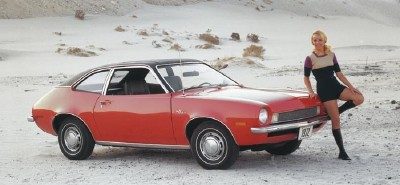
Pinto Sprint sedans and Runabouts wore a specific look. White bodies. Blue hoods. Blue lower body panels. Wheels came with hubcaps and bright trim rings. Red pinstripes ran the length of the car. Stars-and-stripes shields sat on the front fenders. It was a very patriotic appeal. Interiors used white vinyl. Blue and red accents filled the gaps.
Production Numbers and Market Shifts
Prices crept up. Base sedans started at $1,960. The Runabout nudged to $2,078. The new station wagons hit showrooms at $2,265. That was $20 less than the Chevrolet Vega Kammback wagon.
Production climbed. The Runabout became the sales leader among Pinto buyers. Ford assembled 197,920 hatchbacks. Sedans followed closely with 181,002. The wagon entered late in the model year but still moved 101,483 examples.
Total Pinto figures crossed 833,000 units after just two model years. American carmakers’ push into the subcompact field began to bite. Japanese import market share dropped from a high of 15.2 percent in 1971 to 14.8 percent in 1972. This was a temporary ebb. The tide would turn.
Safety Mandates and the ’73 Turmoil
Ford dealers across the nation were having a field day. They created special and regional editions. The most potent was the Pangra. Produced by Huntington Ford in Arcadia, California, it was expensive and muscular. It might be considered the grandfather of today’s sport-compact “tuner” cars.
Pinto went into the 1974 model year sitting on top of the world. That didn’t last.
For the upcoming third season, notable changes arrived. These reflected new safety mandates and changing customer tastes. The most obvious update was the energy-absorbing aluminum front bumper. This brought the Pinto up to a five-mph damage-resistance standard. New federal laws required it. The bumpers stretched the sedan length to 164.1 inches. Wagons grew to 173.9 inches.
Ford added five new exterior colors. Forged alloy wheels and a handling package hit the option list. Prices kept creeping upward. The two-door sedan finally inched past $2,000.
The wagon took advantage of a full production year. It was the priciest member of the family. It remained the most popular body style. This established a pecking order that lasted for years. Demand for the wagon followed by the Runabout and then the sedan.
Then the market broke.
For more picture-packed articles about great cars, see:
-
Classic Cars
-
Muscle Cars
-
Sports Cars
-
Consumer Guide Automotive
-
Consumer Guide Used Car Search
1973 and 1974 Ford Pinto
The 1973 and 1974 Ford Pintos entered the market during a turbulent time. In October 1973, war flared in the Middle East. Key Arab oil-producing states were angry about Western support for Israel. They raised prices. They orchestrated an embargo by the Organization of Petroleum Exporting Countries.
Gas prices in the U.S. leapt from around 30 cents a gallon. It went well past half a dollar. Shortages hit the pumps. Lines stretched up to a mile long. Motorists panicked. They were afraid of going to sleep with the fuel gauge in the old buggy below the three-quarters-full mark.
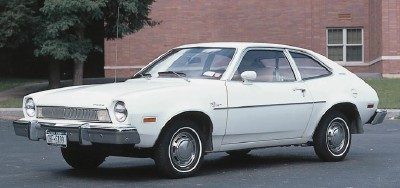
The 1974 Pinto: Volume King Amidst Crisis and Controversy
The fuel panic changed everything overnight.
Shoppers stopped buying big V-8s. They wanted efficiency. Ford dealers, watching full-sized Galaxies and LTDs struggle to hit 12 mpg, found their lifeline in the Pinto.
It promised 20 to 25 mpg. That was a massive leap forward.
Sales of full-size Fords collapsed in 1974. They dropped from over 854,000 units to just 461,000. The Pinto filled the void.
President Nixon signed the 55 mph national speed limit into law early that year. It was meant to conserve fuel. For Pinto owners, it was actually a relief. The little subcompact handled the lower speeds well. It didn’t need to scream down the highway to make its point.
Then came the engine news.
Ironically, just as the gas crunch bit hard, Ford added a larger optional engine. This wasn’t imported or copied from overseas. It was designed and built right here, at Ford’s Lima, Ohio facility.
It was an all-new 2.3-liter overhead-cam four-cylinder.
The rating? 85 horsepower.
When this new mill arrived, Ford killed the slow-selling 1.6-liter four. The 2.0-liter moved up to become the standard powerplant.
Here is where it gets weird. The new 2.3-liter made one horsepower less than the base engine. But Ford claimed it produced more torque. They also said it delivered better gas mileage.
By year’s end, most Pintos carried the 2.3. It added $52 to the base price.
The look didn’t change much. Aside from some minor tweaks, the biggest visual update was the bumpers.
Federal standards for rear impact protection had risen to five mph. The Pinto needed new bumpers to comply.
Add the new bumper system. Add the base engine upgrade. Add sound insulation throughout the cabin.
The weight of a Pinto sedan jumped from 1,949 pounds in 1971 to 2,372 pounds in ’74. That is a 21 percent increase.
Prices went up too. You were paying more for a heavier, quieter car.
Yet, the big Fords were dying. The Pinto reigned supreme.
Ford built 544,209 of them in 1974. Another record high. Total production neared two million cars.
But the story wasn’t all sales figures.
Problems were surfacing. Memos inside Ford. Reports in the press.
A serious issue with rear-end collisions.
These crashes resulted in fiery explosions. And deaths.
Lawsuits started to fly. Secret research launched inside the company. They were looking for corporate liabilities.
They were trying to figure out how bad it really was.
The numbers were good. The sales were great. But the truth was burning underneath.
The 1975 Ford Pinto arrived on September 27, 1974. The marketing pitch leaned hard on “plucky.” Externally? Barely changed. The wheelbase stretched by fractions—a half-inch for the wagon to 94.7 inches, a hair less for the rest to 94.4 inches. But under the hood, Ford was rewriting the script.
The old 2.0-liter four was gone. In its place sat an 83-horsepower 2.3-liter four. But the headline act was different. Ford introduced a V-6. It was a 2.8-liter unit based on Lancia’s Italian design. Officially rated at 97 net horsepower. An 8.0:1 compression ratio. A two-barrel Holley carburetor on top.
Why the 1975 Ford Pinto V-6 Matters
The engineering here was surprisingly sophisticated for a subcompact. 60-degree banking. Uniform alternate firing. The camshaft was mounted high in the block to keep the valvetrain light. The result? Smoothness that belied the car’s budget origins. This basic architecture would live on in Ford products for over 25 years.
You couldn’t get it in the basic sedan. The V-6 was locked to the Runabout and the wagon. It also demanded the newly redesigned SelectShift Cruise-O-Matic transmission. For the first time, ordering the V-6 unlocked power steering and power brakes as options.
How the 1975 Ford Pinto MPG Model Saved Fuel
By summer 1974, the fuel emergency had cooled. Oil shipments hit full volume. Gas prices dipped. Americans felt the bargain-bin thrill again. But mileage still mattered. Ford responded with specific 1975 Ford Pinto MPG model configurations.
These weren’t just marketing gimmicks. They used the four-cylinder engine. A manual transmission. A new catalytic converter that allowed for efficiency retuning. And a 3.18:1 axle ratio instead of the standard 3.40 gears. The government rated this setup at 34 mpg on the highway. 23 in the city. Drop the stick shift for an automatic and you dropped to 30/21.
Advertising for these late-arriving units screamed highway mileage and base price. They compared favorably against both foreign imports and domestic rivals. All three body styles got the treatment.
The Rising Cost of the 1975 Ford Pinto
You pay for those upgrades. Prices crept up, landing the Pinto closer to—and sometimes above—the slightly larger Maverick.
- Sedan: $2,769 base.
- Runabout: $2,984.
- Wagon: $3,094.
Add $253 for the V-6. Another $202 for the automatic transmission.
This wasn’t just about new standard equipment or compliance costs. Raw materials were exploding. Steel up 35 percent in a year. Rubber up 43 percent. Aluminum up 61 percent. Plastics averaged 21 percent. Ford told writers in early 1975 that manufacturing was bleeding margins.
The market reacted. The 1973-74 fuel crisis still had ripple effects. Domestic automakers got hit hard. The 1975 Pinto sales numbers were brutal. 223,763 units built. A 59 percent drop from the previous year. Ford actually sold more 1974 Pinto wagons than it did all Pintos in 1975.
Mercury Bobcat and the 1976 Update
There was one side note. 1975 brought the Bobcat to US dealerships. It was Mercury’s upscale Pinto. Used the Runabout and wagon bodies. Created initially to fill a gap for Canadian dealers. Sales were limited. But Lincoln-Mercury dealers were desperate. They were stuck with slow-selling, gas-guzzling luxury liners. The Bobcat was a welcome stopgap.
Then came 1976.
The first major physical changes to the Pinto’s appearance. And a pivot in marketing. The front end finally changed. The vertical slats of the previous years vanished. A fine grid grille took their place. Rectangular parking and turn-signal lights floated near the outer edges. The face of the car was new.
What Changed in the 1976 Ford Pinto Styling
It wasn’t just a grille swap. The entire front fascia shifted. The vertical slats that defined the early Pintos were gone. Replaced by a dense, fine grid pattern. It looked more modern. More serious.
The parking and turn signals moved too. They floated near the outer edges of the new grille. Rectangular. Clean. It was a departure from the boxy simplicity of the launch model.
Why did Ford wait until 1976 to change the face of its best-selling subcompact? Probably because the 1975 sales crash was still fresh. They needed to refresh the image without a full redesign. The grid gave it a tighter, more composed look. The rectangular lights aligned with trends shifting away from round lamps.
It was a subtle shift. But in the crowded subcompact market, subtle shifts were all you got before the whole car was replaced. The Pinto lived on. Just with a different face.
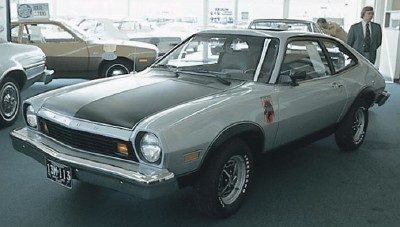
The 1976 1976 Ford Pinto was the first model year to break away from the flat, unadorned look established in 1971. Ford added bright trim where it hadn’t been before. Headlight bezels got chrome plating. A strip of polished aluminum ran across the forward edge of the hood. Block letters on the hood itself spelled out Ford. It was subtle, but it was a shift.
From a marketing perspective, dealers started pitching the subcompact as an “import fighter.” They had to. The market was changing. For buyers who wanted to drive on the absolute cheapest possible basis, Ford introduced the Pony MPG sedan.
The Bare-Bones Pony MPG
You shaved $130 off the standard four-cylinder sedan’s $3,025 base price. What did you get for that discount? About as bare-bones a car as federal regulations allowed.
Standard equipment included inexpensive cloth seats. Black rubber floor mats. A more economical 3.00:1 axle ratio. This was the entry point. All other four-cylinder Pintos, which were simply badged as MPGs, came standard with the slightly taller 3.18 axle.
If you wanted to go in the opposite direction—toward style rather than pure economy—Ford released the Pinto Stallion.
The Stallion Package
The 1976 Stallion resembled the similarly trimmed Mustangs and Mavericks of the era. It was attractive. Silver paint covered the body. The grille was blacked out. Window frames disappeared into black. Headlight surrounds were dark too. The hood and cowl area got a matte-black finish.
It wasn’t just paint. The package included:
– Black sport mirrors
– Special logo decals on the fenders
– Forged aluminum wheels
– A73313 raised-white-letter, wide-oval tires
– A special handling suspension
This package added $283 to the $3,200 base hatchback price. It was a clear signal that the Pinto could be a style statement, not just a budget tool.
Minor Variations and Interiors
Other minor variations appeared for the year. The V-6 engine became available in the two-door sedan. A Squire version of the Runabout was added, featuring a wide band of imitation-wood trim on the bodysides. Bright side-window and drip-rail trim completed the look.
Interiors got interesting. Ford-exclusive vinyl-weave fabric was available in one of four colors. Or you could choose several choices of a nylon-based plaid pattern.
An interesting innovation was the vinyl half top. It covered only the area ahead of the rear roof pillar. Not a full convertible top, but it let light in where it counted.
Powertrain Numbers
No major mechanical innovations were announced for ’76. But the numbers shifted. The base four-cylinder engine was boosted to 92 horsepower at 5,000 rpm. The optional V-6 climbed to 103 horsepower at 4,400 revolutions. Small gains. Reliable ones.
Within a generally improved automobile market in 1976, Pinto production perked up significantly. A total of 290,132 units were run off for the model year. That’s an increase of nearly 30 percent. Ford was selling them again.
1977 Ford Pinto
Even though Henry Ford II had promised no annual changes just for the sake of change, the 1977 Ford Pinto received an attractive facelift. The front end changed the most.
A narrower chrome-plated plastic grille composed of six rows of rectangles sat between vertically bisected parking and turn-signal lamps. The entire grille ensemble was canted back toward the top. The body-color headlight buckets followed that angle, looking almost like the “frenched” lights on customized cars of the Fifties.
Rear changes were equally distinct. Sedan and Runabout taillights were redone for the first time. They were enlarged, using a sectioned red plastic lens. A white inset lens handled the back-up lights. It was a clean update. The Pinto was still a subcompact, but it looked a little more polished as the decade wound down.
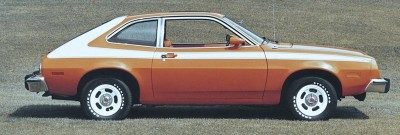
The 1977 Ford Pinto got a facelift. It looked sharper. It also cost more.
Ford installed an improved electronic ignition system called DuraSpark. This brought the Pinto engines to life with less fuss. Power was down slightly, though. The four-cylinder now made 89 horsepower at 4,800 rpm. The six generated 93 horsepower at 4,200 rpm.
Horsepower went up and down year to year. Prices rose steadily. Lee Iacocca wanted this car to sell for no more than $2,000. It now cost at least $3,000. A stripped-down Pony sedan started at $3,099. A four-cylinder station wagon began at $3,548. Squire equipment added $343 to the bill.
Wagon buyers had another option. The Cruising Wagon package cost $416. It tried to turn the Pinto hauler into a miniature version of the custom vans that were in vogue during the Seventies. The package included a filler panel for all rear-side windows. A portholelike “bubble” window appeared toward the rear on each side.
Exterior touches followed. Buyers chose from several colorful bodyside tapestripe selections. Color-keyed dual racing mirrors came standard. There was a front spoiler. Polished aluminum wheels finished the look. Inside, a carpeted cargo area extended to the sidewalls in the rear compartment.
Buyers still wanted extras. Sound systems included AM/FM with eight-track players. Air conditioning was available. Ford offered a treasure trove of accessories.
New for the sedan and Runabout was a pop-up glass sunroof. It could be removed altogether. Runabouts could get an airier look with a solid-glass rear hatch for just $13. One extra that failed to return to the Runabout this year was the Squire trim option.
Interiors were snazzy. Plaid cloth mixed with striking color combinations in vinyl. Plush Ruffino leather-like graining was available. Special stitching patterns added flair. Bold accent-stripe decor groups were optional. One resembled the red and white Ford Torino seen weekly on Starsky and Hutch.
Television promoted the Pinto. Commercials ran. The car appeared in series. Charlie’s Angels viewers remember Kate Jackson’s orange and white Runabout.
Sales fell. Reports of explosive rear-end collisions grew. Ford touted improved cushioning of all fuel tanks. Recall efforts were massive. Consumer confidence did not build.
Resale value dropped. Used Pintos fell far below the established curve for other cars in its class. Just 202,549 of the Ford subcompacts rolled off the assembly line. The fewest yet for any season.
1978 Ford Pinto
The 1978 Ford Pinto models were close in looks to the previous year’s cars. Sales literature recycled a number of ’77 photos. The only cosmetic news was the shuffling of a few exterior colors. Changes to a couple of appearance packages rounded out the updates.
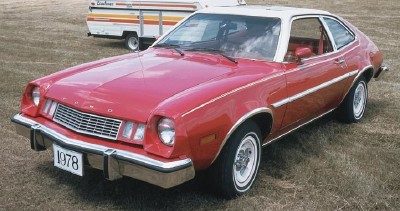
The 1978 model year didn’t bring sweeping changes to the Ford Pinto. It was largely a continuation of the previous year’s formula. But for buyers looking for a little flair, Ford introduced the 1978 Ford Pinto Rallye edition.
This trim level was available on both the sedan and the Runabout wagon. It wasn’t just a badge job. You got black window trim. Gold tape striping ran along the body. A front spoiler added a bit of aggression to the nose. Sports mirrors sat on the doors. And underneath, four-spoke styled-steel wheels with trim rings gave it a distinct look.
Ford also tweaked the lineup to serve small businesses. A sedan delivery version of the Pinto wagon arrived. Between the metal side panels, they installed a full-length flat cargo floor. If you needed extra security, a rear-window security screen was available as an option.
Under the hood, things got slightly quieter. Or rather, slightly weaker.
The standard four-cylinder engine now produced 88 horsepower. That is a loss of one horsepower from the previous year. The V-6 option dropped even harder, generating just 90 horsepower. That’s a decline of three horses. These minor revisions to horsepower ratings were about as dramatic as the engineering updates got.
The Price Tag Problem
The real shock came at the dealership. Pricing saw a dramatic shift.
An entry-level Pony sedan cost just $40 more than the 1977 version. Barely noticeable. But other models? Prices were boosted by about $400 or more. For a car already struggling against the rising tide of import competition, this was a tough sell.
Bad press continued to haunt the Pinto. The stigma from the fuel tank controversy hadn’t fully faded. Now, Japanese and European imports were gaining ground. They offered better reliability and refinement. The Pinto’s customer base eroded.
Production numbers reflected the panic. Sales slumped below 190,000 units. It was a significant drop.
Runabout Takes the Lead
Demand for sedans actually ticked up slightly. But wagon orders plunged. They declined by 34 percent. Why? Perhaps buyers were moving to larger vehicles. Or perhaps they simply didn’t want the Pinto wagon anymore.
The result was ironic. The Runabout became the most popular Pinto for the first time since 1972. The compact wagon, once a secondary option, stole the show. It held on while the rest of the lineup stumbled.
By 1979, the end was in sight. The Pinto was eight years old. The design was stale. Ford knew it had to do something. They mandated a front-end redo. But for 1978, the Pinto was just hanging on, selling more wagons than sedans, and asking customers to pay more for less power.
“The Runabout was the most-popular Pinto for the first time since 1972.”
It didn’t last. The 1979 model would bring cosmetic surgery to a dying patient. But for 1978, it was about holding the line. And failing.
1979 Ford Pinto
When the 1979 Ford Pinto opened
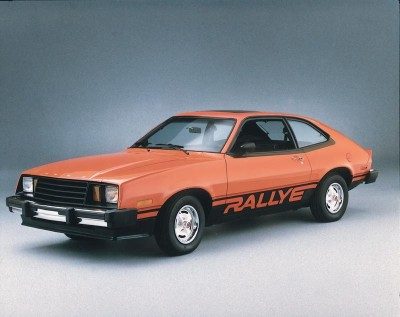
Front-end styling updates in 1979 were cosmetic bandaids on a fatal wound. The Pinto got rectangular headlights, a trend that had taken hold in the US since mid-decade. A wide chrome-plastic grille with four rows of tiny squares sat in the center. New bumpers had black plastic rub strips and vinyl guards at the ends. Hood and front fenders got reshaped. Sedan and Runabout models lost their frames for large, unframed red taillight lenses.
Inside, the dash changed. The two round gauge pods from 1971 were gone. Square gauges took over. Speedometer on the right. Fuel gauge and warning lights on the left.
Entry-level buyers got more options. A Pony edition joined the station wagon lineup. Those with deeper pockets had other choices.
European Flair and Sporty Interiors
The ESS package brought a European vibe to the sedan and Runabout. Silver paint. Black accents around window trim, dual racing mirrors, back panel, and bodyside moldings. Grille and headlamp buckets were charcoal. Styled steel wheels finished the look. A front stabilizer bar was included. Runabouts kept their all-glass hatches.
The interior matched the exterior’s aggressive tone. Leather-wrapped steering wheel. Leather shift knob. The instrument cluster added a tachometer, ammeter, and coolant-temperature gauge.
The Cruising Wagon stayed put. It offered several stripe kits. The eye appeal was undeniable. A similar package debuted for the Runabout. The $330 hatchback option included blackout trim. Multicolor bodyside stripes. White-painted styled-steel wheels. Sport steering wheel. The gauge package remained.
Marketing targeted youth. Print ads mostly featured models under 30. Even the family-oriented Squire showed young couples with toddlers. The messaging was clear. This was a young person’s car.
External Pressures Mount
Marketing tried to prop up sales. Reality did not cooperate. Civil juries handed down hefty awards. Internal memos leaked. They suggested financial decisions trumped human life. The damage was done. Prices kept rising.
Production hit 199,018 units. A slight increase from previous years. The basic two-door sedan led popularity. First time since 1971. It had a head start on the Runabout back then. Now it led again.
The late Seventies were chaotic. Inflation ran rampant. A fuel crisis hit in late 1979. Gasoline crossed $1 a gallon in most places. Doomsday investors pushed gold to $800 an ounce. Iran’s Islamic revolution took over the US embassy in Tehran. Hostages held for over a year. Cold War tensions persisted. Jimmy Carter boycotted the 1980 Moscow Olympics. Protest against the Soviet invasion of Afghanistan.
Detroit saw little joy. Henry Ford II summed it up. The US auto industry faced an economic Pearl Harbor.
Market Share Erodes and Leadership Changes
Trade agreements were too liberal. Japanese manufacturers gobbled up market share. Import cars grew to 26.7 percent of the total market. American carmakers lost $40 billion combined.
Lee Iacocca left Ford in late 1978. Many blamed the Pinto gas-tank memos. Henry Ford II was unhappy with fines. Punitive damages piled up. Negative news threatened the family business. Henry and Lee no longer saw eye to eye. The man whose name was on the building won out. Iacocca was sent packing.
The Pinto was gone. The Pinto’s final year showed that styling changes cannot fix structural and reputational failures. The external pressures were too great. Internal decisions had sealed its fate.
For more picture-packed articles about great cars, see:
– Classic Cars
– Muscle Cars
– Sports Cars
– Consumer Guide Automotive
– Consumer Guide Used Car Search
The Final Lap for the Pinto
Ford didn’t bother pretending the 1980 Pinto was a fresh start. They unveiled it in the fall of 1979 knowing the front-wheel-drive Escort was already circling. The Pinto was on its last legs. There was zero budget for updates. The only real mechanical change? The V-6 was gone. The 2.3-liter four-cylinder ran the show alone.
Marketing had to do the heavy lifting. They slapped packages on a dying car to make it look alive. Runabouts got the Rallye Pack with stripes and spoilers. There was the Cruising package. The ESS option group. The Cruising Wagon came back, this time with a Rallye variant. You could still buy the cheap Pony sedan or wagon if you didn’t care about looks.
Prices didn’t care about the car’s decline. Inflation ate the Pinto alive. Base prices had more than doubled in ten years. A Pony sedan started at $4,117. The Squire wagon hit $5,320 before you added a single option. There was always an option.
So people bought sedans. They ignored wagons. Only 39,159 wagons rolled off the line. The lowest number ever. Total production for 1980 sat at 185,054. That pushed the lifetime tally past 3.1 million. The little pony was still selling. Just not the wagons.
The Fire Controversy Explained
The Pinto’s end wasn’t just about sales. It was about flames. The late Seventies were dominated by stories of exploding Pintos. Juries handed out massive awards to victims. Was it hype? Or did Ford cut corners on human safety to save pennies?
The trouble started early. 1972. Reports hit the National Highway Safety and Transportation Administration. Rear-end collisions. Low speed. Explosions.
Investigations showed something strange. Victims often had no trauma injuries from the crash itself. They burned. The cars exploded. Some were trapped inside because the body buckled. Doors jammed shut. Escape wasn’t an option.
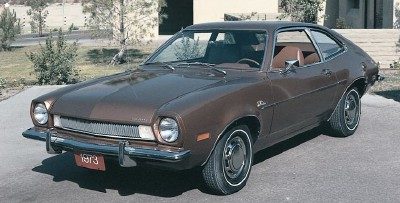
The Cost of a Life: Inside the Ford Pinto Fire Crisis
By 1973, the writing was likely already on the wall for the Ford Pinto fire hazard. This wasn’t a sudden discovery in a vacuum. Ford had been sweating fire safety since the mid-1960s. The push started with Arjay Miller, then the company president. He had been rear-ended in his brand-new 1965 Lincoln Continental. The crash ruptured the fuel tank. A spark ignited the rear of the luxury sedan. Miller escaped with his life and his door, but the experience changed him. He went on a crusade for safer fuel containment. He worked with suppliers to create systems that kept gasoline from becoming a flamethrower. He even testified before Congress about Ford’s commitment to the cause.
So why did the Pinto fail so spectacularly?
Testing That Revealed the Flaw
Records show Ford began rear-end collision tests on the Pinto in December 1970. That was months after production had already started. The initial batch of eleven coordinated crashes was brutal. In eight of the tests, the gas tanks ruptured. In most cases, they burst into flames.
The three tests that didn’t catch fire used prototype safety devices. These were the blueprints for what should have been standard.
The most effective fix involved a rubber bladder or liner made by Goodyear Tire and Rubber Company. The exterior of the tank might have cracked, but the bladder held the fuel inside. No spill. No fire. The cost to add this unit was calculated at just $5.08 per car.
A second method involved a steel plate mounted behind the bumper. It isolated the tank from direct impact. In a 30 mph blow, the plate kept the tank intact. Experts estimated this modification would cost up to $11 per car to install.
The $200,000 Calculation
Engineers identified the specific mechanical failures causing the disasters. First, the filler neck would break off, pouring fuel onto the ground where sparks could ignite it. Second, the tank was being penetrated by differential mounting bolts and the right shock absorber during an impact.
Fixing these issues was cheap. A simple plastic insulator on the differential cost less than $1 to produce. It stopped the bolts from touching the tank.
Yet, internal memos revealed a chilling decision. Ford engineers argued that retooling the plant to add these safety features would be too expensive. They looked at the cost of a redesign versus the cost of paying for the consequences.
This is where the infamous Ford Pinto cost-benefit analysis comes into play. Memos published by author Mark Dowie in Mother Jones showed that executives had run the numbers on corporate liability.
They valued a human life at roughly $200,000. A serious burn injury was worth about $67,000.
The math was straightforward and monstrous:
– Estimated deaths: 180
– Estimated serious burns: 180
– Cost to redesign and rework the gas tank: ~$137 million
– Cost of potential liability payouts: ~$49 million
Why fix a $11 part when you could pay out millions in settlements? The decision to keep the Pinto as-is was driven by this cold calculus.
The Capri Comparison and Trunk Space
Ford tried to justify the design by comparing the Pinto to the imported Capri, sold through Lincoln-Mercury dealers. Both cars were similar in size and construction. But everyone agreed the Capri’s fuel tank was in a much safer location. It was mounted higher up, away from the rear bumper and less vulnerable in a rear-end collision.
Ford engineers pushed back. They claimed that moving the Pinto’s tank higher would destroy the already meager trunk space. They argued that fitting a set of golf clubs into the reduced space would be nearly impossible. Storage convenience apparently outweighed the risk of the tank rupturing.
The Verdict in Court and Criminal Charges
The real-world toll was devastating. Twenty-seven people were determined to have been killed in rear-end-crash explosions involving Pintos.
One case went to trial in California. A boy had been severely burned and disfigured. The driver of the car died days later from her injuries. The jury awarded the boy $126 million.
When the memos detailing the liability assessments were entered into evidence, the case was effectively over. The jury heard the company knew the risk and priced it out. On appeal, a judge reduced the award to $3.5 million. It was still a massive wake-up call. Ford’s legal teams scrambled to settle pending cases out of court.
The trouble didn’t end there. In 1978, Elkhart County, Indiana, Prosecutor Michael Cosentino called a grand jury regarding three girls who died in a Pinto collision fire. The result was criminal charges of negligent homicide against Ford officials.
It was an unprecedented move. Ford’s corporate legal machine went to work on the defense. They pointed out that the accident happened on a notorious dangerous stretch of road. They also highlighted that the driver of the van that rear-ended the Pinto was under the influence of alcohol and drugs. The judge eventually dismissed the criminal charges.
The Late Recall
The criminal dismissal was a reprieve, but the industry was watching. American manufacturers realized they couldn’t ignore product safety anymore.
Finally, in September 1978, Ford issued a recall. It covered 1.5 million 1971-76 Pinto sedans and Runabouts, plus all similar 1975-76 Mercury Bobcats.
The fixes were the same ones deemed too expensive years earlier. Every car received a new fuel-tank filler neck that extended deeper into the tank. A plastic shield was installed between the differential and the tank. Another shield was added to deflect contact with the right-rear shock absorber.
It came too late for the victims. It came too late for the trust they had placed in the brand. But it was the first time Ford had admitted, through action if not words, that the Pinto was not safe. The engineering solutions were simple. The cost was negligible. The moral failure was absolute.
The Pinto’s design wasn’t the only thing under fire. Station wagons, by contrast, were deemed far safer in rear-end collisions. They had ten extra inches of sheetmetal behind the axle. The fuel filler was configured differently. They weren’t part of the recall. But the Pinto was another story.
Lee Iacocca didn’t sugarcoat it in Talking Straight. He called it what it was: clamming up. Ford’s strategy in the late ‘70s was simple. Keep your mouth shut. The company was bombarded with lawsuits. The gas tank fires were causing public outrage. Iacocca admitted the suits might have bankrupted them. So they stayed silent. They feared saying anything a single jury might construe as an admission of guilt. Winning in court became the only priority. Nothing else mattered.
“Winning in court was our top priority; nothing else mattered. And of course, our silence added to all the suspicions people had about us and the car.”
That silence backfired. It fueled every suspicion. People already doubted the car’s safety. The refusal to engage just made Ford look guilty. Iacocca’s reflection is stark. You can win the legal battle and still lose the war for public trust. The Pinto remains a cautionary tale not just for its engineering, but for the corporate paralysis that followed.
The Hunt for the Ultimate Ford Pinto Performance Build
Some folks just can’t stop tweaking. It’s in the DNA. You see it in the Shelby Mustangs and the Stroppe Broncos. But there was also a tame little subcompact that drew in tinkerers. The Ford Pinto. People wanted to make it faster. They wanted the ultimate version.
The stock Pinto started with a basic four-cylinder. It was cheap. It was easy to fix. It was not fast. Who would give this small pony real speed? A legend from Ford racing did.
Huntington Ford in Arcadia, California, moved a lot of Pintos. They sold over 400 in the first year. Another 550 followed in year two. Jack Stratton, the sales manager, had a plan. He told owner Clare Hoke they should become the performance capital of the Pinto world.
They brought in Ak Miller. He was a known master of Ford performance. Behind closed doors, they designed, tested, and developed something new.
Then came the announcement. A super Pinto was ready. They called it the Pangra.
Anatomy of the Pangra
The car looked different immediately. It had an aerodynamic front clip. This added ten inches to the length. Huntington Ford sold the Pangra in four distinct kits.
Kit 1 was just the bodywork. Fiberglass front end. Hood. Fenders. Cowl. Pop-up headlights.
Kit 2 added the interior. Recaro high-back bucket seats. Stewart-Warner gauges. Custom console. Dash trim. It also included “mag-shot” wheels. These were cast and machined. The tires were fat for the era. 175HR13 up front. 185HR13 in the back.
Kit 3 took the looks and added handling. Spearco “Can-Am” kit. Shortened coil springs. Heavy-duty stabilizer bars. Koni shock absorbers all around.
Kit 4 was everything. Plus a Spearco turbocharger. It bolted to the same 2.0-liter ohc four-cylinder engine that powered hundreds of thousands of stock Pintos.
Speed and Handling Comparisons
How did it stack up? Motor Trend built its own super Pinto. They also tested two Porsches. The base 914 had a 1.7-liter flat-four. The 914-S had a 2.0-liter engine.
The results were stark.
The Pangra averaged 7.5 seconds in the 0-to-60-mph run. The Porsche 914-S, the best of the rest, did it in 10.5 seconds.
The Pangra had help. It made an estimated 285 horsepower. Stock output was about 86 horsepower. The Porsche 914-S made 91 gross SAE-rated horsepower. The handling was gripping. The upgraded suspension and wide tires held the road. Motor Trend writers said the car “clings like Saranwrap.”
Value and Legacy
The Pangra cost $4,600 delivered in Arcadia. The basic Porsche 914 was $5,300. The S version cost another $288.
This wasn’t just about paying more for better. The Pinto was cheaper. It was faster.
By late 1974, the Pangra disappeared. Stricter emissions rules made altering factory systems harder. Stronger engines became available elsewhere. No one knows how many Pangras were built.
For more picture-packed articles about great cars, see:
-
Classic Cars
-
Muscle Cars
-
Sports Cars
-
Consumer Guide Automotive
-
Consumer Guide Used Car Search
The Pinto wasn’t just a car. It was a cultural flashpoint. You can argue about the tankin’ incidents, the safety recalls, and the lawsuits. But strip away the headlines and you’re left with a machine that sold in massive numbers for a decade. It was cheap, it was light, and it was everywhere.
We’re looking at the hard data here. No myths. Just specs, weights, prices, and production totals for every model year from the 1971 launch to the 1980 finale. This is the autopsy of an American icon.
1971: The Launch Year
The first year was all about establishing the base price. Ford wanted a sub-$2,000 car. They delivered.
| **Model | Weight (lbs.) | Price (new) | Number built** |
|---|---|---|---|
| Sedan | 1,949 | $1,919 | 288,606 |
| Runabout | 1,933 | $2,062 | 63,796 |
| Total | 352,402 |
The Runabout hatchback was the performance-oriented body style, even if the engine wasn’t. The weight difference is minimal, but the price bump signals buyer preference early on.
1972: The Wagon Enters
Ford added the Station Wagon to the mix. It was heavier. It was more expensive. But it filled a gap in the market for small utility vehicles.
| **Model | Weight (lbs.) | Price (new) | Number built** |
|---|---|---|---|
| Sedan | 2,061 | $1,960 | 181,002 |
| Runabout | 2,099 | $2,078 | 197,920 |
| Station wagon | 2,283 | $2,265 | 101,483 |
| Total | 480,405 |
Production doubled from the previous year. The Runabout outsold the Sedan by nearly 20,000 units. Buyers wanted practicality with a sporty edge.
1973: The Peak of the Hatchback
The Wagon became the dominant seller. It’s the only year where the three-box configuration actually won the volume war.
| **Model | Weight (lbs.) | Price (new) | Number built** |
|---|---|---|---|
| Sedan | 2,115 | $2,021 | 116,146 |
| Runabout | 2,145 | $2,144 | 150,603 |
| Station wagon | 2,386 | $2,343 | 217,763 |
| Total | 484,512 |
Prices ticked up across the board. The Station Wagon, at $2,343, was now nearly $400 more than the base Sedan. That’s a significant jump in 1973 dollars.
1974: Weight Creep Begins
Safety regulations started adding pounds. The Sedan lost a quarter-ton of efficiency compared to its 1971 self.
| **Model | Weight (lbs.) | Price (new) | Number built** |
|---|---|---|---|
| Sedan | 2,372 | $2,527 | 132,061 |
| Runabout | 2,406 | $2,676 | 174,754 |
| Station wagon | 2,386 | $2,343 | 237,394 |
| Total | 544,209 |
This was the highest production year of the entire run. Over half a million cars left the factories. The Wagon continued to dominate, pulling in 237,000 units.
1975: The Oil Crisis Hits
Gas prices spiked. The Pinto’s small engine suddenly became a virtue rather than a compromise. But production numbers took a massive nosedive.
| **Model | Weight (lbs.) | Price (new) | Number built** |
|---|---|---|---|
| Sedan | 2,495 | $2,769 | 64,081 |
| Runabout | 2,528 | $2,984 | 68,919 |
| Station wagon | 2,692 | $3,153 | 90,763 |
| Total | 223,763 |
Production was cut nearly in half. Why? Supply chain issues? Demand drop? The weight continued to climb. The Wagon now weighed over 2,600 lbs. That’s heavy for a “compact.”
1976: The V6 Era
Ford introduced the 2.3L V6 engine. It changed the performance profile entirely. It also split the lineup into MPG vs. V6 variants.
| **Model | Weight (lbs.) | Price (new) | Number built** |
|---|---|---|---|
| Pony MPG sedan | 2,450 | $2,895 | |
| MPG sedan | 2,452 | $3,025 | |
| Sedan V-6 | 2,590 | $3,472 |