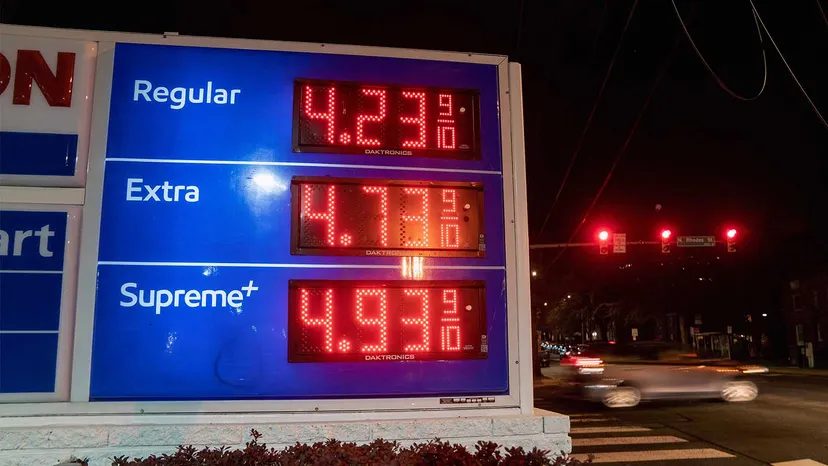
It feels absurd to see a fraction of a cent added to a fuel price in an economy where a penny buys almost nothing. Yet, if you’ve filled up recently, you’ve likely seen that familiar 9/10 suffix. It’s not a glitch in the matrix. It’s a historical artifact.
The practice dates back to when gasoline cost mere pennies per gallon. The government didn’t round up the tax. They added the fraction to keep the base price looking lower. Back then, a full extra cent was a significant hit to the wallet.
The federal tax arrived in 1932 via the Revenue Act of 1932. The plan was simple. It was supposed to expire in 1934. That deadline passed. Then another. Congress extended it. Then they increased it. The money was meant to fund roads and infrastructure during the Great Depression.
At that time, gas hovered around 10 cents a gallon. Adding 0.9 cents was negligible. Consumers accepted it. It was just part of the sticker price.
But the world changed. Gas prices soared. The tax structure stayed rigid.
As of January 1, 2022, state taxes averaged 31 cents per gallon for gasoline. Diesel sat at 33 cents. California is an outlier. Locals there pay up to 58.8 cents per gallon in state taxes alone. Federal taxes add another 18.3 cents for gas. Diesel federal taxes hit 24.3 cents.
These are still fractions of a cent mathematically, but the logic is outdated. The 9/10 figure persists from a different era.
Prices fluctuate wildly. In 2022, regular gas hit a national average of $4.08 on April 18. Mid-range options ran between $4.50 and $4.75. The average peak for the year was $4.33 on March 11.
You have options. Apps track prices. Car infotainment systems show the cheapest station nearby. You can hunt for deals. But you probably aren’t noticing the 0.9 cent. You’ve been rounding up for so long it’s invisible.
So why does it stay?
Psychology. When you buy groceries, you ignore the pennies. A shirt priced at $29.99 feels like $29. You mentally round down. Gas works the same way.
$4.08 9/10 reads as $4.08. It doesn’t read as $4.09.
That 0.9 cent adds up. For a 20-gallon tank, it’s about 20 cents. Small change. But it adds up across the industry. Marketplace reports that these fractional taxes generate half a billion dollars annually.
Here is the thing most people miss. Stations aren’t all competitors. A gas station on one side of a divided highway isn’t really competing with the one on the other side. Drivers won’t cross heavy traffic to save a few cents. They stay on their side.
The 9/10 cent tax is just a relic. A habit from when a penny mattered. It persists because no one notices. And because half a billion dollars is hard to give back.