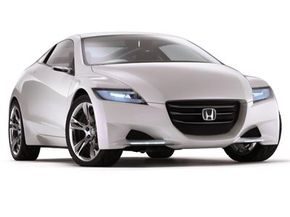
Automakers are sweating over a specific perception problem right now. The push for hybrid technology is hitting a wall of public opinion. Companies want you to see their hybrids as “green.” They want you to focus on fuel efficiency. The logic is simple. You switch between an electric motor and a gasoline engine. This stretches every drop of fuel further. Less consumption means less environmental impact. That part checks out.
But there is a second image automakers can’t seem to shake. Hybrids look slow. They look weak.
Gasoline engines give you horsepower and torque. You press the pedal, the car moves. It’s quick. Hybrid gas engines are usually smaller. They don’t spit out that same acceleration. Enthusiasts who are used to sporty engines notice this. They shy away. They stick to pure fossil fuel cars. It’s a barrier. A real one.
Car makers are trying to break it. Newer models are getting faster. The interiors are sharper. The exteriors are better. The exterior is where it starts.
Take the Honda CR-Z. It looks nothing like the Civic Hybrid that came before it. Honda isn’t marketing this as just another gas-saving appliance. The focus is on sporty nature. The name says it all. CR-Z stands for Compact Renaissance Zero. It hints at a small footprint. It hints at a new start. A fresh take on fundamentals.
The timeline was supposed to be slow. The CR-Z started as a concept car. Production was slated for 2011. Maybe even 2012. Honda moved the date up. Why? Changing fuel standards. Higher demand for efficient tech. The release is now locked for late 2010. It’s coming faster than expected.
Honda CR-Z Design
A Design That Bends the Rules
Look at the Honda CR-Z sitting next to a Civic. They are worlds apart. The Civic is practical. It is sensible. The CR-Z is something else entirely. Honda clearly wanted a different kind of hybrid. Not just a Prius with a different badge. This was an attempt to redefine what a hybrid could look like.
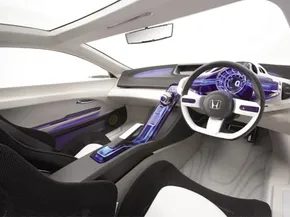
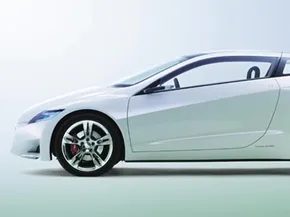
The front end drops sharply. It dives toward a low, wide grille. The profile feels aquatic. Water-worn. Sleek. The windows and doors slope down in unison. They rise back up toward the rear. The result is a tight, slick hatchback. It is compact. Yet, Honda claims the interior is spacious. Two people fit. The seats use mesh covers. Simple. The dashboard in early concept shots showed a shiny, glass-covered instrument panel. Futuristic.
Don’t let the modern look fool you. This design bows to the past. The name CR-Z is a nod to the CRX. That car ran from 1983 to 1991. It was a compact with a short hatch. Why skip from X to Z? Try selling a car called the CR-Y. You can’t. Y is a hard letter to market. Z works.
The CRX had a gas engine. The CR-Z has teeth. It is a full-on hybrid. This is where the tech matters.
Under the Hood: The Hybrid Heart
The big shift between the old CRX and the new CR-Z is the powertrain. You are not just swapping a spark plug for a battery. You are changing the entire philosophy of how the car moves.
Honda’s hybrid system for the CR-Z relies on a specific layout. It uses a 1.5-liter four-cylinder engine. But that engine does not drive the wheels directly in the traditional sense. It is part of a series-parallel hybrid system.
Here is how it breaks down:
- The Engine: A 1.5-liter i-VTEC four-cylinder. It produces around 122 horsepower.
- The Motor: An electric motor integrated into the transmission. It adds torque. It fills the gaps when the gas engine is lazy.
- The Transmission: A 5-speed manual or a Continuously Variable Transmission (CVT). The manual is rare. The CVT is common.
- The Battery: A Lithium-ion pack. Located under the rear seats. It saves trunk space.
This setup allows the CR-Z to run on electric power alone at low speeds. You can creep through a parking lot silently. The engine kicks in when you need acceleration or higher speeds. It is efficient. It is responsive.
Performance and Efficiency Numbers
You do not buy a CR-Z for straight-line speed. You buy it for the feel. The handling is sharp. The center of gravity is low. The battery placement helps.
| Spec | Detail |
|---|---|
| Horsepower | ~122 hp (combined with electric motor) |
| Torque | ~128 lb-ft (combined) |
| 0-60 mph | ~7.0 seconds |
| MPG (City) | ~35 mpg |
| MPG (Highway) | ~38 mpg |
Inside the CR-Z: Civic Roots and Hybrid Tech
It looks nothing like a Civic. Step inside and the similarities emerge.
The heart of the 2011 Honda CR-Z is a 1.8-liter SOHC i-VTEC engine. It’s the same mill found in the Civic. But here is the difference. This setup produces 140 horsepower. That’s significantly more power than most current hybrid gasoline engines. It’s big. It’s potent.
On its own, that gas engine pulls impressive numbers. Honda’s data cites 25 mpg in the city. The highway jumps to 36 mpg. The combined average sits at 29 mpg. That is solid for a standalone petrol unit.
Then you add the electric motor. It presumably handles low-speed cruising. It assists during uphill climbs. This synergy will likely push fuel efficiency even higher.
Transmissions are a choice. Honda plans to offer both automatic and manual options. The throttle system relies on drive-by-wire technology for the engine response.
The hybrid components come from the Honda Insight. It’s called the Integrated Motor Assist system, or IMA. The design is key. The IMA is thin. It fits between the engine and transmission. This saves space. It’s a boon for a compact hatchback like the CR-Z.
There is another Insight-derived option. A continuously variable transmission, or CVT, is available. It pairs with the drive-by-wire setup.
Honda is playing a cost-reduction game here. They are taking parts from existing vehicles. They are combining them into one package. It’s smart engineering. It’s also weight-conscious.
The CR-Z tips the scales at just 2,800 pounds. That’s 1,270 kilograms. It’s fairly light for a hybrid. How? A lighter body. A smaller battery.
Older hybrids are often weighed down by massive battery packs. Irony alert. Those heavy packs result in poor fuel economy. The CR-Z avoids that trap.
This approach changes the equation for affordable sporty hybrids. It’s not just about getting from A to B efficiently. It’s about keeping the car nimble.
Where does this leave the CR-Z in the market? It’s not the Prius. It’s not the Insight. It’s something sharper. The tech is proven. The weight is managed. The power is there.
The rest is just driving it.