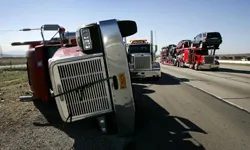
The atmosphere is heating up. We all saw the news. Tornadoes hit places they shouldn’t. Hurricane seasons blend into each other and drag on like a bad pop song. It felt like the sky was actively trying to blow our tires off. The wind blows chaos. It is not a mild coastal climate. In other words, a gust of wind can turn a sedan into a kite and a trailer into a pinball machine.
Driving in strong wind is a pain. I’m tired. Grip the handle with both hands until your knuckles turn white. They fight for every stroke. If you’re looking for ways to make things worse, you’ve come to the right place. We’ll look at five ways to make sure your content appears as FailBlog content.
5: Following a heavy object
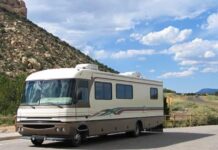
Let’s talk about aerodynamics. Or lack thereof. A tractor trailer, caravan or boat on a trailer is basically a brick. It has square sides. It has a large area. Its rotational capacity is zero. The wind blew from the side, like a rear guard, and suddenly the gear started shaking. It’s unpredictable. This is dangerous.
What is wise action? Some drivers choose to drive behind these huge objects. I shoved my nose under the bumper of the truck in front of me. On a calm day this would be silly. Illegal on a sunny day. What about windy days? This is a recipe for disaster.
For this reason, the trailer must never be towed in strong winds.
Of course, the trailer also serves as a wind protection. But this causes confusion. The atmosphere is chaotic. This is a low pressure system. If you are close enough to benefit from the drag reduction, you may also be in immediate danger if the truck in front of you suddenly tips over. But that’s not the worst part.
The wind blew against the side of the trailer. The trailer shook. It drifts towards your lane. If you hide behind it, you won’t see it swing until it’s too late. You are blind to lateral movement.
Then a real mistake happens. I decided to change the previous driver. They suddenly turned the wheel. The trailer reverses. You are in the kill zone. Even worse, you might not pass the exam. If the gear is already unstable, it will try to accelerate to overcome it. While driving at high speed, I encounter a crosswind. Trailer wake can still affect stability. I made too many corrections. You fight against both wind and passing moves.
Eventually it slides sideways. You spin out. you’re broke It’s simple cause and effect. Take a step back. Please keep your distance. Don’t try to use a half kilometer long sail as personal protection against the wind.
4: Speed kills
This may seem contradictory to some. I think, “We have to beat this wind quickly.” So you set it. Press the gas pedal until the engine screams. you walk very fast.
This is wrong.
When you drive fast in a strong wind, all fluctuations are amplified.
Aerodynamic lift increases with speed. Your tires have less time to react to sudden gusts of wind. A crosswind might only push a car going 30 mph, but it can completely knock a car going 110 mph out of the way. lose control. lose control. Cars turn into leaves in a hurricane.
“Increasing the speed shortens the reaction time and increases the force of the wind”
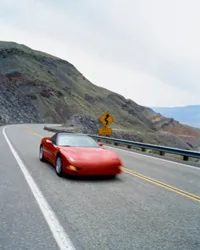
We all know that drill. Speed records are not official unless the wind speed behind you is officially recorded. That tailwind? This extra force causes the needle to move. So logically, if the wind helps, then the hurricanes must be great too.
fix?
If you see a storm coming, if you see dark clouds, lightning, the works, you are golden. You’re going to outrun it. Remember, an old 115-horsepower Volkswagen bus won’t beat a newborn kitten in a drag race. You have this.
Danger is not fear. This is physics. If the wind throws you off course, you won’t have time to fix it. You go where the wind says. If you correct it, you overcorrect and it goes in the opposite direction at high speed. So, give it a try.
3. Drive a tall and narrow car
What may work well for a super model is terrible for vehicle stability. The taller and thinner you are, the more likely you are to fall.
Imagine a Lamborghini sitting low next to a 1976 full-size van. Maybe you have wolf spray painted on the side of your van. Probably not. Place them on an Iowa highway as a storm approaches. It’s like Indiana Jones fighting a snake.
Lamborghini? There is no surface area for the wind to catch. Each panel is aerodynamic. The wind blew through. Also, because it’s so close to the ground, downforce keeps it glued to the pavement.
The van? Large area. The wind is blowing. The passengers in the car felt the whole car shaking on the highway. You might even hear an airbrushed wolf howl. Or maybe it was their own crying. There is enough clearance below, so there is downforce is nonexistent.
lesson? Buy a Lamborghini. This is a safety issue.
2. Try all the fanciest maneuvers
I spent hours practicing my slides. Left foot brake. The corner becomes a slingshot. Of course the wheel is connected to the Xbox. Your skills are Dirt and Forza 4.
Now it’s time to test them. You noticed, right? Game engineers spent years trying to make driver feedback realistic. Traction is needed for turning and braking. Do you want to go straight? You can use plywood. You need a rubber to turn it.
Strong winds reduce friction. Raise the car a little. It moves you off the baseline. It is often accompanied by heavy rain, which makes the roads slippery. Instead of taking the safe, sane route (hands at ten-and-two, your eyes are looking for debris), head down the highway to your very own Nurburgring or Talladega.
Video games and real life are pretty much the same thing, right?
1. Jump into the puddle
Hydroplaning is not only a problem on slippery roads. This is also a wind problem. If the wind hits the sides of your car while driving at high speeds, it will lose stability. If you hit a puddle at that moment, you can no longer drive. You’re drifting uncontrollably.
But why stop at a puddle?
Try to hit every hole. Try swerving to avoid debris. Try to braking hard. In a strong crosswind, the forces acting on the vehicle increase multiplies in connection with a sudden change of direction. The wind doesn’t care about the suspension. It doesn’t care about your tires. It just pushes.
So embrace the chaos. Let the van rock. Let the wolf howl. But don’t expect to arrive at your destination with all four wheels on the ground.
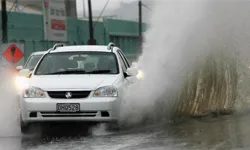
Ignoring anti-skid physics
Hydroplaning is not a myth. This is because there is a layer of water between the rubber and the asphalt, which prevents the tire from touching the road surface. This usually happens at speeds above 35 mph. You drive faster than the tires can displace water. The result is zero steering and zero braking.
The storm brings heavy rain. The gutters are filled. A ditch becomes a river. Most drivers slow down. They avoid standing water. Keep your tires on the road.
But what about you? You can also do the opposite.
Drive straight into the deepest puddle you can find. Keep your foot on the gas. The key here is speed. Without sufficient speed, the tires will simply displace the water and maintain contact. You have to move fast enough to get on top of the liquid layer.
The wind also plays a role. When you skid, you can no longer use the steering wheel to control your direction. The brakes don’t work. This car is basically a sled. If there is a strong gust of wind, the sled can blow somewhere. A strong wind can cause the car to deviate from the course. Or to the trees. Or fall into a ditch.
If you try this and get stuck in a muddy ditch, stay put. Let the rational drivers pass by. They are slowly looking for a safe place to park. Just like adults, they wait out the storm. You can also wait there. I’ll send a tow truck. perhaps. Eventually.
Why this is a bad idea
Anti-skid is there for a reason. Anti-lock brakes prevent the wheels from locking. The electronic stability control system helps to keep the car on the planned course. Hydroplaning negates all of this. You’re flying blind.
The depth of standing water varies. You can’t see what’s underneath. Rocks. Debris. A deep hole. Hitting these objects at high speed can damage your suspension. It is possible to burst a tire. If water gets into the air intake, the engine may stop.
Recovery after hydroplaning can be difficult. You have to take your foot off the gas. You can’t change direction quickly. You have to wait until the tires touch again. If you slip during the recovery, you’ll lose even more control.
Most accidents in wet conditions occur because drivers do not consider the reduction in friction. Grip is reduced on wet roads. Stopping distance increases by up to 25%. Hydroplaning increases it considerably.
Wind adds another variable. A light vehicle can be pushed sideways by a crosswind. If you’re already gliding on water, the wind determines your trajectory. Can’t fight. I can only hope for a soft landing.
Safety drivers slow down on rainy days. Following distance increases. They avoid sudden movements. They avoid large puddles. They know that control is more important than speed.
You may think you are smart. No need to wait. Follow a scenic route through flooded ditches. But this decision is high. Towing is not cheap. Medical costs are even more serious. Are you stuck in a ditch while others are driving safely? This is not a victory. It’s just bad luck.
The storm will pass. The water recedes. But will it damage your car? This can take much longer.