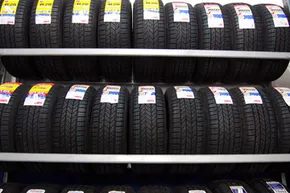
Grocery stores stamp “sell-by” or “use-by” dates on everything from yogurt to meat. It’s a simple safeguard. It tells you when the manufacturer’s legal liability ends and when the food likely becomes unsafe. We accept this for perishables without a second thought.
But what about the things we drive?
Ask your mechanic about a repair. He’ll tell you exactly what he changed. He might even guess how long that new alternator will last. Car makers already put warranties on components. They guarantee parts for a set time or mileage. Yet one critical part often slips through the cracks. Tires get no expiration date.
We assume tires only die when the tread wears smooth. That is not entirely true.
Reports indicate tires degrade long before the rubber runs out of grip. They are built to handle thousands of pounds. They survive heat, cold, and road debris. But time is the enemy. A tire loses structural integrity over years. The rubber hardens. The belts separate. It stops working as designed. Even if the tread looks new, the tire might be dangerous.
Safety groups want change. They argue for mandatory tire expiration dates. They want the same transparency we get with milk.
The Science of Rubber Degradation
Tires are not static objects. They are complex chemical structures. The rubber compounds used in modern tires contain oils and polymers. These keep the tire flexible. Over time, these components break down. Oxidation is the primary culprit.
Exposure to oxygen causes the rubber to dry out. UV light from the sun accelerates this process. Heat from driving adds stress. The internal structure weakens.
This is not just about tread depth. It is about the integrity of the casing. A degraded tire can fail catastrophically. Blowouts happen at highway speeds. The result is often severe.
Manufacturers do not put dates on tires because they claim the product lasts indefinitely. They rely on warranties. But warranties vary. Coverage differs by brand. There is no universal standard for tire lifespan.
Some experts argue that tires last up to ten years. Others say five years is the limit. The truth lies somewhere in between. It depends on storage. It depends on driving habits. It depends on climate.
“Tires can lose their strength and cease to function correctly even if the tread is still deep.”
This fact is known in the industry. It is less known by the public. Many drivers check tread depth with a coin. They ignore the age of the tire. This is a mistake.
Safety advocates are pushing for labeling. They want a clear expiration date. Like food. Like medicine. It is a reasonable demand. We rely on tires for our safety. We deserve to know when they stop being safe.
The conversation about tire lifespan is heating up. Consumers are becoming more aware. The gap between manufacturer claims and reality is widening. It is time to close it.
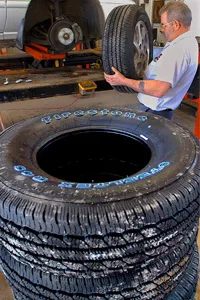
Tires are engineered to take a beating. They endure heat, friction, and weight that would crush lesser materials. Unlike an alternator or a starter motor, tire manufacturers actually provide a lifespan estimate. You will typically see a rating in tens of thousands of miles. That number is your baseline. But it is not a guarantee.
Safety advocates argue that the tread wear metric is insufficient. They want a hard six-year expiration date for every tire. The logic is simple. Research indicates that tire failures spike after six years. The rubber degrades. The structural integrity compromises. The tire industry resists this standard. They do not want to imply their products are disposable commodities. Or perhaps they just do not want to give owners an excuse to replace perfectly good tread.
Ford Motor Company does not wait for industry consensus. They tell customers to scrap tires older than six years. It does not matter if the tread looks fresh. Age is the killer.
Decoding the DOT Date Code
You can determine a tire’s age by reading the sidewall. Look past the speed rating. Ignore the size designation. Find the Department of Transportation (DOT) marking. Following those letters is a code. This code tells you exactly when the rubber was cured.
If the code has three digits, the tire was made before 2000. The last number is the year of manufacture. A “297” means 1997. It is a rough estimate. The tire could have been made in any week of that year.
Newer tires use a four-digit code. The first two digits are the week. The last two are the year. “2409” means the 24th week of 2009. It is precise. It is factual. There is no ambiguity.
Most people ignore this code. They look at the tread depth and call it a day. That is a mistake. Rubber oxidizes. It hardens. The chemicals that provide flexibility break down over time. You cannot see it. You cannot feel it until the sidewall cracks. Then it is too late.
Why Age Matters More Than Miles
How does a tire’s age affect its performance? The answer lies in chemistry.
Tires are made of natural and synthetic rubber. They contain carbon black and silica. These materials degrade. Exposure to ozone causes micro-cracks. UV light accelerates this process. Heat speeds it up. Even if a car sits in a garage, the tires age.
A six-year-old tire with 90% tread remaining is not safer than a three-year-old tire with 50% tread. The older tire is more prone to blowouts. It is less responsive. It has less grip in wet conditions. The bond between the rubber and the steel belts weakens. Separation becomes a risk.
Manufacturers do not provide a specific expiration date. They provide a mileage expectation. But mileage is irrelevant if the tire is expired. A tire driven 5,000 miles in six years is still dangerous. The clock starts ticking from the date of manufacture. Not the date of purchase. Not the date of installation. The date on the sidewall.
Check your tires. Look for the DOT code. If the last two digits are “18” or lower, replace them. Do not wait for the tread to wear out. The rubber is already failing. It just has not torn apart yet.
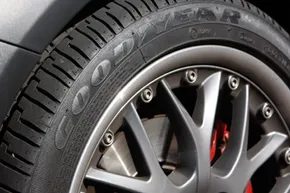
Tires aren’t just rubber bands stretched around steel rims. They are complex assemblies of dozens of individual components bonded together via vulcanization, a high-heat curing process that gives them structure. But like every other component on your car, normal wear and tear eats away at their longevity. When you drive, several factors conspire to wear the tire down and strip it of the properties that keep you safe.
Consider the physics involved. The weight of your vehicle presses down, forcing oxygen against the inner walls of the tire casing. Simultaneously, friction with the pavement generates heat. This combination of heat and oxygen attacking the material from the inside out is known as thermo-oxidative aging.
The National Highway Transportation Safety Administration (NHTSA) defines aging as a “loss in a tire’s material properties,” which inevitably leads to a reduction in performance capabilities. The agency is ramping up testing on these car parts to give the industry and consumers clearer data. The results are stark.
The Spare Tire Fallacy
If you mount a fresh tire on a car immediately after it’s manufactured, oxidation has minimal impact. The tread typically wears out long before the chemical breakdown causes catastrophic failure. But here is the catch: tires mounted on rims—and left there, even if unused—still undergo oxidation.
Think of a spare tire. It sits in the trunk or under the chassis, doing nothing. It ages anyway.
Think of it this way; if you buy a gallon of milk but don’t open it for 8 weeks, it doesn’t mean that milk will still be fresh when you do use it. The milk will curdle regardless of whether or not you’ve opened it. The same goes for tires.
Having a tire sit for several years can actually reduce its effective lifespan. You are not buying a new tire; you are buying a pre-aged one.
Heat Accelerates Breakdown
Oxygen breaks down the material properties, but heat accelerates the process significantly. The NHTSA reported that between 2002 and 2006, a major insurance provider found that 77 percent of its tire claims originated from just five states with high ambient temperatures.
The age factor was even more pronounced. 85 percent of those claims involved tires that were more than six years old.
This creates a dangerous scenario for consumers. You might purchase a set of tires guaranteed for a specific mileage, but if they were stored in a hot warehouse or sat on a dealer’s lot during a heatwave, their structural integrity is already compromised. The mileage warranty assumes a fresh start. It does not account for the years the rubber spent degrading before it ever touched your driveway.
Is this a minor inconvenience or a critical safety oversight? The answer lies in the sudden failure modes associated with aged rubber.
Dangers with Old Tires

The Hidden Cost of Tire Age
NHTSA data from 1994 to 2004 tracks roughly 400 fatalities in the US linked to tire failure. Oxidation is one culprit. It isn’t the only one. You can kill a tire with under-inflation. Overloading the vehicle past its weight rating works too. Improper maintenance. Structural defects. Bad installation. All of it leads to the same result.
When an accident happens, crash data gets entered into a database. It’s for statistics. The age of the tire? Usually not recorded. This makes it nearly impossible to prove if older tires are the root cause of failures. Hard numbers are scarce. That doesn’t mean age is irrelevant.
How Oxidation Destroys Tires
The NHTSA notes tires lose elasticity over time. They dry out. The interior becomes brittle. This degradation affects the auto part longevity of the entire assembly.
“Allegations that there is a correlation between tire performance and chronological tire age are unfounded and unsupported by data” – Rubber Manufacturers Association, 2009
Oxidation breaks down material properties. Tread separation follows. This is when the tread peels off the rest of the carcass during use. Steel belts lose adhesion. The combination of these factors strips control from the driver.
Industry Pushback vs. Manufacturer Advice
The NHTSA faces opposition. The Rubber Manufacturers Association (RMA) pushed back hard. Their 2009 press release dismissed the link between age and performance as unsupported by data.
Other car parts play a role. Usage matters. But several major manufacturers disagree with the RMA. Porsche. Toyota. Ford. Chrysler. BMW. They all recommend replacing all tires, including the spare, after six years. Use or tread wear doesn’t matter in their eyes.
The NHTSA continues to study car part information. They’re looking for more specific data on the dangers of aging tires.
For more about tires and other auto part information, follow the links on the next page.
Lots More Information
Related HowStuffWorks Articles
- Top 10 Everyday Car Technologies that Came from Racing
- How Car Computers Work
- How Driverless Cars Will Work
- How Hypercars Work
- How Auto Transport Works
- How Automotive Production Lines Work
- Can you assemble your own car?
- What makes a digital car digital?
- What’s new in synthetic oil technology?
- Will car repairs in the future financially cripple you?
Sources
-
Gin, Joanna. “AB 496 Assembly Bill – Bill Analysis.” April 14, 2009. (Oct. 3, 2009) http://info.sen.ca.gov/pub/09-10/bill/asm/ab_0451-0500/ab_496_cfa_20090413_111027_asm_comm.html
-
Holguin, Jaime. “When Good Tires Go Bad.” CBS News. May 27, 2005. (Sept. 28, 2009) http://www.cbsnews.com/stories/2005/05/27/eveningnews/consumer/main698333.shtml
-
National Highway Traffic Safety Administration. “Research Report to Congress on Tire Aging.” Aug. 20, 2007. (Oct. 2, 2009)http://www.nhtsa.dot.gov/staticfiles/DOT/NHTSA/NRD/Multimedia/PDFs/Crashworthiness/CongReptTireAgingFinal080907.pdf
-
Rubber Manufacturers Association. “California Tire Measure is a Lawsuit Magnet.” May 28, 2009. (Oct. 5, 2009) http://rma.org/newsroom/release.cfm?ID=267
-
Safety Research and Strategies, Inc. “Tire Aging.” (Sept. 28, 2009)http://www.safetyresearch.net/advocacy/tire-aging